
In the case of the arrest of Legislative Assembly Opposition Leader Udhayanidhi for allegedly speaking harshly about Chief Minister Vijay and women, advocate N.R. Elango Imran Pratapgarhi, who appeared on behalf of the DMK, referred to the definition laid down by the Supreme Court in the case.
The Assembly Opposition Leader, who participated and spoke at a DMK protest in Thanjavur over the Cauvery issue, had sharply criticized Tamil Nadu Chief Minister Vijay and women.
In response, a case was registered against Udhayanidhi in Thanjavur under nine sections, and the Thanjavur police arrested him today.
Earlier, a petition was filed in the High Court on behalf of the DMK seeking an order that he should not be arrested. After hearing that petition, the High Court issued several interim orders, including that Udhayanidhi should not be arrested and that he must be released today itself.
Regarding the hearing of this case, senior advocate N.R. Elango, appearing on behalf of the DMK, told reporters outside the court that they had attributed malicious intent to what Udhayanidhi said. We argued on our side that Udhayanidhi had been forcibly arrested in violation of the High Court’s order.
On the police side, there was no urgency to remand Udhayanidhi. It was said that after conducting an inquiry at the police station, he would be released on station bail. Since there is an important Assembly session starting tomorrow, the judge also ordered that the inquiry be completed today itself and that he be released today itself, said N.R. Elango.
He also cited a case involving someone named Imran Pratapgarhi.
Speaking about that, he said that in the case of Imran Pratapgarhi, the Supreme Court has given a detailed outline of what the police inspector must do before registering a case under Section 196.
Even though they knew that ruling, they deliberately did not follow it and filed this case, arrested the Leader of the Opposition, and tried by any means to prevent him from entering the Assembly tomorrow.
But, as usual, the court intervened and today stopped the arrest action against Udhayanidhi, noting that dictatorship in Tamil Nadu has been halted.
Information about Imran Pratapgarhi, as mentioned by N.R. Ilango, can be found in an article written in Dinamani by English professor Raja Muthrulandi under the title “Even this kind of case... Poet Imran Pratapgarhi! Poetry is the crime -19”.
Before we go to the Supreme Court, let us first learn a little about poet Imran Pratapgarhi...
The gentle-looking young storm currently making waves in Indian politics as well as in the Urdu poetry world was born on August 6, 1987, in Pratapgarh, Uttar Pradesh. His father, Mohammad Ilyas Khan, was a Unani doctor; his mother was a homemaker who was active in local social service. The name his parents gave Imran was Mohammad Imran Khan. To express his strong bond with his hometown Pratapgarh, he changed it to Imran Pratapgarhi (Imran Pratapgarhi).
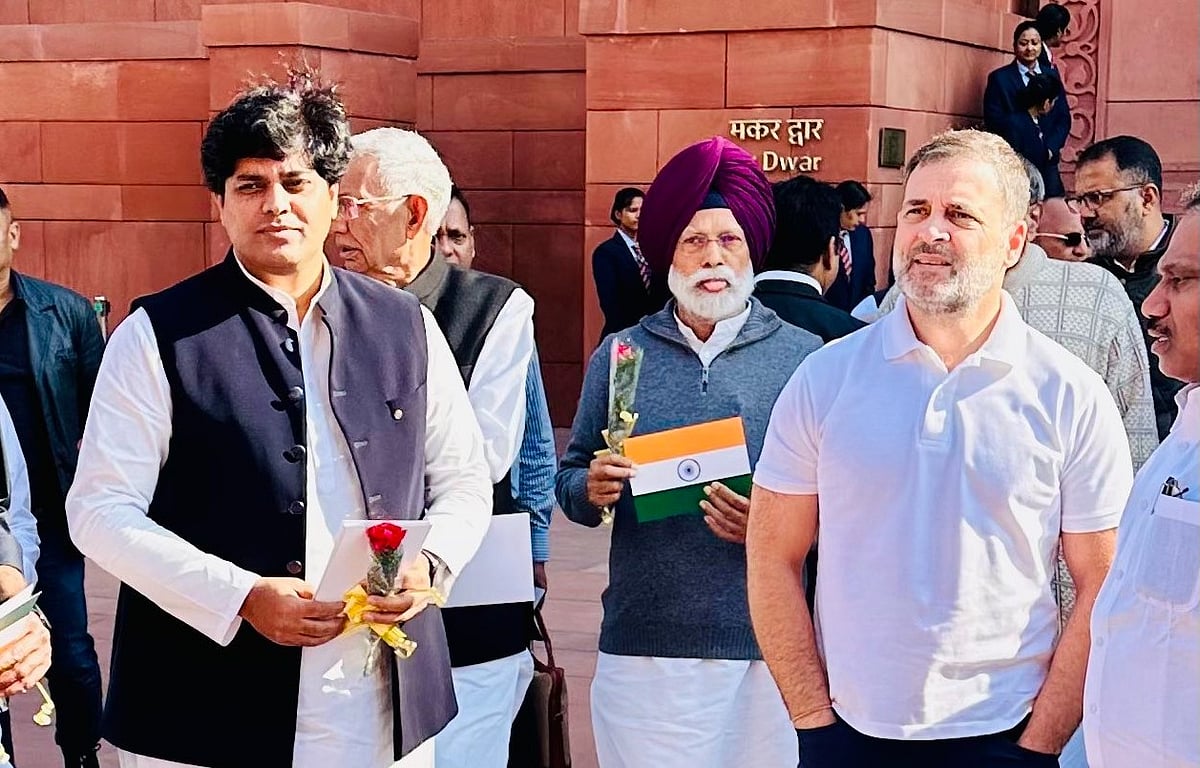
A routine meeting between Rahul Gandhi and Imran in 2018 led to Imran, who had no notable political background, being fielded as the Congress candidate from the important constituency of Muzaffarpur in Uttar Pradesh in the 2019 parliamentary election. Imran’s first electoral contest did not bring him victory. Even though he did not win, Imran’s election campaigns and the way he went among the people and approached them naturally and easily drew attention from many quarters.
As a mark of recognition for political newcomer, poet, and Imran Pratapgarhi’s dedication and perseverance, Imran was appointed on 3 June 2021 as the head of the Minority Department of the All India Congress Committee (AICC). His ability to voice the concerns of minority communities and his commitment to working for solutions have been receiving a warm welcome among minority people.
Continuing his upward climb on the political ladder, in June 2022, he was elected to the Rajya Sabha from Maharashtra as a candidate of the Indian National Congress. This was another significant milestone in his political journey. Since the day he was elected and assumed office (5-7-2022), he has been serving as a strong voice in the Rajya Sabha, with a 94% attendance record, powerfully voicing the opinions, aspirations, and issues of people from all sections. His speeches, interwoven with poetry, continue to draw everyone’s attention both inside and outside the House.
Come... let’s go to the Supreme Court and take note.
We know that the Gujarat High Court, through its final order dated 17-1-2025 issued by Judge Sandeep N. Bhatt, dismissed Imran’s request to completely quash the FIR dated 3-1-2025 registered against him (along with two others) at the Jamnagar police station in Ahmedabad.
Therefore, on the basis of the fundamental rights broadly granted to its citizens by the Constitution of India, especially from the standpoint of freedom of expression, Imran Pratapgarhi’s petition seeking special leave to appeal to the Supreme Court for appropriate relief was taken up for hearing on 21-1-2025.
After hearing the arguments presented by senior advocate Kapil Sibal appearing on behalf of the petitioner(s) and examining the petition, the Bench comprising Hon’ble Justice Abhay S. Oka and Hon’ble Mr. Justice Ujjal Bhuyan passed the following order.
Special leave is granted in the appeal filed by Imran (and two others).
Notice may be issued to the respondents - the State of Gujarat and others - to file a response to the petition by 10 February 2025.
Meanwhile, no further action shall be taken in any manner on the basis of First Information Report (FIR) No. 11202008250014 / 2025 dated January 3, 2025, registered at the City A-Division Police Station in Jamnagar, Gujarat.
(Case: Imran Pratapgarhi v. State of Gujarat, Case Number: SCRA(Q) No. 551/2025)
The Bench comprising Hon’ble Justices Abhay S. Oka and Ujjal Bhuyan observed that the relief mentioned third in the order dated 21-1-2025, though interim, is significant.
The significance of this relief is that it has struck the first nail into all the actions that were intended to be taken, and are being attempted to be taken, on the basis of the complaint filed at the Gujarat police station regarding the content of the Urdu poem “Ae Kaun Ke Pyaas Baat Suno...” heard in the background of the video posted by Imran on social media, as understood by the police that registered the complaint; and the Gujarat High Court’s order, which found that a prima facie case was made out in the very first instance of the complaint.
This case came up again for hearing before the bench of the Hon’ble Supreme Court judges Abhay S. Oka and Ujjal Bhuyan on March 3.
During this round of hearings, there were also humorous exchanges involving legal and literary debates between the petitioner’s senior counsel Kapil Sibal and the government-side/opposing Solicitor General Tushar Mehta.
The bench of Justices Abhay S. Oka and Ujjal Bhuyan observed that the way the police have handled this case in a superficial manner has made it necessary to underscore the value our country places on freedom of speech and expression.
Appearing on behalf of the Gujarat government, Solicitor General Tushar Mehta questioned whether, as stated in the petitioner’s affidavit, this poem was indeed of such a quality that it could possibly be the work of renowned Urdu poets like Habib Jalib or Faiz Ahmed Faiz. He also said that “its status can never be Faiz or Habib Jalib” and criticized the poem in the (video) as a “sadak chaap” (cheap/ordinary/commonplace) poem.
Senior advocate and poet Kapil Sibal humorously replied, “Even my poems are ‘sadaq saab’.” The courtroom heat was eased by Tushar Mehta’s praise of Kapil Sibal and by the intervention of Justice Abhay Shreeniwas Oka, who is set to retire on May 24 after serving as a Supreme Court judge for the past three years, having earlier served as Chief Justice of the Karnataka High Court after moving from the Bombay High Court.
Tushar Mehta, who appears for the government and argues against Kapil Sibal, praised Kapil Sibal’s poems. Justice Oka also joined in the light-hearted exchange.
The senior lawyer, looking at Kapilsilai, said, “Don’t classify your poems as satak saab. Because by the end of May, you may have to write a poem for me. So please don’t say that.”
Moving past the joke and becoming serious, Tushar Mehta continued his criticism of the poem shared by Pratapgari and said, “I do not accept that this is a poem. Why? A share is never partly good or partly bad; it either is or it isn’t.”
Judge Oka, with a smile, said, "So now you want to compete with him? In writing poetry?" and this time Kapil Sibal praised Tushar Mehta to the skies. "Mehta does not need to try; he already has a wealth of poetic knowledge," he said.
Judge Oka laughed, saying, “Government counsel Mehta would not have enough time to write poetry.”
Mehta also replied humorously. "No, no, I am short of time. People say that to become a poet, one must fall in love. I have never fallen like that," he said with a shrug.
It is worth noting that Judge Oka, who is hearing this case, has pointed out, as if driving in a nail, through the coolness of humor. This is not the final verdict in this case; it is a signpost indicating the direction of the judgment.
"The court has to question the reason behind the background of this case. Before registering an FIR, the police should have some sensitivity (Sensitivity to Poetry and the Constitution). That is the problem. They should at least read and understand the provisions of the Constitution. Even now, seventy-five years after the Constitution was drafted, the police should at least understand freedom of speech, the people’s freedom to express opinions, and so on."
Now there is no respect for creativity. If you read that poem clearly, it says, ‘Even if you suffer injustice, bear it with love’; it says, ‘Even if people die, we will accept it.’ This poem is not against any religion. Isn’t what this poem indirectly says that even if someone engages in violence, we will not engage in violence? That is the message the poem conveys. When it comes to freedom of speech and expression, there cannot be some other agenda. We must uphold that. Our concern is that at the very least, efforts should be made to understand the meaning of the poem. That is our concern,” he said.
The bench also criticized the Gujarat High Court’s decision to reject Pratapgarhi’s petition to quash the FIR.
Addressing the government counsel, the court said, “Put your mind into poetry; in the end, realize that creativity also matters,” Justice Oka said.