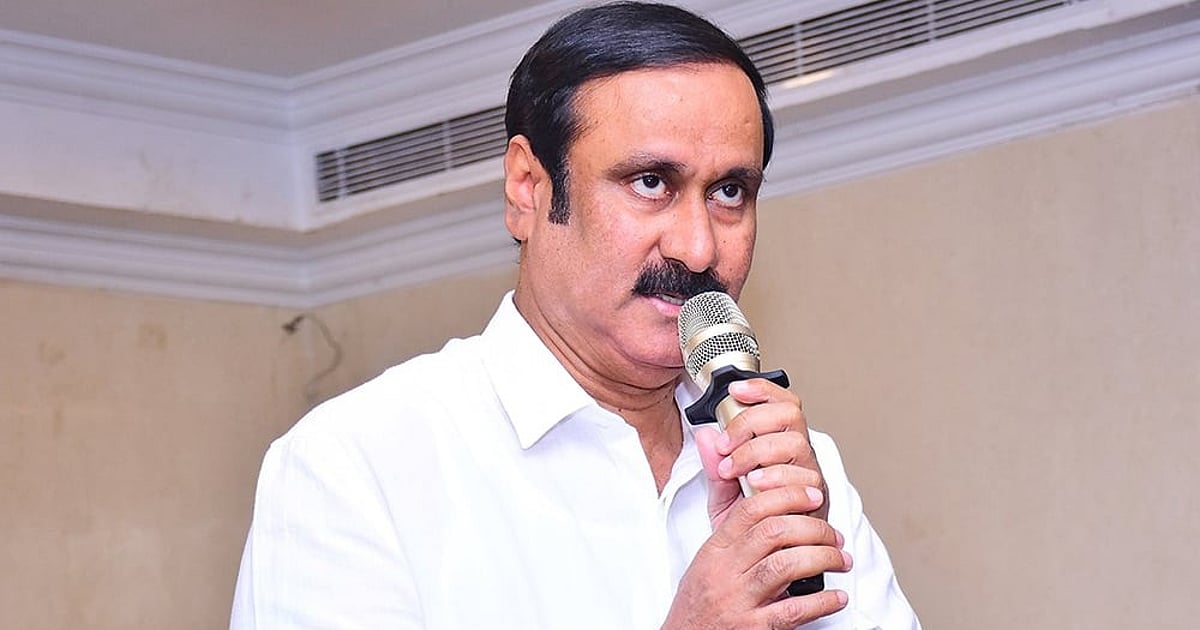
The Pattali Makkal Katchi has released its proposed economic report for 2025-26. In it...
1. In 2025-26, the Tamil Nadu government's revenue has fallen short of expectations.
2. While own tax revenue receipts were estimated at Rs. 2,20,895 crore, only Rs. 1,92,493.07 crore in tax revenue has been collected, which is 13% lower.
3. The components of the Tamil Nadu government's own tax revenue—Goods and Services Tax, Value Added Tax, registration and stamp duty, and motor vehicle tax—have also failed to meet the target.
4. Although Tamil Nadu’s economic growth in 2024-25 increased more than expected, to 10.83%, the government’s revenue did not rise in any way.
5. In 2025-26, Tamil Nadu government’s non-tax revenue was estimated in the budget to be Rs. 28,819 crore.
6. However, only Rs. 23,830 crore has been received as non-tax revenue. This is a 29.10% decrease compared to the previous year’s revenue. Compared to the target for 2025-26, it is a 17.31% decrease.
7. The Tamil Nadu government's total revenue receipts have also declined because the central government's share of tax revenue and grant assistance were lower than the target.
8. In 2025-26, while the Tamil Nadu government was expected to receive a total revenue of Rs. 3,31,569 crore, it has received only Rs. 2,91,219.92 crore. This is Rs. 40,340 crore, or 12.17%, below the target.
Increase in Expenditure
9. In 2025-26, the Tamil Nadu government's capital expenditure did not increase. As a result, large-scale infrastructure that would benefit both the government and the people was not created.
10. At the same time, the government's revenue expenditure has increased significantly. While total revenue expenditure was estimated at Rs. 3,73,204 crore, it will exceed Rs. 4 lakh crore.
11. Due to the twin failures of not increasing government revenue and not controlling expenditure, Tamil Nadu's revenue deficit will increase significantly.
The revenue deficit will increase further
12. While the revenue deficit for 2025-26 was estimated at Rs. 41,635 crore, it may rise to nearly twice that amount, reaching Rs. 78,000 crore.
13. The revenue deficit is also expected to continue increasing in 2026-27.
14. The Rs. 6,000 crore crop loan waiver, the increase in free electricity to 200 units, and the closure of 717 liquor shops will further widen the revenue deficit.
The fiscal deficit will not decrease
15. While the fiscal deficit for 2025-26 was projected at Rs. 1,06,963 crore, it now appears likely to exceed Rs. 1,30,000 crore.
16. In 2026-27, there is no likelihood of the fiscal deficit decreasing. Since the revenue deficit will increase significantly, the overall fiscal deficit will exceed Rs. 1,35,000 crore.
Direct debt will exceed Rs. 11 lakh crore
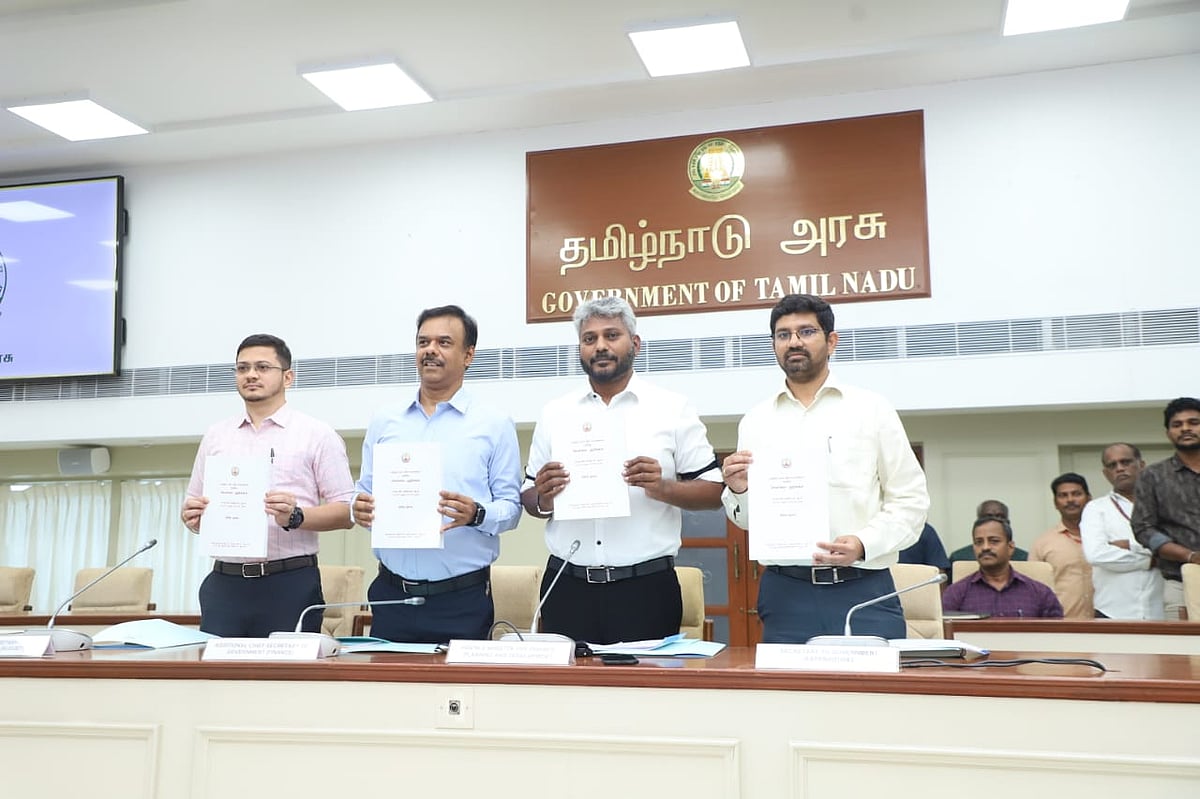
17. Based on the white paper released by the Tamil Nadu government, the government's direct debt was stated to be Rs. 10 lakh crore. By the end of 2026-27, the government's direct debt will exceed Rs. 11 lakh crore.
18. To repay the debt already borrowed, the Tamil Nadu government will have to repay Rs.60,413.42 crore in 2026-27. The reason for this is that, in addition, it will have to borrow Rs.2 lakh crore to manage a fiscal deficit of Rs.1.35 lakh crore.
19. As far as public sector enterprises are concerned, the Electricity Board alone will have to borrow Rs.60,000 crore.
20. Since the government transport corporations will need to borrow Rs.15,000 crore in 2026-27, the total debt of public sector enterprises will stand at Rs.5.75 lakh crore.
21. If the Tamil Nadu government's direct debt and the debt of public sector enterprises are added together, the Tamil Nadu government's total debt will stand at Rs.16.75 lakh crore.
Debt of Rs.8.58 lakh per family
22. By the end of the current year, since the government's total debt burden will rise to Rs.16.70 lakh crore, each person will have a debt of Rs.2,14,743. A family of four will have government debt of Rs.8,58,974.35 in its name.
23. For the debts of the Tamil Nadu government, interest of Rs. 80,000 crore will have to be paid in 2026-27.
24. For the loans taken by public sector enterprises, interest of about Rs. 48,875 crore will have to be paid.
25. Overall, for the debts of the government and public sector enterprises, interest payments of Rs. 1,28,875 crore per year will have to be made.
Economic growth will decline in 2026-27
26. In the next two years, while Tamil Nadu’s economy has achieved double-digit growth, it is unlikely to achieve the same level of economic growth in 2026-27 as well. Tamil Nadu’s economic growth in 2026-27 will be only around 8%.
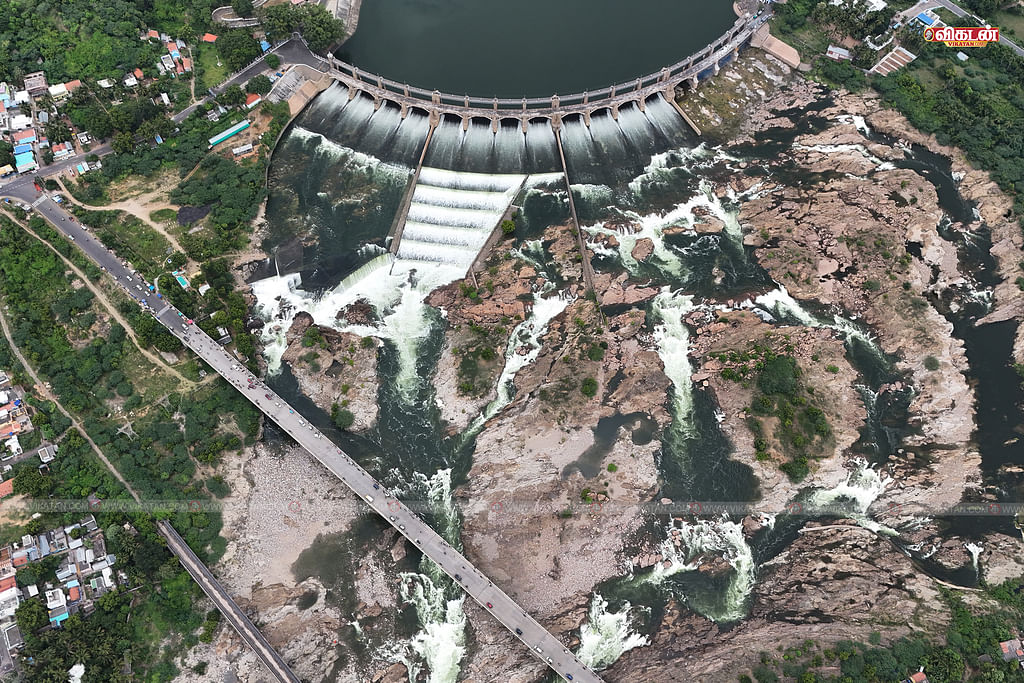
27. Since water has not been released from the Mettur dam, and the southwest monsoon has failed, while the northeast monsoon is also unlikely to bring adequate rainfall, agricultural production will decline significantly in 2026-27.
28. Since the growth of the services sector and the manufacturing sector will not match last year’s growth, Tamil Nadu’s overall economic growth will decline.
The borrowed loan was not used properly
29. Borrowing should be undertaken only for capital expenditures such as creating infrastructure facilities. However, this practice has not been followed over the past 5 years.
30. Although Rs. 5 lakh crore was borrowed over the past 5 years, only Rs. 2.16 lakh crore was spent as capital. The remaining Rs. 2.84 lakh crore and additional amounts were spent only to meet the revenue deficit.
Strategies for Improving the Financial Position
31. The share of committed expenditures, including salaries, pensions, and interest on debt, should be reduced from the current 61.70 percent to below 50 percent.
32. Administrative expenses for all departments of the Tamil Nadu government will be reduced by 15%.
33. Air travel by ministers other than the Chief Minister within Tamil Nadu is prohibited.
34. A ban is imposed on purchasing new cars for ministers, officials, and government departments.
Measures to increase tax revenue
35. Tamil Nadu’s own tax revenue was 5.93 percent of its Gross State Domestic Product five years ago. It has now fallen to 5.45 percent. This should be increased to 7 percent over the next 5 years.
36. Tamil Nadu’s economic growth should be raised to 12% to 13% per year.
37. The Union government’s laws should be amended so that the share of the Union government’s tax revenue allocated to the states is increased to 50%.

38. The additional cess and surcharge collected by the Union government should be merged with the basic taxes. With the aim of increasing the states’ share of revenue, the Tamil Nadu government will urge the Union government to carry out the above-mentioned reforms.
39. If the state government wants to strengthen its financial capacity, it must explore ways to increase non-tax revenue sources. Only then will the Tamil Nadu government be able to independently implement the schemes necessary for the state's development and the welfare of the people," it has been stated.