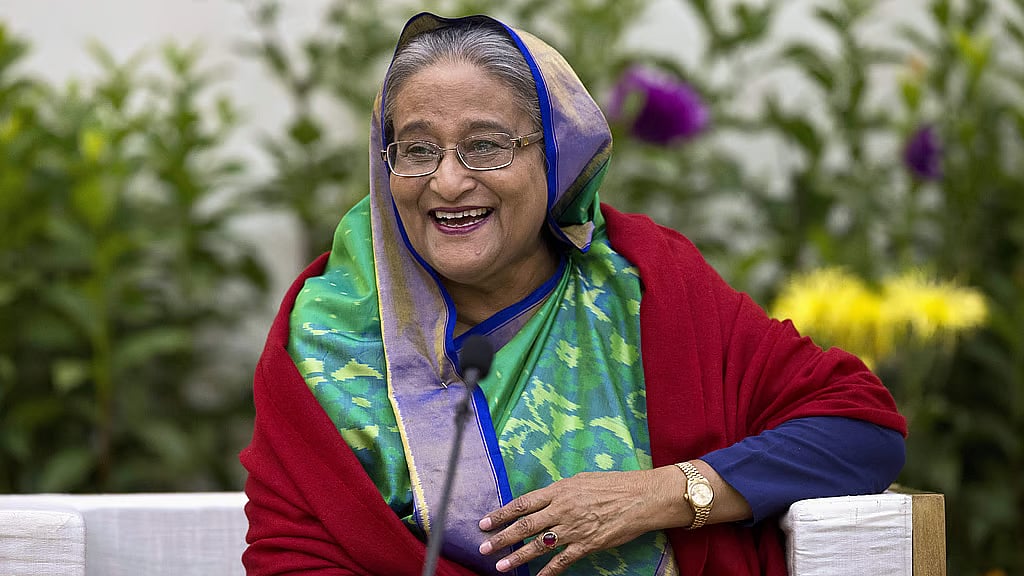
Following the popular uprising in Bangladesh in August 2024, the country’s former Prime Minister Sheikh Hasina, who has been taking refuge in India, has announced that she will return to her homeland by this coming December. Despite the threat of the death penalty, the ban on political parties, and security concerns, her decision has sparked intense debate in the political arena of the South Asian region.
Under the India-Bangladesh extradition treaty signed in 2013, India has the legal right to delay or refuse extradition by invoking provisions such as “politically motivated cases” and “the likelihood of not receiving a fair trial.”
If Sheikh Hasina is handed over, India will be seen on the international stage as a country that abandoned a leader who remained loyal to it. At the same time, by allowing her to continue staying in India, the current Bangladesh government and the people of that country may become dissatisfied with India.
“In this context, Sheikh Hasina’s announcement of returning to the country could not have been possible without the Indian government’s ‘implicit consent,’” say international political experts.
International press conference
As nearly two years come to an end since taking refuge in India, Sheikh Hasina has decided to meet international journalists in India for the first time. At an event organized via video conference by the Foreign Correspondents’ Club of South Asia (FCC) in Delhi for this purpose, Sheikh Hasina is expected to speak about her future plans and returning to her homeland.
Since landing in India, Sheikh Hasina has been kept at a secret location. In this situation, this press conference will be the first major public event she participates in. It is also noteworthy here that she is meeting journalists in Delhi on August 5, the same date on which the ‘2024’ coup took place.
Earlier, in an email sent by Sheikh Hasina to an international news agency, she emotionally said, ‘If I return home, I may be killed, arrested, or imprisoned. I know my fate well. Nevertheless, I want to return to my homeland because my people are calling me. If death is to come, let it happen on my own soil.’
India’s position
Regarding Bangladesh’s request to extradite her, Indian Ministry of External Affairs spokesperson Randhir Jaiswal said, “As a neighboring country, India will always stand by the people of Bangladesh for peace, democracy, and stability. India will continue to engage in dialogue with all stakeholders in that country on the Sheikh Hasina issue. The ‘extradition’ request will be handled in accordance with due legal procedures,” he said.
Following Sheikh Hasina’s departure from the country, widespread reports emerged that attacks against minorities, including Hindus living in Bangladesh, had increased. In this situation, Sheikh Hasina’s announcement of her return to her homeland has prompted the Indian Border Security Force to further strengthen security along the India-Bangladesh border.
The International Crimes Tribunal (ICT) in Bangladesh sentenced Sheikh Hasina to death in connection with the “2024” violence. This tribunal was established by the Bangladesh government in 2010 under the International Crimes (Tribunals) Act of 1973. Initially created to investigate war crimes committed during the 1971 War of Independence, its jurisdiction was expanded following the political change in 2024 to investigate charges of crimes against humanity.
The current government has already revoked Sheikh Hasina’s diplomatic passport. On this matter, Bangladesh’s Law Minister M. Asaduzzaman said, “Sheikh Hasina has the right to return to her homeland as a citizen. Since a death sentence is pending against her, under the country’s law she will be arrested as soon as she enters the border,” he said.
India’s intelligence agency, RAW, and international intelligence agencies have already warned that Sheikh Hasina’s life is in grave danger in her homeland from extremist groups and political opponents.
“Against this backdrop, with the Awami League party banned and its leaders arrested, Sheikh Hasina may believe that appearing in person and facing the cases is the only way to revive her supporters,” say international political analysts.
The public mood
The student groups that led the “2024” revolution and the National Citizens’ Party are urging that the death sentence against Sheikh Hasina be carried out immediately. The Bangladesh Nationalist Party and the Jamaat-e-Islami parties have criticized her, saying that her return would disturb the country’s peace.
Sheikh Hasina’s announcement of “returning to the homeland” is not merely a call for a legal battle; it is regarded as the biggest political challenge she is issuing to the current rulers of Bangladesh. Whether she will actually return to Bangladesh or is, through her announcement, once again stirring up turmoil in that country’s politics and testing the ground-level political climate will become clear only in the months ahead.