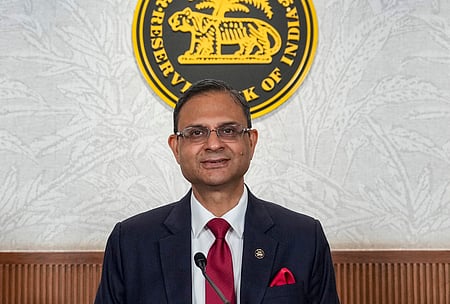
Amid global trade uncertainties and geopolitical tensions, the Reserve Bank of India (RBI) announced on Wednesday that the interest rate on short-term loans it provides to banks, the repo rate, will remain unchanged at 5.25 percent.
The six-member committee unanimously took this decision at the RBI Monetary Policy Committee meeting held in Mumbai under the chairmanship of RBI Governor Sanjay Malhotra. Therefore, there will be no change in home loans, vehicle loans, personal loans, and others.
The West Asian conflict and the war between Iran and the United States have led to an economic crisis at the international level. This has continued to pose a major challenge to the global economy. In this situation, the RBI has decided to study the impact on the country’s economy and take further action. Therefore, the repo rate will now remain unchanged at 5.25 percent. At the same time, the Monetary Policy Committee also retained its neutral policy stance. The country’s economy performed better than expected in the April-June quarter of this financial year.
The Reserve Bank has lowered its consumer price index inflation forecast for the 2027 fiscal year to 5 percent from the previously estimated 5.1 percent.
Earlier, the interest rate was also left unchanged at the monetary policy committee meeting held in July.
The country’s gross domestic product for the current fiscal year is projected to be 6.7 percent. This is 10 basis points higher than the previous forecast.
Reserve Bank Governor Sanjay Malhotra pointed out that global trade uncertainties persist due to the United States’ new trade tariff measures, as well as the fluctuations seen in crude oil prices and financial markets caused by the crisis in West Asian countries.
He also noted that although inflation is lower than its previous peaks, it has risen slightly in recent months. Factors such as crude oil prices, exchange rate fluctuations, and geopolitical events continue to affect inflation. However, inflation remains within the permitted range set by the Reserve Bank.
As far as the domestic environment is concerned, economic activity continues firmly, supported by strong growth momentum, favorable monsoon rains, and continued foreign capital inflows.
Malhotra said that the country’s economy continues to show resilience, while also warning that signs of stress are visible in some sectors.
He also noted that a cautious approach is needed in policy decisions, as significant risks remain in both inflation and growth prospects.