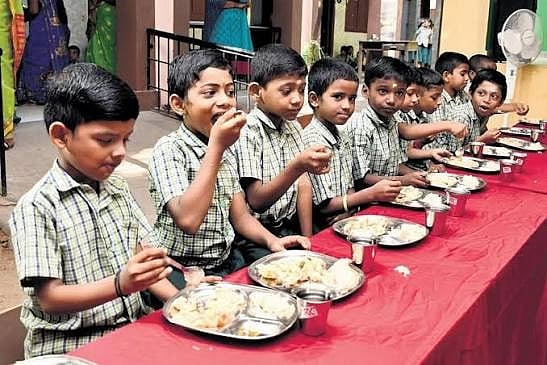
The Tamil Nadu government has issued the conditions for companies participating in the tender invited for the Perunthalaivar Kamarajar breakfast scheme.
Based on the objectives of preventing nutritional deficiencies among children who come to school hungry and increasing attendance, the Chief Minister’s Breakfast Scheme for students studying in classes 1 to 5 in Tamil Nadu government schools was launched on Sept. 15, 2022.
With the scheme expanded to government-aided schools as well, a total of 19.34 lakh students are benefiting from it.
Next, this scheme will be expanded up to eighth grade from Sept. 17, as directed by Chief Minister Joseph Vijay. Through this, an additional 15.14 lakh students studying in government and government-aided schools will benefit.
Approval for Rs. 217 crore: Meanwhile, this scheme has been renamed the ‘Perunthalaivar Kamarajar Breakfast Scheme’. An amount of Rs. 343 crore will be spent annually on this scheme. For the initial requirements in the current financial year, approval of Rs. 217 crore has been granted for this scheme in the 2026-27 financial year.
At this stage, tender notices have been issued regarding the supply of food for the next 3 years under the school breakfast scheme for school students.
13 types of food: The Tamil Nadu government has released the conditions for companies participating in the tender for the Kamarajar Breakfast Scheme. Accordingly, one type of food must be supplied each day from among 13 types. Four types of upma, four types of kichadi, three types of pongal, and two types of kesari must be provided.
It is essential that hot food be delivered to schools by 7:30 a.m. every day. Breakfast must be provided with 294 calories of nutrition. The weight of the meal must be between 150 and 200 grams.
The headmaster’s approval is mandatory for contractors to receive payment. The monthly amount will be paid to the contractor after obtaining the headmaster’s certificate. The quality of the food will be continuously monitored by Food Safety Department officials and through inspections. At the same time, conditions have been imposed, including monitoring food distribution through a mobile app.