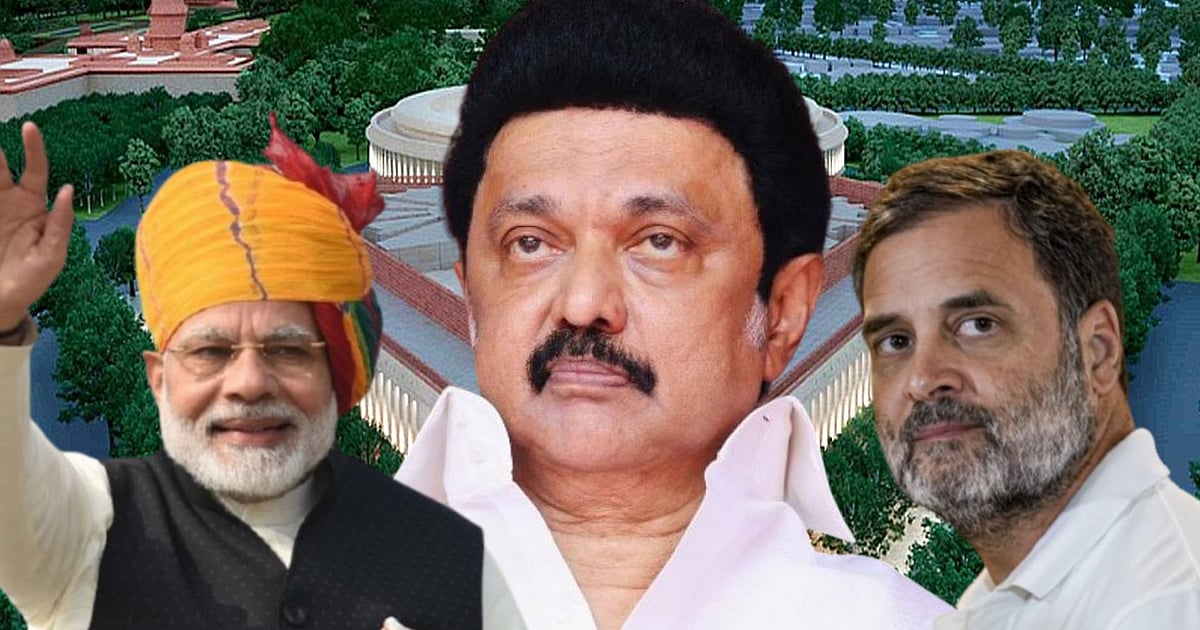
Although it is a regional party in Indian politics, the DMK has always remained a key factor in determining national-level outcomes.
In particular, in the 'India' alliance formed at the all-India level against the BJP, the DMK and its 22 Members of Parliament served as very important pillars.
The DMK, which stood as a strong voice against the BJP both ideologically and in Parliament, was seen as the principal force in the Congress-led alliance at the national level.
However, after the recent results of the Tamil Nadu Assembly elections, the state’s political climate has been turned upside down.
Will DMK contest the parliamentary election on its own?
On the very day the election results were announced, the Congress party exited the DMK alliance and officially joined in support of TVK forming the government.
Amid the political ripples that arose in between, the DMK began boycotting the consultation meetings of the INDIA alliance.
Following this, DMK MP Kanimozhi’s participation in the tea party hosted by Speaker Om Birla yesterday (August 14), and her open declaration that “we are not part of the INDIA alliance,” have sparked debate.
In the context of DMK’s exit from the ‘India’ alliance, will the party contest the upcoming 2029 parliamentary election on its own? Or will it form a new third front? Or will it join hands with the BJP? We spoke at length with journalist Swaminathan, raising these questions.
‘There are no permanent friends or permanent enemies in politics’!
``We see various actions in the DMK’s stance. At the same time, notable changes can also be seen among members of the Bharatiya Janata Party. For example, Vanathi Srinivasan uses the saying, 'There are no permanent friends in politics, and no permanent enemies either,' even at press conferences.
In Tamil Nadu, both major Dravidian movements have suffered major defeats in the two parliamentary elections in which they contested separately without a prime ministerial candidate. First, in the 2014 parliamentary election, the DMK contested on its own. At that time, the Congress-DMK alliance had broken up.

'Modi or this Lady?' campaign
On the other hand, even though the Anna Dravida Munnetra Kazhagam contested independently, Ms. Jayalalithaa put forward the strategy of 'Modi or this Lady?'. As a result, the DMK lost its deposit in many constituencies on the ground. It did not win a single constituency. The AIADMK won in 37 constituencies. In the National Democratic Alliance, Pon. Radhakrishnan won in Kanyakumari and Anbumani won in Dharmapuri.
2014 - 2024 Election
A similar situation arose in 2024 as well. The AIADMK, without a prime ministerial candidate, stood alone and lost in all constituencies. It lost its deposit in eight constituencies. Therefore, both the 2014 and 2024 elections teach a lesson. No matter how large a Dravidian movement it may be, these are proof of what the outcome will be if it does not field a prime ministerial candidate in a parliamentary election.
However, even in such circumstances, people have ignored only one Dravidian movement or another. In 2014, AIADMK survived; DMK fell. In 2024, DMK, with its alliance, survived; AIADMK fell. All these assessments reflect the situation before Vijay’s entry into politics. Now Vijay has also joined the contest.
Double enemies for DMK
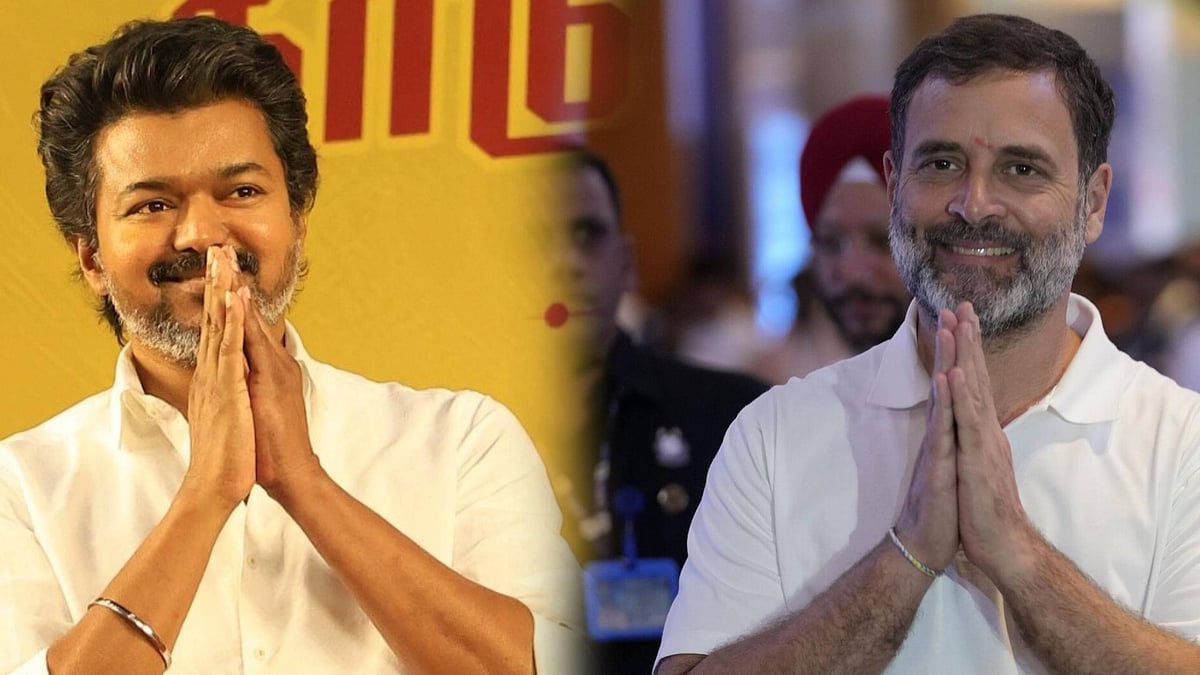
DMK is currently not firmly aligned with a nationwide alliance. There are many reasons for this, but the main one is its actions against alliance discipline. As a result, DMK now has two enemies. First, the right-wing anti-politics it has long opposed (anti-BJP politics). Second, the pressure of having to answer for its betrayals against the Congress. This has created confusion within the party over who the primary enemy is among these two.
Will DMK form a third front?
Looking at these two rivals, the Congress party is not in power either at the Centre or in the state. Therefore, there is a possibility that the DMK may make a small compromise and move closer to the BJP. Otherwise, it may form a third front and weaken Congress at the national level, thereby helping the BJP.
Although many events have taken place in the state, such as the struggle for the NEET exam and the issue of constituency delimitation, the DMK has not directly sent its cadres into the field of protest.

It is part of a soft-handling approach!
It registers its opposition only through reports and Murasoli articles, and does not show any strong opposition to the BJP on the ground.
Leaving aside the 100-day achievement list of the TVK, during this period the actions of investigative agencies against ministers and key figures have intensified. With new entrants like TVK already waiting to target them, the DMK has been following a soft approach, believing there is no need to unnecessarily antagonize the BJP. Participating in the Governor’s tea party was also part of such a soft-handling approach.
It may cause a setback!
From the BJP’s perspective, criticizing the DMK as a corrupt party until yesterday and then suddenly joining hands with them could backfire. As a result, among the votes the BJP has received so far, the votes of those who do not like the DMK may shift toward Annamalai. Moreover, since the right wing believes that the TVK party gives greater importance to minorities, it will be difficult for the BJP to move toward TVK.
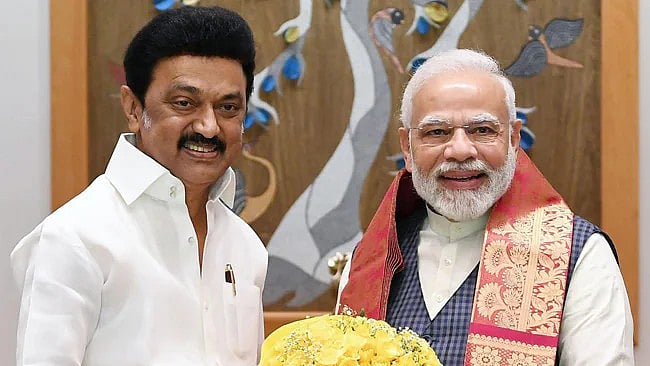
“Even though an immediate alliance between the DMK and the BJP has not materialized, the current situation on the ground is that the DMK is adopting a soft approach toward the BJP for the time being, keeping the future in mind,” he explained.