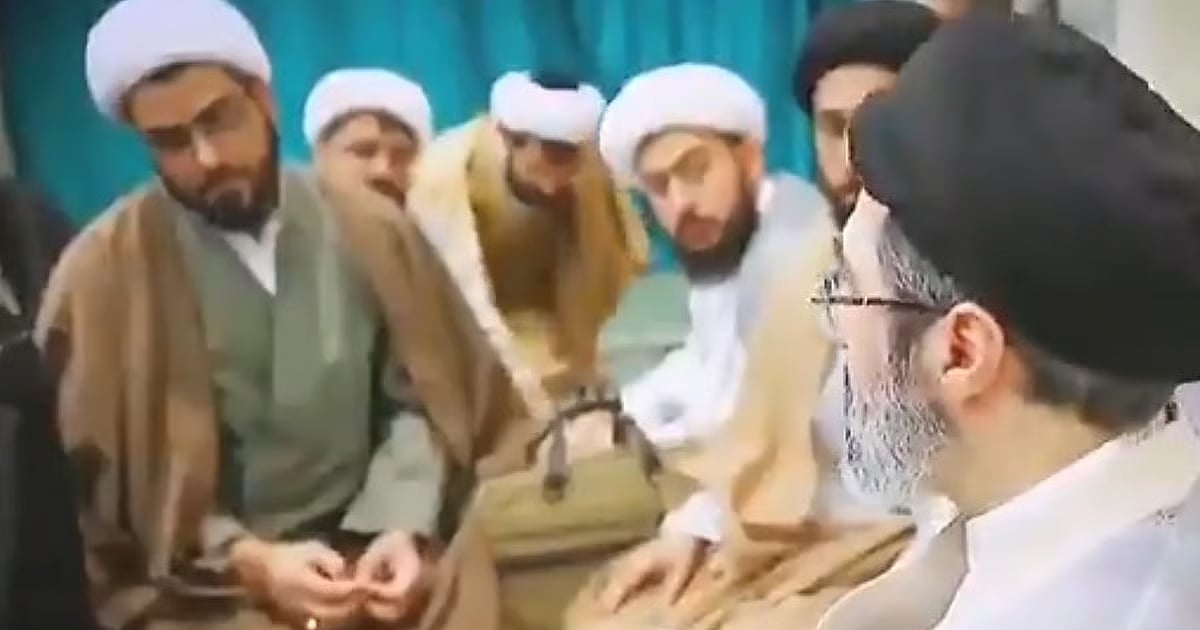
Earlier this year, the United States and Israel carried out a joint attack in Iran. On February 28, Iran’s supreme religious leader, Ayatollah Ali Khamenei, was assassinated in joint U.S.-Israeli military strikes. In the following days, the Ayatollah’s son, Mojtaba Khamenei, assumed the position of supreme leader. However, since his selection, Mojtaba has not been seen in public. He remains in hiding.
Reports emerged that Mojtaba Khamenei was injured in attacks by the United States and Israel and had been receiving treatment at a highly secret location. Israel had repeatedly said that Mojtaba would die soon and that he was being treated in a very critical condition. Confirming this, a recent report published by an Israeli media outlet stated that Khamenei was in a very dangerous condition.

In a report published by The Jerusalem Post citing numerous sources, it said that concerns about his health are spreading within Iran’s leadership.
Khamenei video release
It also stated that we would not be surprised if news of his death were heard soon. In addition, Iran’s President Masoud Pezeshkian had noted in a television interview that direct contact with Khamenei is currently very difficult. Following this, a video of Mojtaba Khamenei has been released to put an end to the speculation. An official news agency run by the Islamic Development Organization of the Iranian government has, for the first time, released a video of Mojtaba Khamenei.
Last July, the Saudi news agency Al-Hadath, citing an Israeli security source, said that Khamenei was not in Iran. In reports released by Western and intelligence sources, it was often stated that he had suffered serious injuries, yet he continued issuing statements without appearing in public directly. As a result, suspicion about him has continued.
We will not charge ships
Vice President J.D. Vance said that Iran has told the United States it does not plan to impose charges on ships in the Strait of Hormuz. J.D. Vance said that Iran has assured Washington that it does not want to impose transit fees on ships passing through the Strait of Hormuz, one of the world’s most important energy routes. "Iran has told us that there is no plan to charge commercial shipping using the waterway.
Some people in Iran, of course, are talking about fees. The Iranians have told us that there is no plan to charge for the Strait of Hormuz. But, in reality, we are going to see what actions are actually taking place. The Gulf countries also support the resumption of normal shipping and energy trade through the region. In any case, the United States will be judged by its actions rather than Iran's statements," he said