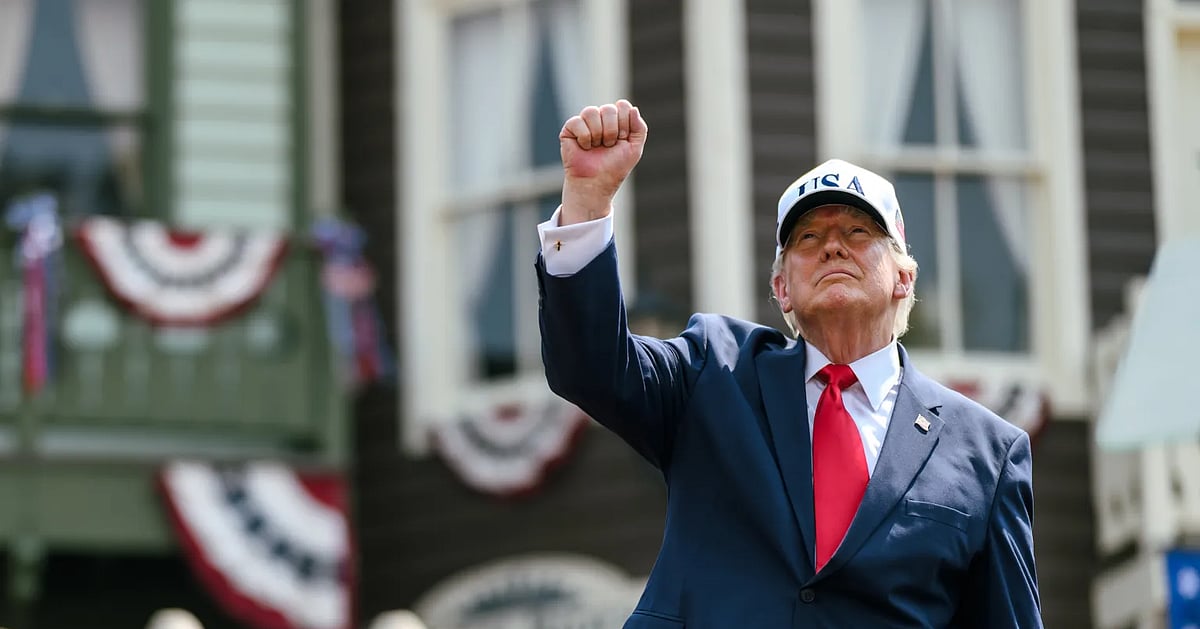
The biggest headache the world’s countries have been facing since Trump took office as U.S. president is “tariffs.”
Trump says that countries around the world have been cheating the United States and collecting high tariffs. So, he says he is imposing higher tariffs on those countries, and he has been continuously taking every step toward that.
Whatever comes his way—lawsuits, court rulings, and more—Trump keeps finding new and new routes to impose tariffs on countries around the world.
So wouldn’t the countries of the world also find ways to escape these tariffs?
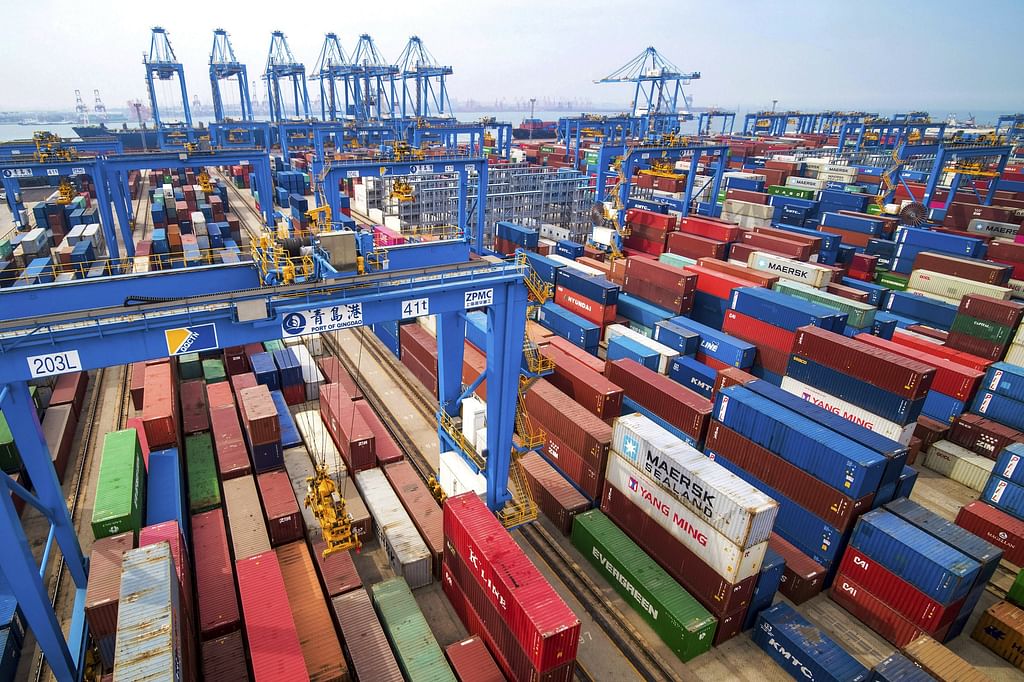
What scam?
Among the tariffs currently imposed by the United States, some countries have been assigned lower rates. As a result, countries facing higher tariffs first export their goods to countries with lower tariffs, and from there those goods are exported to the United States.
Through this, those countries are evading U.S. tariffs. This is called a 'Transshipment Scam'.
The White House has issued a statement strongly condemning this scam. The data mentioned in it...
According to Goldman Sachs and Altana’s estimate, this annual indirect trade market ranges from $40 billion to $303 billion (Altana estimate).
The resulting tax revenue loss for the United States: based on calculations, it could be approximately $10 billion to $136 billion per year.
Impact on the overall economy (on average): about 450,000 jobs lost, a GDP loss of $113 billion to $150 billion, and a federal revenue loss of $19 billion to $26 billion.
Which countries are involved in the fraud?
The United States accuses Canada, the European Union, India, Israel, Japan, Mexico, South Korea, and Taiwan of carrying out this fraud.
The U.S. administration has planned to uncover this fraud through Agreements on Reciprocal Trade (ARTs), Executive Order 14411, and artificial intelligence border surveillance.
> Agreements on Reciprocal Trade: New trade agreements have specifically included rules of origin 'to prevent third countries from receiving benefits on a large scale.'
> Executive Order 14411: This was created to prevent fake international importers and opaque supply chains.
This includes tightening the rules for importer registrations, raising bond/domestic asset requirements, making it mandatory to disclose details about company owners/affiliates, adding eligibility requirements, strengthening penalties, and increasing trade transparency.
> Artificial Intelligence Border Surveillance: This is a state-of-the-art AI/ML technology system for the U.S. Customs and Border Protection (CBP).
It integrates shipment data, route histories, product classifications, corporate ownership links, satellite/computer imagery, and anomaly-detection methods to identify high-risk cargo.
It also turns that information into inspections, fines, and tax-collection actions.
Trump came to power through the “Make America Great Again” campaign. This is said to be one of its measures.