Civilization and technological advancements periodically push human society into certain trends. As if not joining the trend were some great disaster, people gather together in crowds and unite around it. Then those trends fade away and another one emerges. This keeps happening in a cycle. Sometimes new trends begin in some Western countries and spread to other regions, and sometimes they begin in Asia and spread all the way to Europe.
On closer inspection, everything that is listed as progress in the civilized world seems to come with some kind of collateral damage as a free gift to human society. Surviving it or getting caught in it is a matter of each person’s own skill.
In that sense, a new trend has now emerged. Young couples are the dark target group of this trend. For now, it is mostly seen in the Western world, in places like Britain, the United States, and Germany.
Let us briefly look at the name of this new trend that is becoming popular among young couples, what it is, and what it means. “Food divorce” — that is the name of the trend that is becoming popular among young couples.
What does ‘food divorce’ mean?
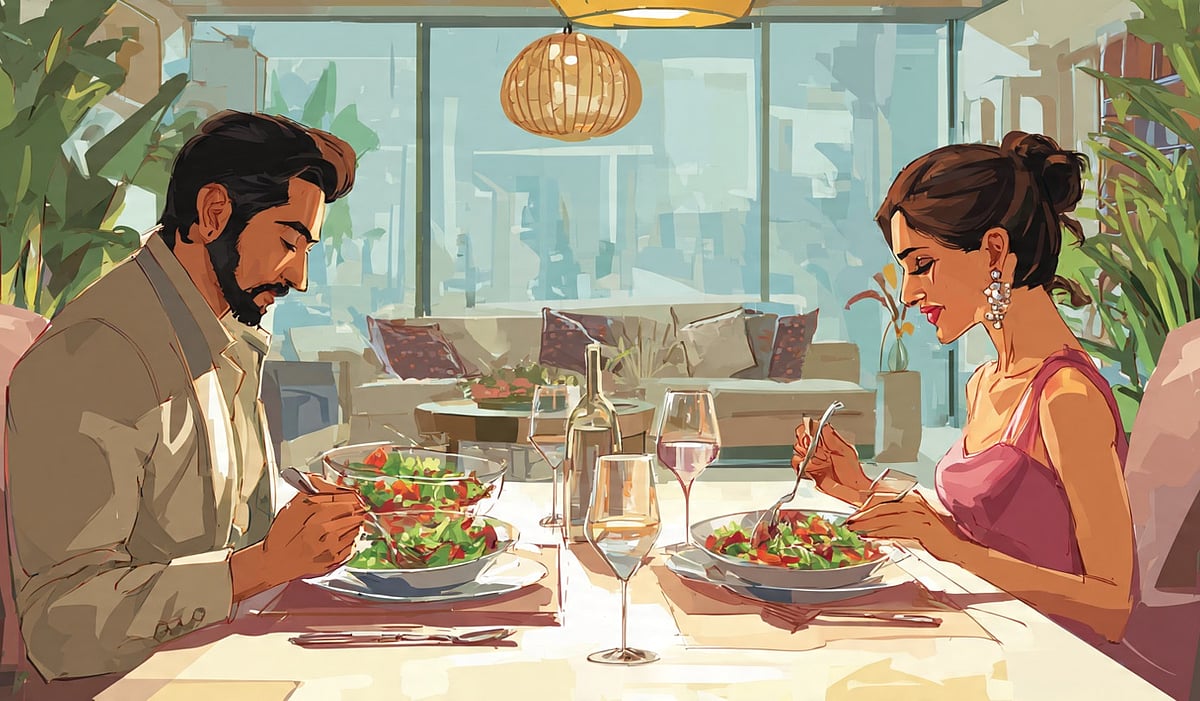
In simple terms, ‘food divorce’ means a couple buying their food ingredients separately, cooking separately, and eating separately.
No matter how big the disagreement, when people sit together and share a cup of coffee or tea, or a meal, a harmonious atmosphere can emerge. This applies to everyone, whether friends, couples, or office colleagues. It has existed around the world like a cherished tradition. But in the current ‘food divorce’ trend, people eat separately, much like a ‘take diversion’.
A scientific argument is also put forward behind this. In modern times, even when people are married, individual preferences and freedom take priority. As a result, their food preferences also differ. It is argued that diet choices, work schedules, and taking GLP-1 class medications such as Mounjaro and Ozempic are causing changes in couples’ mealtimes and eating habits.
GLP-1 class medications and their effects!
Another related question may arise: what exactly are GLP-1 class drugs? GLP-1 (Glucagon-like peptide-1) is a hormone. It helps regulate blood sugar levels, increases insulin secretion, and reduces appetite while making you feel full.
In medicine, these are generally used to control Type 2 Diabetes. They are also used in weight-loss treatment. They are available either as injections or as tablets. These GLP-1 class drugs are now widely used among the younger generation, especially among celebrities.
Beyond just weight loss, people taking this kind of medication appear to be skin wrapped over bones, with only a little flesh beneath. Reports emerged in Bollywood that popular producer and director Karan Johar was using Ozempic. As criticism intensified around him after his drastic weight loss, he had said, “I have not used Ozempic. No one knows what the truth is. I don’t want to say it either.”
This is the situation in Britain!
Okay, let’s return to “food divorce.” Dr. Leila Fathi, a researcher at the Food Policy Center at City St George’s University of London, says, “People taking GLP-1 medications will experience a change in their interest in food. This is because common side effects of GLP-1 drugs include nausea and a reduced appetite. This can reshape an individual’s relationship with food. As a result, differences in eating habits may arise between couples. That negative trend gradually leads couples to prepare and eat food separately.” This is what is referred to as “food divorce.”
Fast Food, Processed Food, and Allergies!
Fatty says that fast foods, processed foods, and ultra-processed foods have multiplied food-related allergies among people in Britain.
“People have become used to relying more and more on pre-prepared, ready-to-eat foods. The food industry is introducing more and more ultra-processed foods into the market. And as people become obsessed with fitness and dieting, the availability and use of ‘high protein’ ultra-processed foods has also increased. This has narrowed people’s habits of cooking food and eating together as a family,” says Fatty.
Moreover, Fathi says that the average amount of time British people spend after their education, work hours, and other duties on time set aside exclusively for themselves has become 3 hours and 44 minutes, and that during that time they immerse themselves in entertainment, leisure activities, and socializing, which is why they turn to ready-made meals. As a result, the habit of cooking and eating together, or going to a restaurant and eating together, has given way to everyone eating according to their own preference, at a time that suits them.
This is how ‘food divorce’ became a trend among couples: 7% of people in Britain are taking Ozempic medications. Statistics show that this is why couples in Britain are increasingly shopping for groceries separately, cooking separately, and eating separately.
According to March 2026 statistics, 12% of Americans aged 18 and above are taking Ozempic and Wegovy medications. Reports have also emerged that the ‘food divorce’ trend is quite prevalent there as well.
Eating habits and relationship issues!
Psychological counselors in Britain are expressing concern that changes in eating habits caused by Ozempic medications are creating rifts between couples in the country. However, some couples taking Ozempic say that simply sitting together at the dining table and eating does not determine a relationship. Some say that eating whenever one wants, as desired, is a kind of freedom. A young woman in Britain says that she even ate the food served on her wedding day by herself, and that this did not affect their relationship.
However, food habits do indeed cause relationship problems. Social activists say it cannot be denied that “food divorce” also creates permanent separation among couples.
Is food just food!
Food is essential for survival. But today, food is no longer just about meeting that basic need. Food has become part of one’s identity. From eating properly to doing the right exercise and staying healthy, the pressure on every individual has increased. No one has the right answers to these pressures. Every individual’s body has different needs. The foods each person’s body accepts or does not accept also vary. The exercises they need will certainly differ as well. In this, nothing can be definitively defined as “this is right” or “this should never be done.” In such a situation, all the pressure imposed ends up surfacing in trends like “food divorce.”
Like the beauty products industry, this can be seen as a result of the diet and fitness industries beginning to view the entire global population as consumers.