
Since 2014, the central government has been blending ethanol into petrol to reduce dependence on foreign countries for crude oil and to cut carbon dioxide emissions. Petrol blended with 20% ethanol is currently being sold in India. However, opposition to this petrol is growing among motorists due to 'reduced vehicle mileage, engine problems, and vehicle incompatibility.'
In addition, just as an organization called the `Cockroach Janata Party' was formed, an organization called the 'E20 Janata Party' has also emerged to oppose the blending of 20% ethanol in petrol.
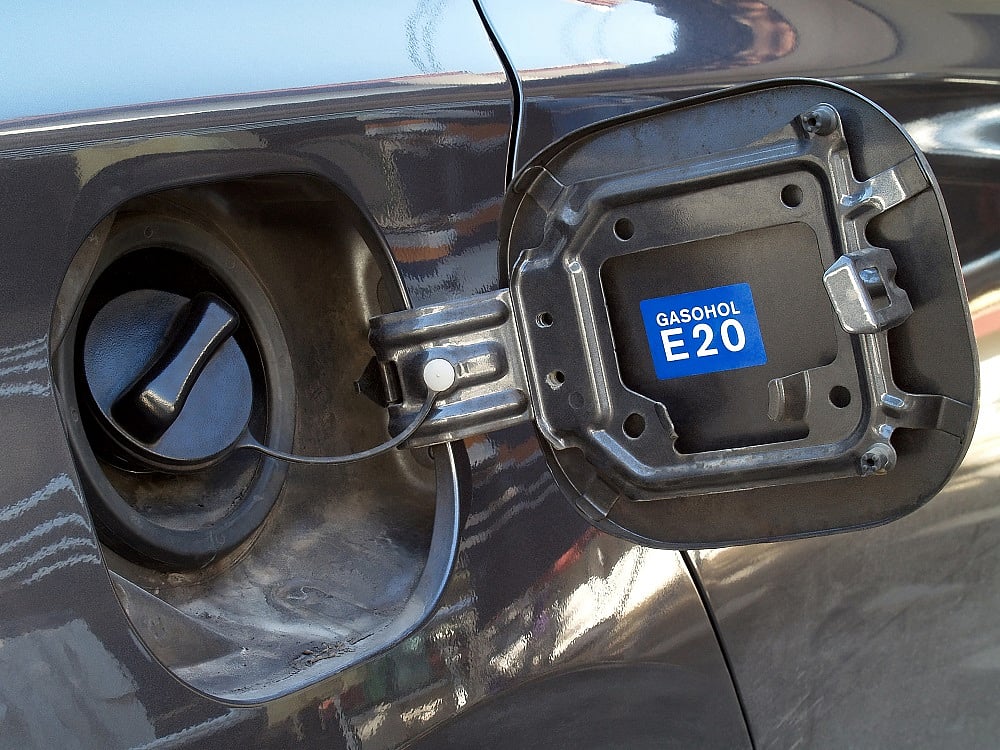
This organization, which demanded that “100% pure petrol should be sold and consumers should be given the right to choose fuel,” had also stated that “Nitin Gadkari should resign.”
Responding in the Lok Sabha to questions raised by the opposition regarding this petrol, Nitin Gadkari said, “Indian Oil Corporation and other companies jointly tested the quality and potency of E20 fuel in BS-3 and BS-4 vehicles. In this test, depending on the type and age of the vehicle, it was found that the fuel requirement of vehicles could decrease by 2 to 6 percent.
Through this, the country’s fuel expenditure has the potential to come down by up to 6 percent. It was also found that no faults were caused by E20 petrol in engine life tests conducted on dynamometers or in vehicle tests carried out on roads,” he said.
In this situation, the Society of Indian Automobile Manufacturers (SIAM) has sent a letter to the Central Government. In it, it says, ``Due to the chloride issue, the damage to customers’ vehicle parts and the need to replace them has increased significantly in recent times. This chloride issue has been seen on a much larger scale only after the introduction of E20 fuel.
E20 fuel contains excessive moisture. Because of this, the vehicle may stop on the road immediately after refueling. Over time, it can completely damage engine parts. Therefore, it is very important to include chloride levels in fuel quality control regulations and to enforce quality control to prevent customers’ vehicles from breaking down,” it notes.
To discuss the problems faced by petrol dealers due to E20 petrol, we contacted K.P. Murali, president of the Tamil Nadu Petroleum Dealers Association. He said, “Since April 2025, as per the Central Government’s directive, only E20 petrol has been supplied at the distribution centers of all public sector oil companies. As a result, only ethanol-blended petrol is currently being distributed to the public at all petrol pumps across the country.
Initially, the general public and vehicle owners did not have adequate awareness that the fuel they were using was E20 petrol. However, when mileage in vehicles decreased, they mistakenly assumed that less petrol was being dispensed at petrol pumps. Only after reports appeared through the media about E20 and that it could reduce mileage by 3% to 6% did people come to know the real situation.
The vehicle manufacturing companies themselves should answer the question of whether ethanol petrol causes engine problems or reduced mileage. Likewise, petrol pump owners (dealers) are merely suppliers.
Their only job is to distribute to the public the fuel supplied by oil companies at the price fixed by the government. They have not yet been provided with the technical facilities to fully test its quality.

The biggest challenge for petrol pump owners due to E20 petrol is the monsoon season. Ethanol naturally has the property of dissolving easily in water. At petrol pumps, petrol is stored in underground storage tanks. If there is any leakage and even a small amount of rainwater gets inside, all the ethanol in the tank can turn into water.
As a result, the petrol’s color fades and becomes contaminated, and there is also a risk of water reaching vehicles through the dispenser. This not only affects customers but can also cause dealers financial losses running into lakhs.
To find a solution to these issues, we, on behalf of the Petrol Pump Owners Association, have put forward some important demands to the oil companies and the government.
At petrol pumps, instead of mentioning only "petrol," the boards should specify "EBMS" (Ethanol Blended Motor Spirit) or E20 petrol, as stated on the invoice.
Dealers should be provided with the appropriate equipment and training to verify whether petrol contains the correct 20% ethanol content and to check its quality.
Underground tanks should be converted into a completely waterproof structure. They should be fitted with "Auto Cut-off" technology that automatically stops the pump if water enters the tank.
When fuel is dispatched from the tanker lorries of oil companies, it should be ensured that there is no water leakage in it before sending it," he noted.
With the central government's explanation and the vehicle manufacturers' letter at odds, to understand this in detail, we spoke with Dr. E. Rajasekar, former professor at the Department of Automobile Engineering (IRTT).
He said, “All new vehicles currently being manufactured are being built with design and engine technology suited for E20 petrol. However, older vehicles manufactured about 4 to 5 years ago were designed to use only pure gasoline.
When E20 petrol is poured into these older vehicles, many engine-related technical problems arise. Ethanol’s energy density is lower than that of regular petrol. When ethanol is blended with petrol, its overall energy content decreases, so a vehicle’s mileage may drop by about 6% to 8%.
Moreover, although oil companies purchase one liter of ethanol for roughly Rs. 70, when they sell it to the public as E20 petrol, they sell it at the same price as full petrol. As a result, consumers do not save money, and only mileage and engine power decrease.
Even now in India, it is common to see middle-class people refurbishing and using vehicles that are 15 to 20 years old. New vehicles are less affected because they have Fuel Injection technology. But older vehicles have only a Carburetor system. Ethanol, which has hygroscopic properties that absorb moisture from the air, can even when a vehicle is left unused for long periods, absorb moisture from the air through the petrol tank vent hole and separate the water from the petrol. As a result, rusting and damage occur in the petrol tank, carburetor, and engine parts.

In the current situation, those who own older vehicles can follow a few practices to reduce the impact caused by E20 petrol:
Avoid leaving the vehicle parked without running it for long periods.
It is good to refill with fresh petrol from time to time when needed.
It is better not to keep the fuel tank empty; keep it filled to some extent. If the tank is empty, air enters inside and, through condensation, water droplets form, increasing corrosion.
Furthermore, vehicle manufacturers should provide clear information about the fuel compatibility of each vehicle. Consumers should also receive accurate information. The quality of the fuel and storage methods should be properly monitored," he said.

The E20 ethanol-blended petrol program is an important initiative to reduce the country’s crude oil import burden and control environmental pollution. However, practical issues such as engine problems in older vehicles, reduced mileage, and maintenance challenges faced by petrol pump owners have not yet been fully resolved. Therefore, the government, vehicle manufacturers, and oil companies should work together to enforce strict quality control and address technical shortcomings.
At the same time, providing consumers with the right to choose cleaner petrol and transparent awareness will be the lasting solution to ensuring public trust in this scheme.