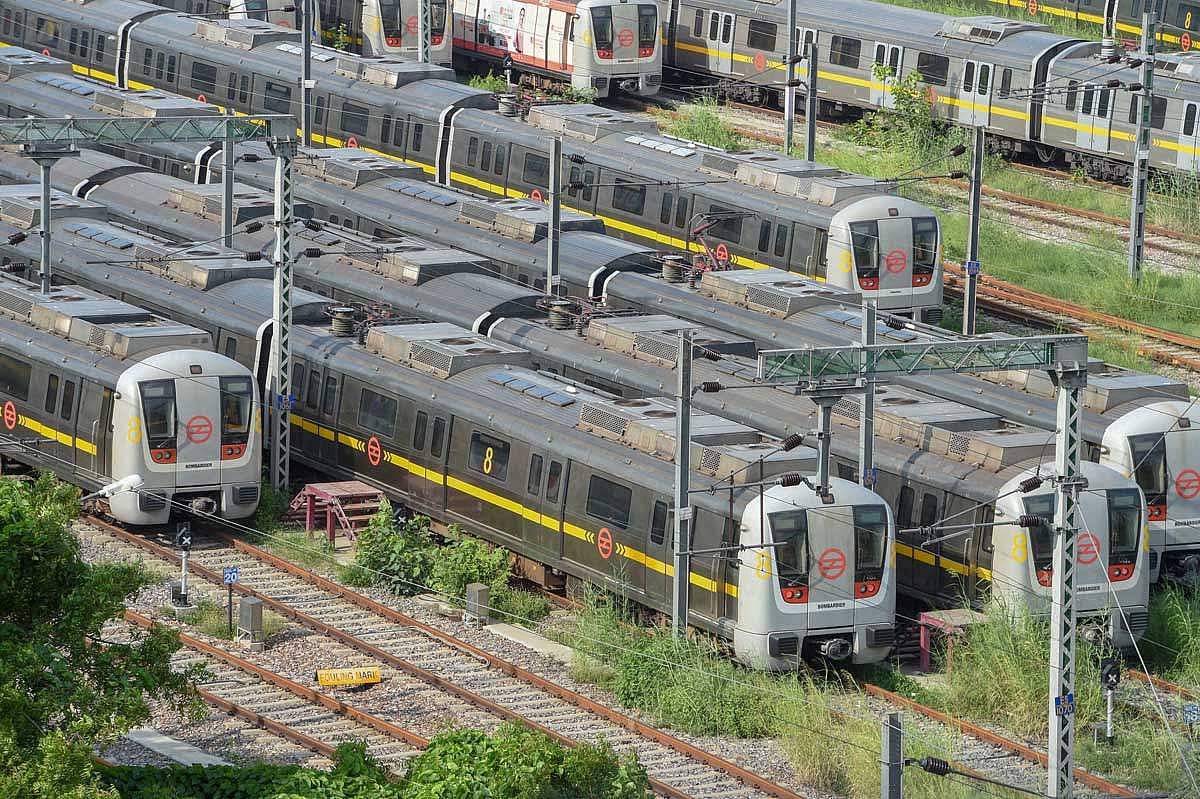
Delhi Metro trains recorded 99.95 percent on-time performance in 2026, and despite years of expansion, its network continues to maintain high operational reliability, the DMRC said on Sunday.
According to the press release issued in this regard: The Delhi Metro Rail Corporation (DMRC) has seen its daily passenger ridership rise from about 82,000 passenger trips in its first year to an average of 64.06 lakh trips now. The network recorded its highest single-day ridership of more than 81 lakh passenger trips on August 8, 2025. DMRC’s punctuality benchmark is strict. A train is considered delayed if it reaches its destination more than 59 seconds late.
Rail punctuality, which was 98.27 percent in 2003, increased to 99.64 percent in 2005 and has remained at 99.9 percent in subsequent years. The average distance traveled by metro trains before a service delay, measured by mean distance between failures (MDBF), was 2.72 million car kilometers. The international benchmark of the Community of Metros, a federation of 45 metro systems, has placed Delhi Metro among the top five systems globally in terms of reliability, based on the two-minute delay benchmark.
At some busy stations, the interval between trains has been reduced from seven minutes to 2 minutes 18 seconds in the early years of rail operation. About 29 percent of the Delhi Metro network is currently operated under unattended train operation. The Pink Line, or Line 7, has 45 stations spanning 71.55 km and is operated using driverless technology. This route provides interchanges with most other Delhi Metro lines and offers alternate routes across the network.
Delhi Metro began operations on December 25, 2002, with a 8.4-km stretch between Shahdara and Tis Hazari covering six stations.
This network has expanded to 416.5 km, with 303 stations across 12 corridors and 31 interchange stations connecting Delhi and the National Capital Region, it has been reported.