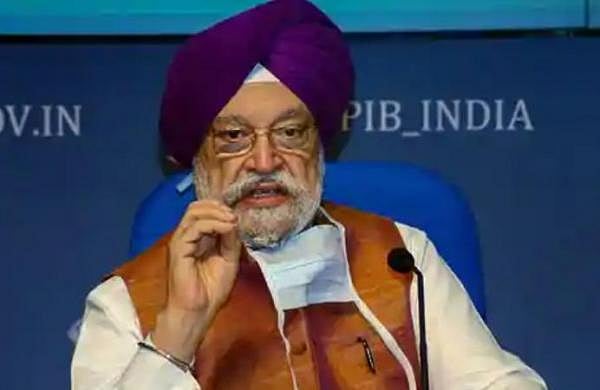
The country’s crude oil reserves have not declined; crude oil sufficient for 60 days is always kept in stock, and there is no shortage of it, said Petroleum Minister Hardeep Singh Puri.
Speaking on this at an event of the Confederation of Indian Industry (CII) held in New Delhi on Friday, he said:
At the beginning of this year, during the Iran (West Asia) war, the Strait of Hormuz was closed. Even then, although the movement of crude oil tankers and gas tankers through that strait was disrupted, the government kept the supply of petrol and diesel in India steady without any shortage.
Before the war, India imported 50 percent of the crude oil it needed (from Gulf countries) through that strait. Likewise, 90 percent of LPG cooking gas and 60 percent of gas were also imported through that strait. This was disrupted by the war. However, to prevent a shortage of petrol and diesel in the country, India bought additional crude oil from other countries. It also increased crude oil refining capacity and domestic production. As a result, there was no shortage of petrol or diesel in the country.
India used to buy crude oil from 27 countries. That number has now increased to 41. In 2014, there were 52,000 petrol retail outlets in the country. But now there are 107,000 petrol retail outlets. The country’s crude oil reserves have also not declined. Crude oil sufficient for 60 days is always kept in reserve. There is no shortage in that.
The United States has emerged as the country exporting the most LPG gas to India. We import 67 percent of the LPG gas needed by our country from the United States alone.
Do not believe the information being circulated regarding E20 petrol sales. Before any complaints arose, oil companies had already conducted extensive testing of E20 petrol on a very large scale. Over the past 4 years, petrol and diesel prices in India remained low because of the bold decision taken by the Central Government led by Prime Minister Modi to reduce excise duty three times. In the past few years, petrol and diesel prices have risen by only 4 or 5 percent. But excise duty was reduced by Rs. 10 per litre on petrol and diesel prices. That is why India was able to remain one of the countries with the lowest petrol and diesel prices in the world, he said.