Would you believe it if someone said, “The smartphones in your hands and the sleek battery cars speeding along the roads are stained with the blood of African forests and the people who live there”? Yes, the “heart” of our everyday modern technology is beating deep underground in Congo, a poor Central African country.
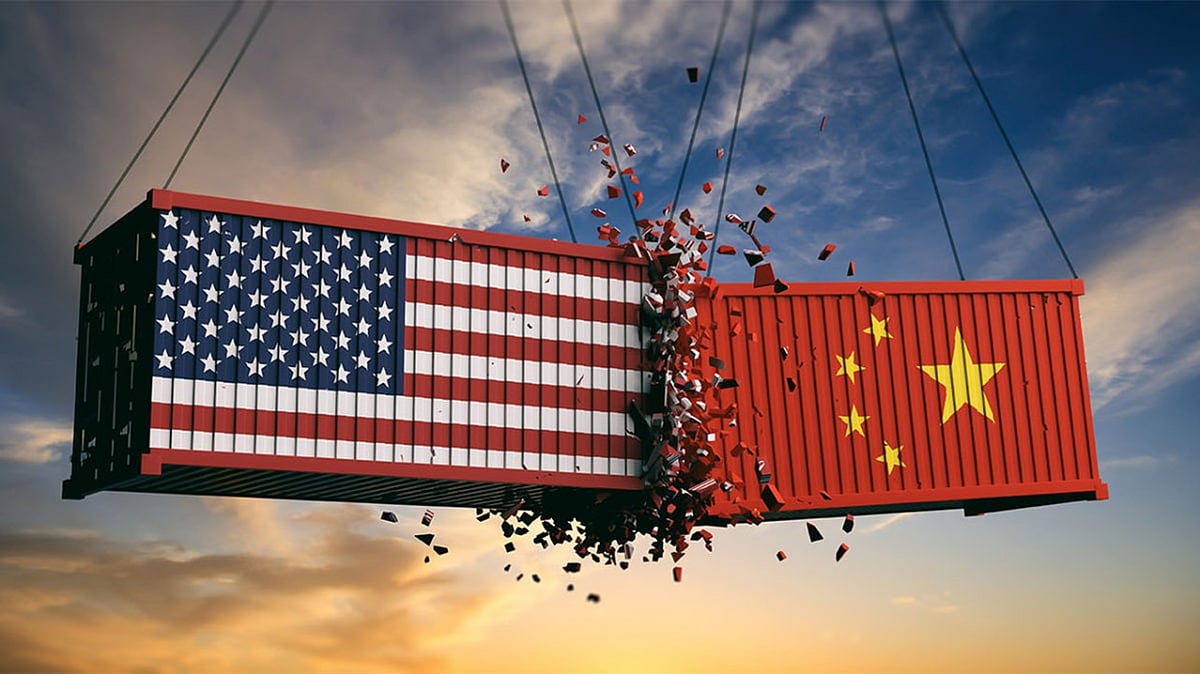
Congo, the second-largest country on the African continent, holds within it a mineral treasure trove worth nearly 24 trillion dollars. Because of this, it has become a battleground for a new “Cold War” between the world’s great powers, the United States and China.
Congo is one of the poorest countries in the world. Yet it rules an empire by holding 70 percent of the production of essential minerals needed for the modern world, including cobalt, lithium, tantalum, and copper. This is not just a story about extracting minerals. It is a shadow war that will decide who will seize dominance over the global economy in the 21st century.
What kind of country is Congo?
The country in Central Africa is the Democratic Republic of the Congo (DRC). Although it is known as the second-largest country in Africa, it remains a poor nation. Despite being rich in natural resources, Congo has not developed significantly due to political instability, lack of infrastructure, entrenched corruption, and exploitation by Western countries.
More than 50 percent of the raw minerals extracted from here are exported to China. Congo holds 70 percent of the world’s total cobalt reserves. In addition, minerals such as copper, coltan, gold, manganese, diamonds, tantalum, and platinum are found here in abundance. Even with all this, a UN survey says that people earn only 800 dollars a year.
Colonial domination and the background of poverty
After Western countries discovered Congo in the 16th century, they enslaved millions of people there and transported them around the world for their labor. During the Industrial Revolution, rubber, 75 percent of the copper for shell casings in World War I, and uranium for the atomic bombs dropped by the United States in World War II were all extracted from Congo.
Congo was under Belgian rule from 1879 to 1959. The Soviet Union and the United States created political turmoil here in order to seize its uranium. The Congo's later rulers also enriched themselves by handing over minerals to foreign countries, leaving the people in poverty.
In Congo, people are impoverished, unhealthy, deprived of rights, and unable to bring their own country’s resources under their control.
China’s unshakable dominance
China, which entered Congo decades ago, takes cobalt, manganese, tantalum, and gold to its own country for refining. China has seized 90 percent of Congo’s cobalt, 80 percent of its manganese, and 50 percent of its copper. China alone controls 70 percent to 90 percent of the global capacity to refine these minerals.
Under the ‘Belt and Road’ project, China secured mining rights by building infrastructure for Congo. With companies like China’s ‘Molybdenum’ taking over mines, more than 70 percent of production is operating under China’s control.
In addition, it has signed a contract to build the 1,860 km ‘Tazara Railway’ line at a cost of $1.4 billion, and plans to export minerals through Tanzania’s Dar es Salaam port.
America’s swift diplomacy
To curb China’s influence and seize resources, the United States has stepped in. The U.S. has allocated $6 billion to build the 1,300-km “Lobito Corridor” railway line from Angola’s Atlantic Ocean coast to Congo and Zambia. It also provided arms and military support to Congo to suppress the “M23” armed group fighting in the eastern region.
In June last year, the “Regional Economic Integration” (REIF) agreement was signed between Congo and the United States. Following this, “KoBold Metals,” in which Jeff Bezos and Bill Gates are stakeholders, has signed an agreement to extract lithium, and “Virtus Minerals” has signed a deal to extract copper and cobalt.
The American consortium “Orion CMC,” in partnership with “Glencore,” has blocked China by acquiring a 40 percent stake in “Mootanda Mining” and “Kamoto Copper” for $9 billion.
Challenges Facing Congo
Although the United States cannot immediately break China’s dominance, it has intensified active competition. However, Congo faces many challenges.
Among them, the ongoing clashes among armed groups in the eastern region to illegally seize minerals are significant.
Human rights violations also occur in traditional manual mines, where children and workers are made to work in dangerous conditions.
Because mines are dug without environmental studies, toxic waste mixes into the land and water; deforestation increases, posing a major threat to the environment.
This Cold War unfolding between two superpowers on Congolese soil is not merely a race to scoop up minerals. It is a struggle for dominance that will decide who controls the 21st-century green economy, the battery car market, and military technology. Although China has the lead in this, U.S. investments and deals have pushed the competition to its peak.