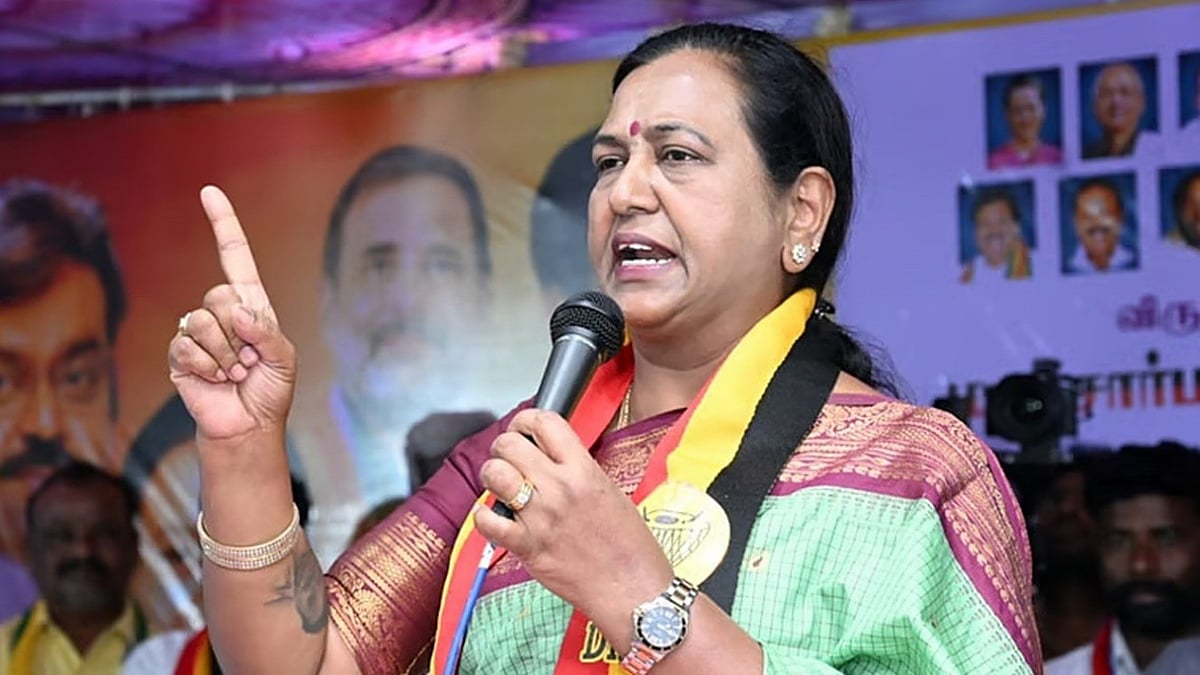
Chennai: “At this important time, when the Assembly budget session is set to begin tomorrow, arresting the Leader of the Opposition on the grounds that he allegedly expressed his views at a public meeting is an act that does not align with democratic spirit or political decorum,” said DMDK general secretary Premalatha.
In a statement issued by her on this, she said, “Udhayanidhi Stalin, who is the Leader of the Opposition, has been arrested for the remarks he made at a public meeting. In a democratic country, expressing differences of opinion is a fundamental democratic right.
Responding to opinions with opinions is the hallmark of democracy; considering arrest as the solution is not in keeping with democratic traditions. During the colonial era, various repressive laws were used to suppress views.
In independent India, actions such as arresting someone for expressing an opinion will create dissatisfaction among the public and distrust in democracy. Ruling party members and the Chief Minister, among others, freely express their views on political platforms.
Likewise, the opposition also has the right to express its political views in a democratic manner. It is unacceptable to carry out arrests in a way that curtails that right.
Recently, allegations have arisen that in connection with the incident in Ranipet where journalists were attacked by TVK functionaries, appropriate legal action has not yet been taken and swift action has not been taken against the offenders.
However, the fact that arrest action is taken immediately after opposition members express their views raises questions about the fair and balanced enforcement of the law. At this important time, with the legislative assembly budget session set to begin tomorrow, arresting the opposition leader on the grounds that he allegedly made remarks at a public meeting is an act that does not align with democratic spirit or political civility.
Therefore, respecting democratic traditions and freedom of expression, the government should abandon the practice of handling political differences through arrests. The public expects the law to be enforced equally for everyone. During the British era, there was a law called the gag law, and this act of silencing the opposition in a similar manner is condemnable,” it said.