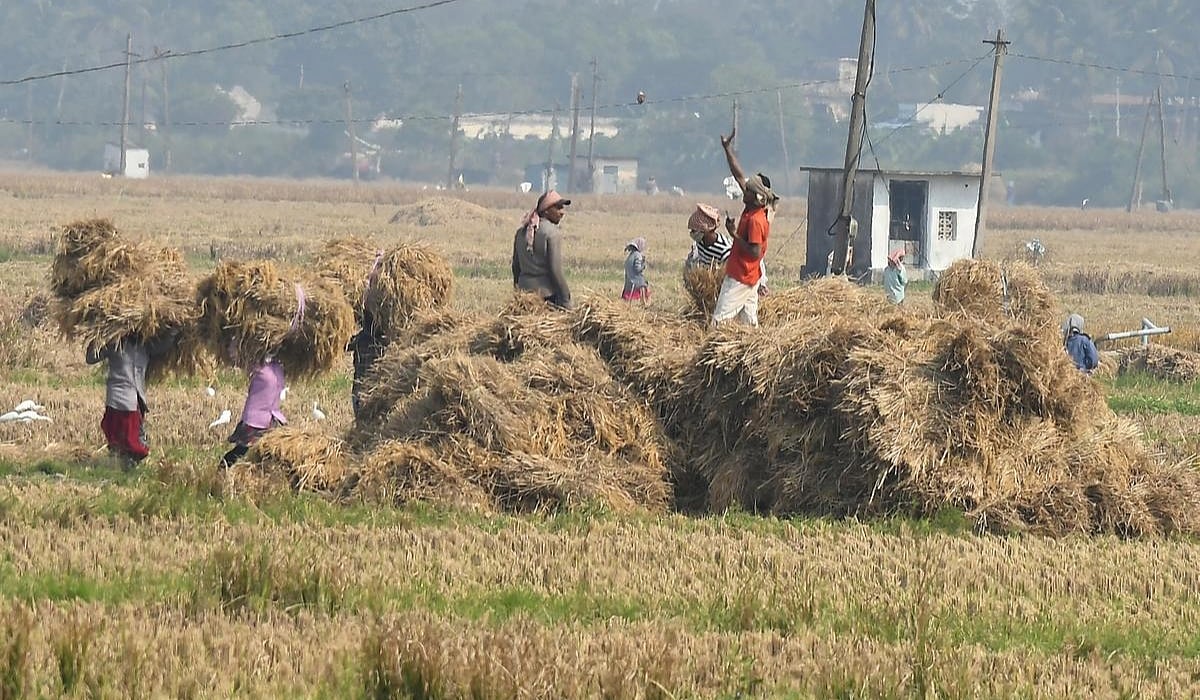
Chennai: Talks are under way to increase the paddy procurement price to Rs. 3,500 per quintal and the sugarcane price to Rs. 4,500 per tonne. Tamil Nadu Agriculture Department Secretary P. Shankar said that an announcement on this will be made soon.
Speaking to reporters today about the key features of the agriculture budget, Agriculture Department Secretary P. Shankar said: “The agriculture budget includes several new schemes, such as the Soil Conservation Mission at a cost of Rs. 600 crore, the Ambedkar Agricultural Assistance Scheme for Adi Dravidar and tribal farmers at a cost of Rs. 56.72 crore, an organic agriculture diploma college in Chakkottai, the Coconut Processing Corporation at a cost of Rs. 22.30 crore, the Farmers’ Income Enhancement Commission at a cost of Rs. 23 crore, and the Millets Mission at a cost of Rs. 63.81 crore to increase the cultivation area, production, and productivity of millets. The agricultural institutions being newly established will benefit farmers in the long term.”
To ensure onions fetch a good price throughout the year, onion storage warehouses with a capacity of 57,000 tonnes are to be built at a cost of Rs. 22.80 crore. Funds have been allocated to provide solar pump sets to 1,000 farmers with a subsidy of Rs. 23.06 crore.
Most of the demands put forward by farmers in the consultation meetings have been included in the budget. In particular, funds have been allocated for drone operator training and for training drivers of agricultural farm vehicles. Permission will be granted to sell organic agricultural products one day a week in farmers’ markets.
Production and distribution subsidies are being provided to farmers to ensure that the area under paddy cultivation does not decrease. Discussions are under way to increase the paddy procurement price to Rs. 3,500 per quintal and the sugarcane price to Rs. 4,500 per tonne. An announcement on this will be made soon. The government is also considering the demand of farmers’ associations to waive all crop loans.
Weather forecasts have indicated that 12 districts may be affected by El Niño. For this purpose, with the assistance of Tamil Nadu Agricultural University, we have conducted a study in each district on the District Agriculture Contingency Plans (DACP) defined by the Central Research Institute for Dryland Agriculture (CRIDA) in Hyderabad and prepared a report on the impacts. Guidelines regarding this have been sent to the district collectors.
The Chief Secretary has also held consultations with district collectors regarding the tasks that the agriculture, animal husbandry, and fisheries departments need to carry out to deal with the impacts. Information has also come in that the El Niño effect may weaken. If it does weaken, there is a possibility that the second phase of the southwest monsoon rainfall will be normal. Therefore, there is hope that water will come in the Cauvery and all the problems will be resolved,” he said.
Senior officials including Agricultural Marketing Commissioner R. Kannan, Agriculture Director K.V. Muralidharan, and Horticulture and Hill Crops Director J. Vijaya Rani were present.