The United Nations Security Council report has stated that the attack carried out near Delhi’s Red Fort last year was by Al-Qaeda’s affiliate for the Indian subcontinent (AQIS).
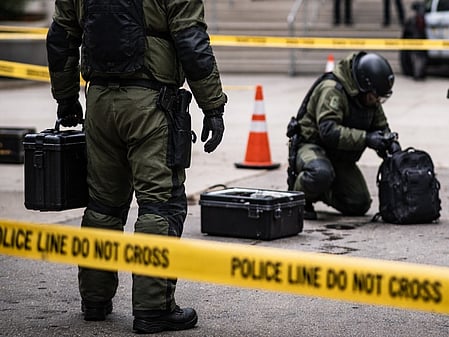
Last year, a horrific explosion took place in the Red Fort area of Delhi. Fifteen civilians were killed in it. Many others were injured. The attack was carried out using a bomb hidden in a slowly moving car at a traffic signal near the Red Fort metro station.
An investigation has been conducted into this, and the committee monitoring the UN Security Council’s actions against terrorist organizations has submitted a report. That report was released recently. It states the following:
AQIS, the affiliate of al-Qaeda, is emerging as an organization with regional influence. Instead of operating as large units, this organization has split into smaller cells and has also developed logistical and financial structures for itself. It was AQIS that carried out the terrorist attack in the Red Fort area of Delhi in November 2025.
That organization has also established a branch in Bangladesh and is trying to destabilize the situation there. Al-Qaeda and the ISIS-K terrorist organization have shown interest for many years in developing chemical and biological weapons. However, their efforts have been failing because of technical challenges. Advice on how to make these weapons is being shared among terrorists operating on websites. For example, the ISIS organization’s English-language book had published guidance on how to make toxin and cyanide.
The ISIL-K organization has been sharing advice on websites about producing ricin poison for the past 12 months. At the end of 2025, Indian authorities arrested three people, including a doctor. The ISIL-K organization had assigned that doctor the responsibility of creating ricin poison.
In Afghanistan, without any change, numerous terrorist groups continue to operate. These organizations pose a threat to its neighboring countries and the Central Asian region. Even though action has been taken against terrorist organizations, the authorities have been unable to put an end to the problems arising from them.
The Tehreek-e-Taliban Pakistan organization said in December last year that it had created two divisions within its structure. One is for Balochistan and the central region. The other is a division for Kashmir and the Gilgit region. The UN Security Council report said that this reorganization also includes a unit said to be the Tehreek-e-Taliban’s air force.