
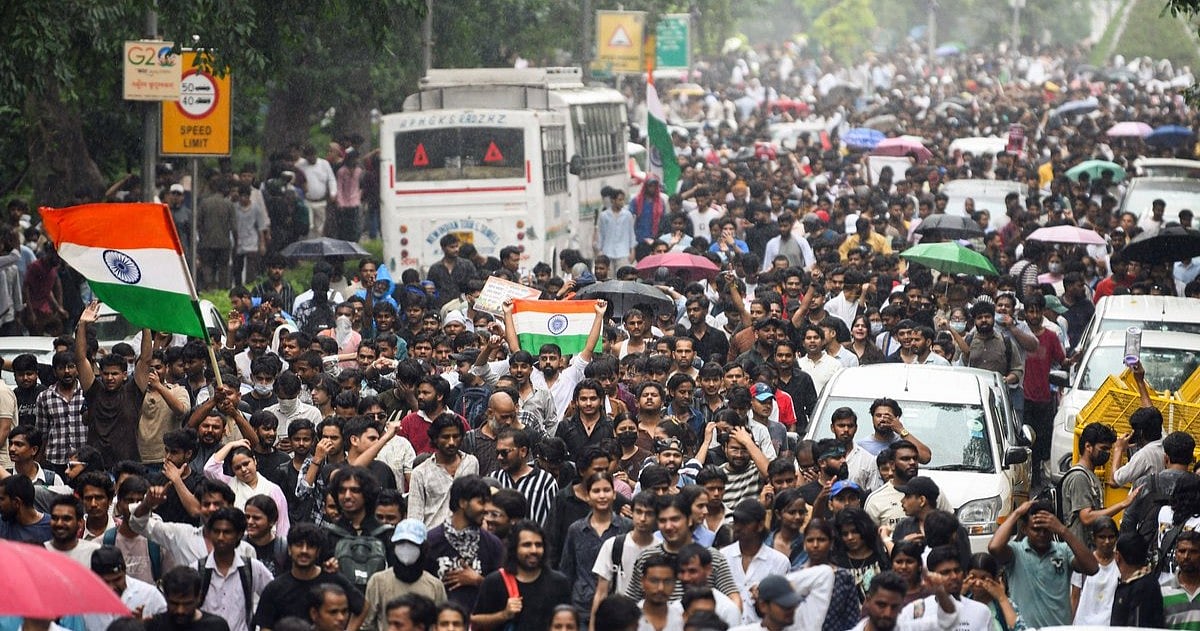
Students are furious at India’s Ministry of Education over the NEET question paper leak and the irregularities in government examinations. As a result, protests by students erupted in Delhi, and as a consequence, Minister Dharmendra Pradhan was forced to resign from his post. Following that, Prime Minister Modi had promised that the examination system would be completely reformed. Based on that, the government has taken some measures.
As part of this, Prime Minister Modi has announced a high-level task force of six domain experts led by Infosys co-founder Nandan Nilekani. This special committee includes a space scientist, an intelligence officer, an IIT director, a civil services officer, and a logistics expert.
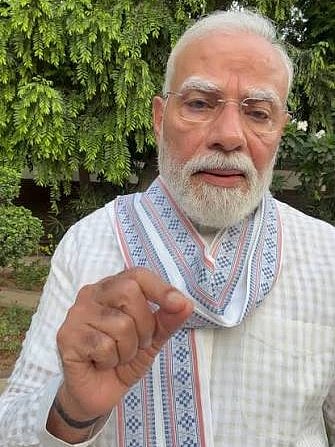
The primary goal of this committee is to make the examinations conducted by the National Testing Agency (NTA) highly reliable and transparent by using modern technologies, so that irregularities do not occur. In addition, the government has stated that a new bill providing strict punishment for those involved in question paper leaks is also set to be introduced in Parliament.
Prime Minister Modi, announcing this task force, said, "Those who played with students' futures have been jailed. A new bill is going to be introduced in Parliament to bring in a strong law against question paper leaks. But we need to think about the future. To ensure that our examination system is reliable, transparent, and that technology is used properly, we have decided to set up a high-level committee headed by the world-renowned technologist Nandan Nilekani. As soon as we receive this report, we will implement its recommendations to make future examinations secure."
What is the contribution of the group members?
Besides Nandan Nilekani, the other members of this task force are former ISRO chairman S. Somanath, former intelligence chief Tapan Deka, IIT Madras director V. Kamakoti, former education secretary Anita Karwal, and former official Amrit Lal Meena.
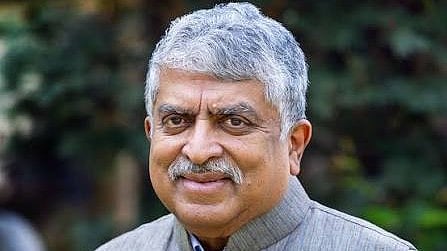
Nandan Nilekani (Infosys co-founder):
Nilekani, the former chairman of the Unique Identification Authority of India (UIDAI), is the chief architect of India’s digital public infrastructure system. He is currently the honorary chairman of Infosys. A former IIT student, Nilekani will help build an end-to-end encrypted digital platform for the examination system and drive digital transformation.
S. Somanath (former ISRO chairman):
S. Somanath, an aerospace engineer with more than 30 years of experience, has led India’s major space missions, including Chandrayaan-3. With experience managing complex and zero-failure systems, he will help design multiple layers of safeguards to ensure that no even minor error occurs in the selection system.
Tapan Deka (former intelligence chief):
Tapan Deka, an IPS officer from the Himachal Pradesh cadre, served as the Director of the Intelligence Bureau from June 2022 to June 2026. Having played a key role in counterterrorism operations and the investigations into the 26/11 Mumbai attacks, he will help strengthen the security framework to protect the examination process from hacking, question paper leaks, and insider threats.
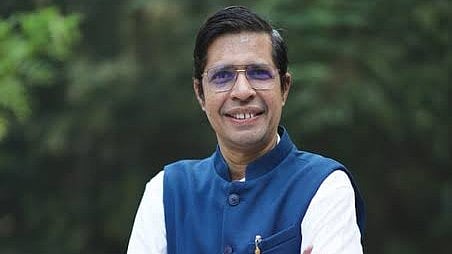
V. Kamakodi (Director, IIT Madras):
Kamakoti, a computer scientist, has been the Director of IIT Madras since January 2022. He also heads the Central Government’s microprocessor development program and the information security education program. With expertise in computer science, he recommends the use of artificial intelligence (AI) and machine learning applications to detect irregularities in exam preparation, evaluation, and results.
Anita Karwal (former Education Secretary):
He is a 1988-batch Gujarat cadre IAS officer with more than 36 years of service experience, who served as Chairman of CBSE (2017-2021) and as Secretary of the School Education Department. His experience, having played a key role in shaping the National Education Policy (NEP) 2020, will help in the policy-level reforms needed in the National Testing Agency (NTA).
Amrit Lal Meena (Logistics and Public Administration Expert):
Amrit Lal Meena, who served as Bihar’s Chief Secretary and later retired, is an expert in supply chain and logistics. It is said that he will help ensure that question papers are transported securely and without any malpractice from the printing location to the examination centers.