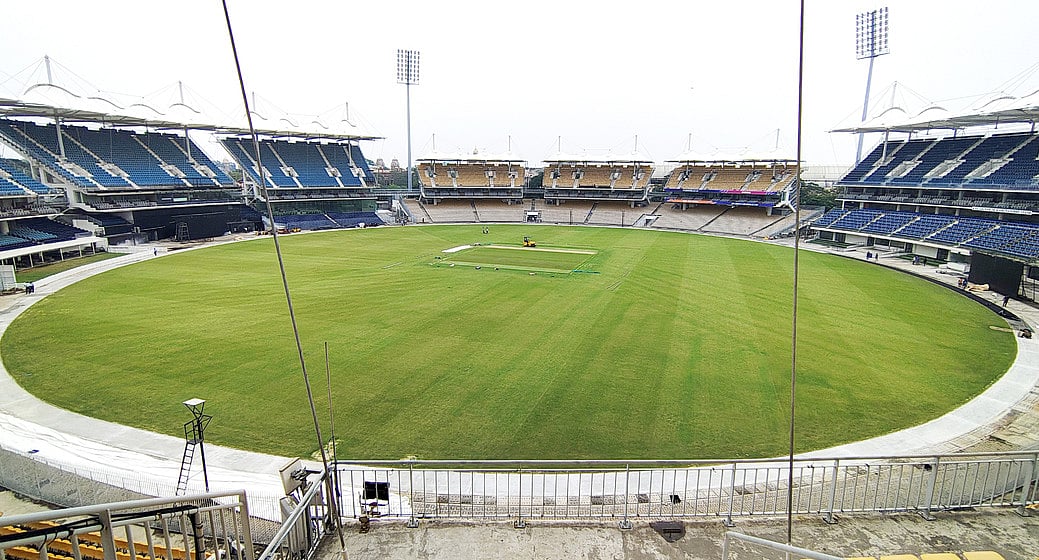
One of the three formats of cricket, One-Day Cricket (ODI), has recently reached the milestone of 5,000 matches.
Cricket, which emerged in England in the 16th century and became popular there in the 18th century, made its mark outside the country in the 19th century and gained popularity in the 20th century. In countries including India, it has become an indispensable sport.
While Test format was the foundation of cricket, the one-day format emerged as the game’s second stage of evolution. This format, which was one of the main reasons for cricket’s popularity worldwide, is now losing its charm due to the phenomenal growth of T20 cricket.
At a time when questions are being raised about whether 50-over matches are really necessary, and debates around them have begun, one-day cricket has reached a significant milestone of 5,000 matches over 55 years. Here are some key facts about that format:
First match
5 January 1971
Melbourne, Australia.
Australia - England
Australia won (by 5 wickets)
1,000th match
25 May 1995
Nottingham, England.
West Indies - England
West Indies won (by 5 wickets)
2,000th match
10 April 2003
Sharjah, UAE.
Pakistan - Zimbabwe
Pakistan won (by 8 wickets)
3,000th match
22 June 2010
Southampton, England.
England - Australia
England won (by 4 wickets)
4,000th match
17 March 2018
Harare, Zimbabwe.
Papua New Guinea - Hong Kong
Papua New Guinea won (58 runs)
5,000th match
7 August 2026
Dundee, Scotland.
Scotland - Canada
Scotland won (9 runs)
(It took 24 years to reach the first thousand matches, while each subsequent thousand has been reached in 7 to 8 years)
The achievers of each thousand...
1971 - 95 (1,000)
Batting: Desmond Haynes (West Indies) - 8,648 runs (1000)
Bowling: Wasim Akram (Pakistan) - 273 wickets
1995 - 03 (2,000)
Batting: Sachin Tendulkar (India) - 9,149 runs
Bowling: Muttiah Muralitharan (Sri Lanka) - 300 wickets
2003 - 10 (3,000)
Batting: Ricky Ponting (Australia) - 6,954 runs
Bowling: Brett Lee (Australia) - 202 wickets
2010 - 18 (4,000)
Batting: Virat Kohli (India) - 8,534 runs
Bowling: Lasith Malinga (Sri Lanka) - 204 wickets
2018 - 26 (5,000)
Batting: Shai Hope (West Indies) - 5,391 runs
Bowling: Adam Zampa (Australia) - 156 wickets
Country with the most matches played (Top 3)
Australia - 647
India - 538
England - 514
Venue that has hosted the most matches (Top 3)
Sharjah - 255
Harare - 193
Sydney - 162
In One Day Cricket so far...
5,000 matches
4,00,000+ overs
21,54,225 runs
71,652 wickets
4,900+ boundaries & sixes
3,145 players
Most runs...
Sachin Tendulkar (India)
18,426 (463 matches)
Most sixes...
Rohit Sharma (India)
369 (288 matches)
Most boundaries...
Sachin Tendulkar (India)
2,016 (463 matches)
Most wickets...
Muttiah Muralitharan (Sri Lanka)
534 (350 matches)
Highest score (innings)
Rohit Sharma (India)
264 (173 balls)
Most wickets (innings)
Chaminda Vaas (Sri Lanka)
8/19 (8 overs)
Team highest score...
England - 418/5 (Netherlands)
Team's lowest score...
Zimbabwe - 35/10 (18 overs) (Sri Lanka)
Biggest victory (runs)
England - 342-run margin (target 415/South Africa)
Most centuries...
Virat Kohli (India)
54 (314 matches)
Most half-centuries...
Sachin Tendulkar (India)
145 (463 matches)
Most matches played...
Sachin Tendulkar (India)
463
Most matches as captain...
Ricky Ponting (Australia)
230
Changes...
Over
Initially, the game was played with 40 overs, at 8 balls per over. Later, overs were defined differently in different places as 55 overs, 60 overs, and 35–40 overs. Finally, starting with the 1987 World Cup, they were fixed internationally at 50 overs per innings.
Ball
Red Duke balls were used in the first four World Cup matches. In 1992, the white ball and day-night matches were introduced. The last time the game was played in white clothing with a red ball was in 2000. In 2003, white Kookaburra balls were finalized. Initially, 2 balls per match (1 per innings) were used, but since 2011, 4 balls per match (2 per innings) have been used.
Edited by: Nathan Natarajan