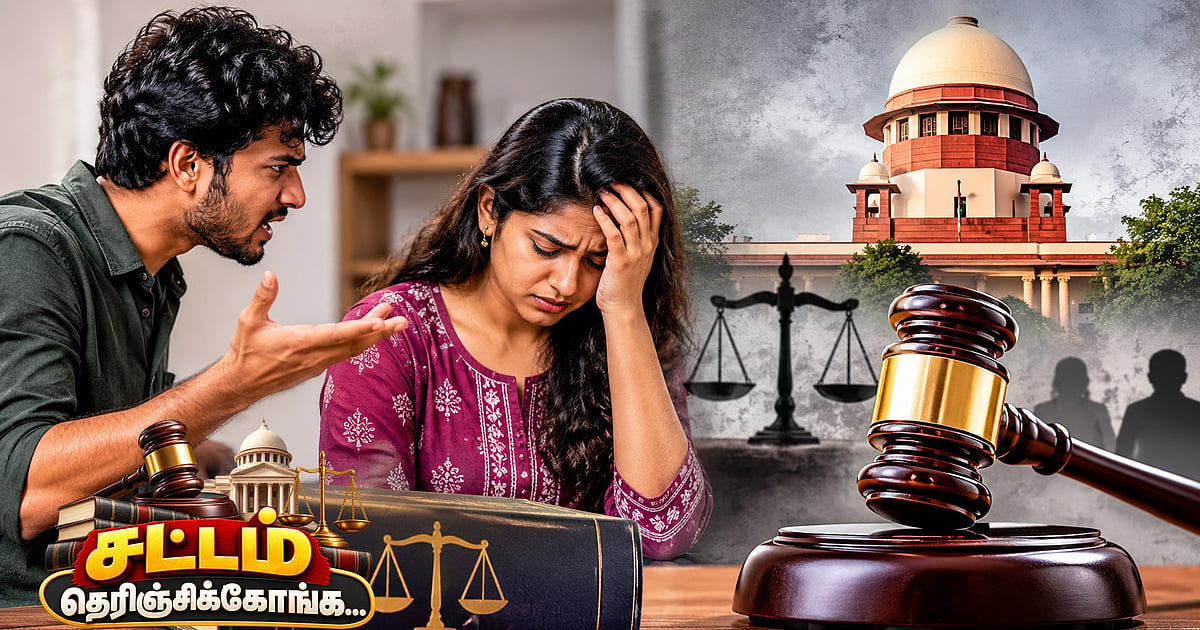
The law is in your hands!
You may have said to someone in anger or as a joke, “Why are you still alive?” But would saying things like this amount to the offense of abetting suicide? If someone dies by suicide, would everyone who had a quarrel with them become criminals?
What does the law say about this?
When is it a crime?
Under Section 45 of the Bharatiya Nyaya Sanhita (BNS), inducing a person to do an act, engaging in a conspiracy to commit that act, and as a result the related act or omission of an unlawful act occurs, or intentionally aiding in the commission of that act may amount to abetment of an offence.
As a result, the related act or omission of an unlawful act occurs, or intentionally aiding in the commission of that act, may amount to abetment of an offence.
If a person dies by suicide and the offense of abetting that suicide is proven, under BNS Section 108, imprisonment of up to 10 years and a fine may be imposed. If a child, a person of unsound mind, a person in a state of mental disturbance, or an intoxicated person dies by suicide, the person who abetted the suicide may be punished under BNS Section 107 with the death penalty, life imprisonment, or imprisonment of up to 10 years and a fine.
What acts constitute an offense?
Continuously threatening, deliberately humiliating, or severely harassing someone may, depending on the nature and background of those acts, amount to the offense of abetment of suicide. However, merely refusing love, refusing marriage, or speaking angrily in a family dispute does not by itself prove this offense. The court will examine the accused person's actions, intent, the background of the incidents, and whether there is a link to the suicide.

What does the Supreme Court say?
In State of West Bengal v. Orilal Jaiswal (1993), while assessing the charge of abetment of suicide, the Supreme Court emphasized that the court must carefully examine the background of the incident, the cruelty inflicted on the victim, and the available evidence.
It may also be considered whether the person was in such an excessively sensitive state of mind (hyper-sensitivity) that they could not tolerate ordinary differences of opinion or disputes. However, this cannot be used as a reason to disregard actual harassment or cruelty..
Geo Varghese v. State of Rajasthan (2021), the Supreme Court explained that merely reprimanding a student for disciplinary reasons is not enough to establish the offense of abetment of suicide. It also noted that the accused’s actions, their background, and evidence of an intention to provoke suicide must be examined.
Based on the circumstances of that case, the Supreme Court quashed the First Information Report against the teacher.
What is the evidence?
Even if a person’s name is mentioned in a suicide note, that alone does not make them guilty. WhatsApp messages, emails, threatening records, witness statements, and previously filed complaints may all be considered as evidence. The court will assess their reliability, their connection to other evidence, and their ability to prove the allegation.
Article 21 of the Constitution protects the right to life and personal liberty. In Gian Kaur v. State of Punjab (1996), the Supreme Court clarified that the right to life does not include the right to commit suicide.

At the same time, punishing people who attempt suicide should not be the only approach. Under Section 115 of the Mental Healthcare Act, 2017, a person who has attempted suicide shall be presumed to have been under severe mental stress; the government has a duty to provide care and rehabilitation support to them
“Suicide is not a solution to any problem; there is no problem that cannot be resolved through conversation! The pain and suffering that seem unbearable today may change tomorrow. Share what is on your mind with someone you trust; if needed, seek mental health support. Asking for help is not weakness; it is the courage to protect yourself. Your life is precious!”
Those affected by stress or those who need mental health counseling can contact the government’s free 24-hour Tele-MANAS service at 14416. In case of immediate danger, the emergency helpline number 112 can be called.