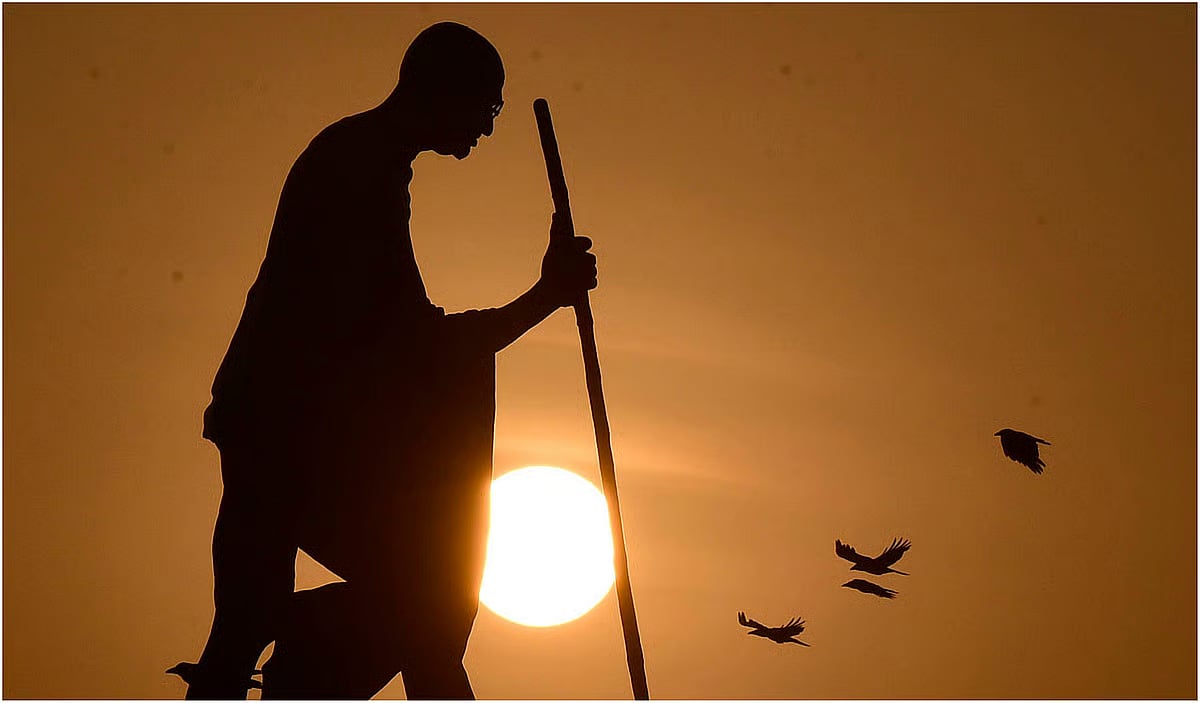
The question of why Mahatma Gandhi, the champion of satyagraha, nonviolent resistance, and the architect of India’s freedom struggle, and the owner of principles celebrated around the world, was never awarded the Nobel Peace Prize still lingers among people to this day.
Mahatma Gandhi’s name was nominated not once or twice, but five times for the Nobel Peace Prize, yet on many occasions that opportunity slipped away by a hair’s breadth.
That is, in the five years 1937, 1938, 1939, 1947, and 1948, Mahatma Gandhi’s name was recommended to the Nobel Prize selection committee, and even though he was selected in the list of laureates, it is said that various factors, including political conflicts such as the India-Pakistan partition, influenced the committee’s decision.
In 1948, before the deadline for nominations for the Nobel Peace Prize had expired, Mahatma Gandhi was assassinated. However, due to practical and legal complications, the Nobel Peace Prize was not awarded to Mahatma Gandhi on the grounds that it would be posthumous. That year, it was awarded to the Quaker organization founded in England.
The selection committee that came later expressed regret that Mahatma Gandhi had not been awarded the Nobel Peace Prize, and when the Nobel Prize was awarded to the Dalai Lama in 1989, they noted that it was intended as a tribute to Mahatma Gandhi.
After India gained independence in 1947, when Gandhi’s name was nominated for the Nobel Prize for the second time, at a time when he would most likely have received the award, it was said that some members of the selection committee took into account the India-Pakistan partition, the violence caused by the division of the two countries, and similar events, and therefore did not want to give Gandhi the Nobel Prize.
Gandhi was assassinated on January 30, 1948. There were only two days left before the deadline for Nobel Prize nominations ended. Even before that, Gandhi’s name had already been nominated.
This caused confusion for the selection committee. Would this prize be awarded after Mahatma Gandhi’s death? Because, until then, the Nobel Peace Prize had never been awarded to anyone who had died.
Moreover, since he was not affiliated with any organization, had no property, and had left no will, legal complications also arose over to whom the prize money should be given. It was then, after obtaining a legal interpretation that the Nobel Prize could be awarded posthumously only if a person died after being selected to receive the prize, that Gandhi was reportedly denied the Nobel Peace Prize.