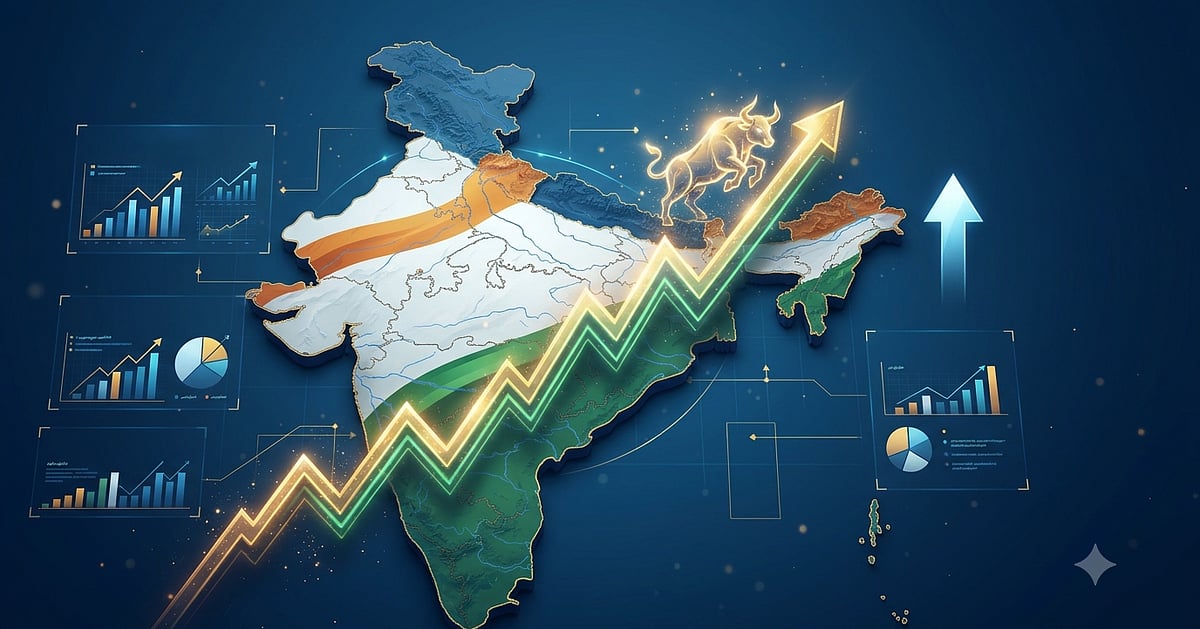
Australia’s renowned international policy research institute, the Lowy Institute, has stirred up the international political arena by releasing its 'Asia Power Index 2026' report, which shows who holds the upper hand in the power dynamics of the Asia-Pacific region.
In this list, India has firmly held on to its 3rd place, while the gap between the superpowers, the United States and China, has narrowed to an unprecedented extent — that is this year’s hot topic!
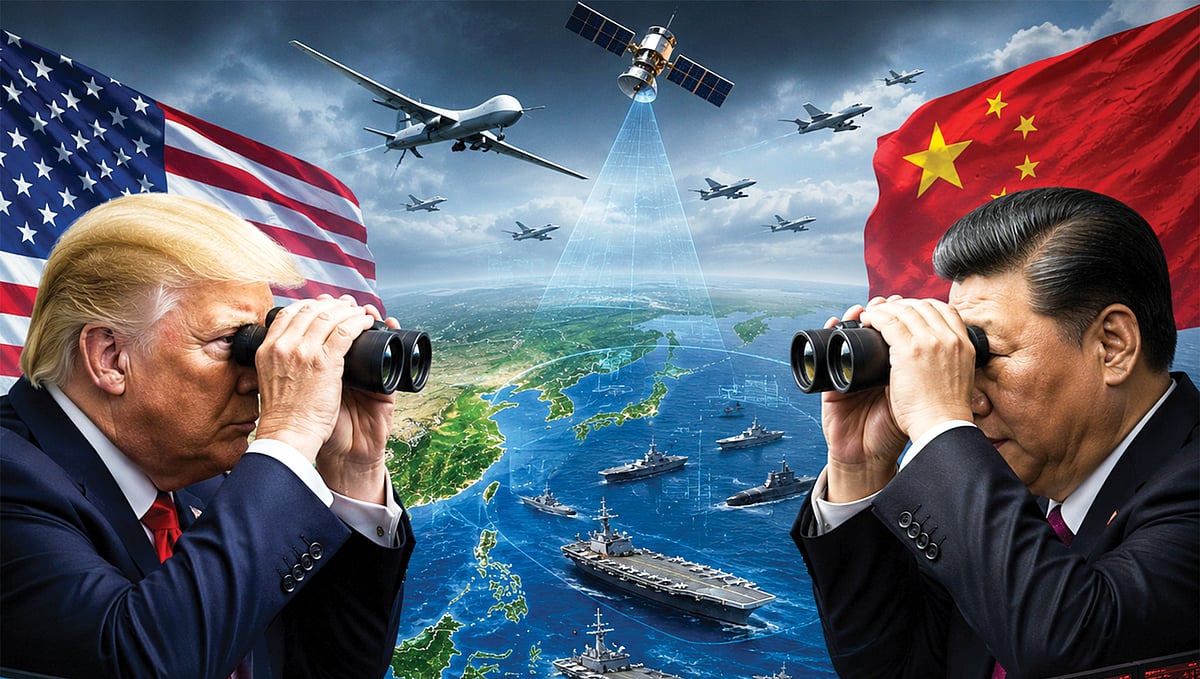
America Vs China: A narrow gap!
The list has been compiled using 131 indicators under 8 key criteria, including the economy, military strength, and diplomatic influence of the 27 countries and territories in the Asia-Pacific region.
The United States remains in first place with 78.9 points. China is in 2nd place with 73.6 points. India has retained 3rd place with 40.5 points (0.5 points higher than last year). Japan is in 4th place with 38.6 points.
Since this index was launched in 2018, the gap between the United States and China has narrowed to just 5.3 points, the smallest ever. In military capability as well, China has come so close that it is practically breathing down America’s neck.
Modi’s ‘regional’ leap and ‘global’ slide!
As far as India is concerned, although China’s overall power is greater than ours, it is a relief that the power gap between China and India has shrunk to a very small extent since 2018.
In the regional leadership assessment, Prime Minister Narendra Modi has moved up to become Asia’s second most influential leader, after Chinese President Xi Jinping. But there is also a small “twist.” The report also points out that perceptions of Modi’s global leadership and diplomatic ambitions have slipped slightly, partly because India responded softly to incidents such as the U.S. submarine sinking an Iranian naval vessel during the Gulf War.
What are India’s “plus” and “minus” points?
Diplomatic Strength: Even in a year when most countries stumbled, India stands tall with 70.3 points in diplomatic influence.
Security & Trade: Through the sale of BrahMos missiles to Southeast Asian countries and defense cooperation, India has moved up two places in the defense network to 9th place (18.6 points), and up two places in regional trade relations to 7th place. Cultural influence stands at 43.8 points, and future resources at 56.2 points.
Economic Challenge: Economic capability points have slightly declined to 26.4. The fall in the rupee’s value, changes in the International Monetary Fund’s (IMF) calculation method, and a decline of about $20 billion in foreign investments have affected our relative GDP position.
China didn’t grow... it was America that slipped!
The most important observation in this report is this: it is not China’s extraordinary growth, but America’s own self-inflicted setbacks that have brought China closer to the top spot.
In 2026, America’s diplomatic influence fell by 6 points to 76.7. For the fourth consecutive year, the United States has seen a decline, and this is its biggest annual drop since 2018.
The Trump administration’s unilateral foreign policy, trade tariffs, war with Iran, confrontational stance toward international organizations, arms sales to Taiwan, and President Donald Trump’s remarks about military exercises with South Korea have weakened Asian countries’ confidence in U.S. leadership.
In short, while America’s wavering has turned to China’s advantage, India is steadily advancing and maintaining its place as Asia’s “major power”!