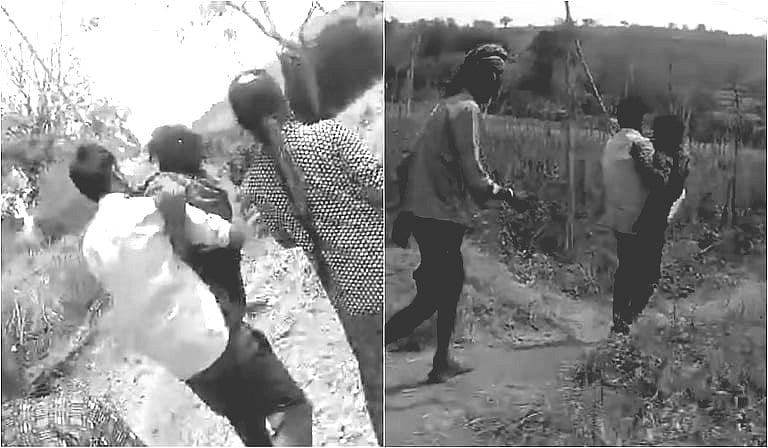
In March 2025, a video went viral on social media and left viewers shocked. Among the thousands of videos that go viral every day for entertainment and to pass the time, many of us may have forgotten that video, which was released a year earlier.
To jog your memory, I am sharing the details of that video recorded in Krishnagiri. The video captured the actions of relatives who arranged a child marriage for a young girl in a hill village near Hosur and forcibly carried her to her husband’s house. It caused a major stir in Tamil Nadu.
In Krishnagiri district, near Anchetti, next to Hosur, at an altitude of about 3,000 feet above sea level, there are more than 20 small villages, including Onnepuram, Sithappanur, Chikkamanji, Kriyanur, Bellatti, and Thottamanji. Around 5,000 people live here. For their daily needs, the people in this area travel to Anchetti, which is 20 km away, and from there go to various other places.
Since the students here study only up to 10th standard at the government higher secondary school, they travel to Anjetti every day to continue their studies beyond that. Parents are hesitant to send girl children to study by traveling long distances, and so they stop their schooling after 10th standard, cutting off their education midway.
Parents arrange marriages for girls who drop out of school midway. As a result, there are allegations that child marriage is increasing in that hill village.
That video is also about the marriage arranged after cutting short the schooling of a 14-year-old girl from that hill village, who had studied up to 7th standard.
In this situation, “In that mountain village, even now, after 10th grade, students still have to go to Anjetti for higher education. Nothing has changed” was the on-the-ground report shared by Hindu Tamil Thisai Hosur reporter G. Jayakanthan.
It must be noted that preventing school dropouts among teenage girls plays a very important role in curbing child marriage.
Against this backdrop, International Day of the Girl Child was observed a few days ago. The theme for the 2026 International Day of the Girl Child is “End child marriage; invest in their rights.”
With the aim of eliminating child marriage, the Central Government launched the ‘Child Marriage-Free India’ campaign in 2024. It also set a target of completely eradicating child marriage by 2030.
In this context, let us look at how far we have successfully progressed toward this goal and what more needs to be done to achieve it accurately, with a focus on the ground reality in Tamil Nadu.
According to UNICEF and some statistics, 50% of the child marriages taking place in India occur in just 5 states, including Uttar Pradesh, Bihar, West Bengal, Maharashtra, and Madhya Pradesh. At the same time, Kerala state and the Union Territory of Lakshadweep appear to be performing well in preventing child marriage.
Across India, it cannot be denied that girls’ rights have been strengthened through investments in girls’ education, health, nutrition, child welfare protection, and social security schemes. At the same time, experts say it should be noted that progress will be accelerated by deepening these investments and by strengthening women’s voice, agency, and participation.
Because one-third of the world’s child brides are in India. In India, one in five young women is married before she turns 18. The share of child marriages, which was more than 50 percent in 1996, has now fallen to just over 20 percent. But experts say this is certainly not enough to achieve the goal of a “child-marriage-free India” by 2030.
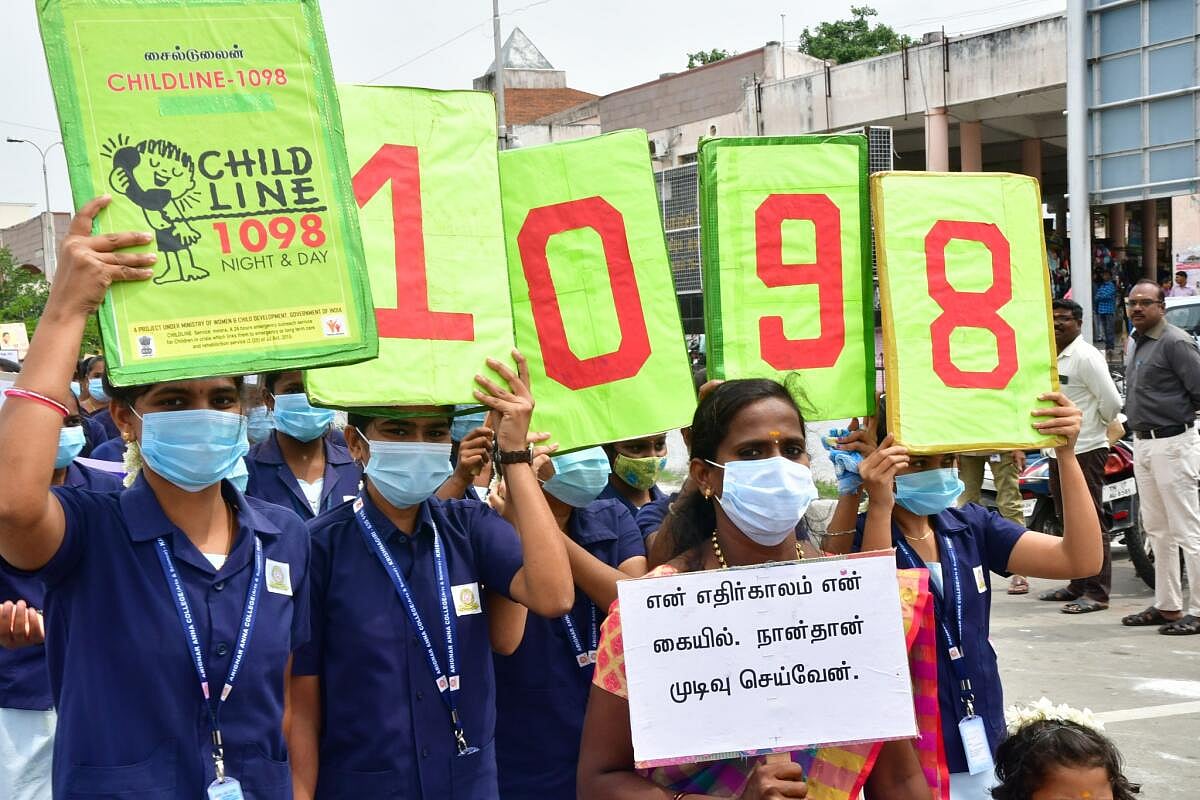
The legal age for marriage in India has been set at 18 for women and 21 for men. Marrying before this age is considered child marriage. To prevent child marriages, complaints can be made to the Child Helpline numbers ‘1098’ and 181.
Even so, child marriages are still taking place. In Tamil Nadu, child marriages continue to be reported in large numbers in districts such as Salem, Dindigul, Krishnagiri, Theni, Tiruvannamalai, and Erode. Apart from these, child marriages are also occurring in many other districts.
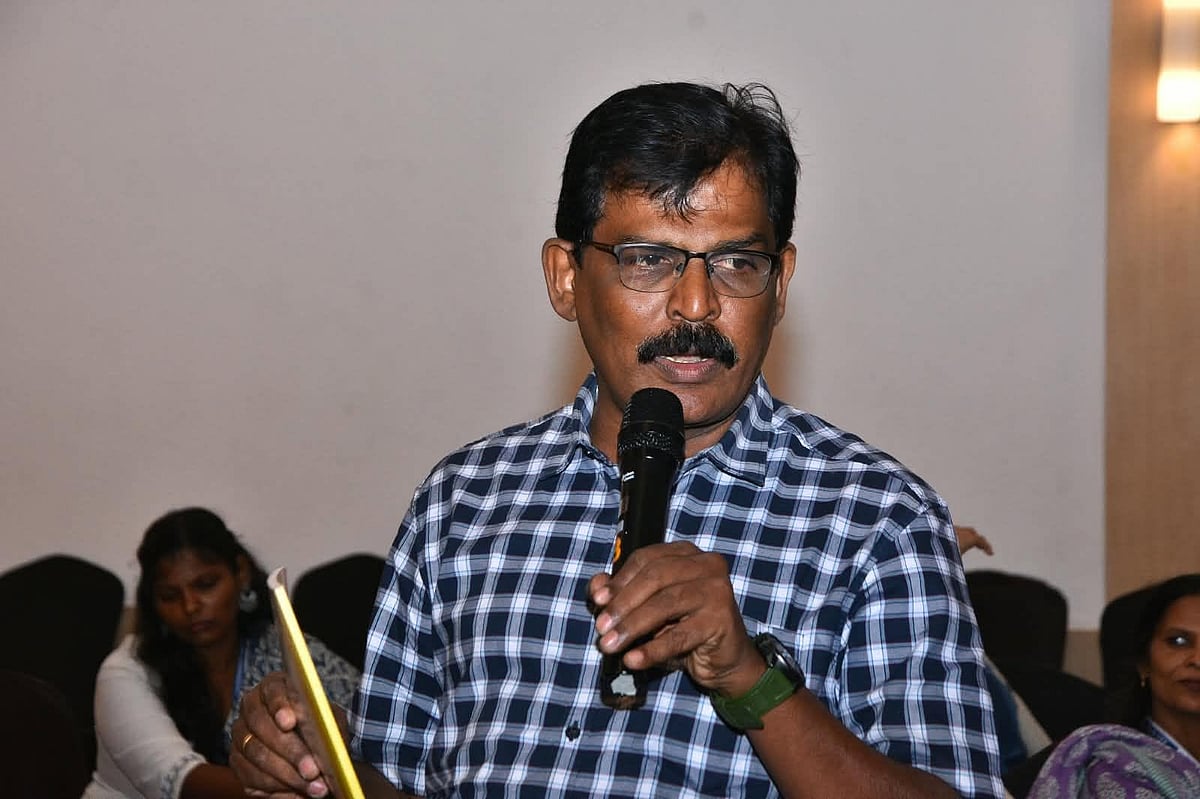
The National Family Health Survey (NFHS-5) says that out of every 100 marriages in Tamil Nadu, 12.5 are child marriages. In this context, when asked child rights activist Devaneyan about where Tamil Nadu is falling short in preventing child marriages, he shared the following information:
“The root of child marriage lies in child marriage itself, and it remains a global problem to this day. The Prohibition of Child Marriage Act is indeed a comprehensive law. Child marriages cannot be prevented by law alone. It is not enough to hold an awareness seminar somewhere saying that child marriages are taking place. We must move toward the goal.”
The most important of these is ‘hotspot intervention’ (intensive area monitoring action). Child marriages are not happening across Tamil Nadu as a whole. However, they do take place in some districts such as Salem, Krishnagiri, Theni, Dindigul, and Tiruvannamalai. Likewise, teenage pregnancy has also increased in Tamil Nadu. Child marriage and teenage pregnancy must be viewed together.
Statistics related to child marriages are available accurately in the respective districts. These figures are compiled using the complaints registered at the 1098 helpline and the complaints registered with the police department.
Similarly, data related to teenage pregnancy will be available with the health department. Based on this, accurate intervention is needed in each district and in the taluks within it, depending on the nature of the problem prevailing there.
In Tiruvannamalai, it may be prevalent among tribal communities. In another district, child marriages may take place due to religious or caste-based customs. Therefore, interventions and programs suited to each area are needed.
Child marriages take place due to various socio-economic and religious ritual influences. In 2023, a complaint was received that the Dikshitars of the Chidambaram Nataraja Temple were conducting child marriages, known as 'balya vivaham'. That is why I say that laws and schemes alone are not enough.
“Hotspot intervention” also needs to be taken to the next stage with greater precision. In Tamil Nadu, there are Village Level Child Protection Committees at the village level. That committee includes the panchayat president and several others. They must monitor various matters, including whether girl children within their panchayat are receiving education appropriate to their age.
When such monitoring becomes intensive, school dropouts will decrease. If school dropouts decrease, child marriages will decrease, girls becoming child laborers will decrease, teenage pregnancies will decrease, and the number of young widows will also decline significantly. Therefore, the single issue of child marriage is linked to many other issues.
However, no budget is allocated to village-level groups that can do all this. Likewise, inter-departmental coordination is also very essential.
The Child Welfare Special Service Department, Childline, the police department, the Rural Development Department, the Social Welfare Department, and the Department for Prevention of Violence Against Children and Women must all work together in safeguarding children’s welfare.
Under the leadership of the District Collector, the District Child Protection Committee should meet once every three months for consultation. If a rural area does not have proper bus facilities, the girl children in that area may drop out of school.
Therefore, child marriages can be prevented only if we operate with a microscopic approach,” he said.
There is no budget at all!
Funding for the Child Welfare Special Services Department, the primary nodal department responsible for preventing child marriages, is being continuously reduced. For the past 10 months, even a regular director has not been appointed for this department, and it has been functioning with only an interim director.
Similarly, the nodal officers of the District Child Protection Unit (DCPU), which operates at the district level, do not even have vehicle facilities to go into the field. Basic infrastructure facilities are lacking.
The State Commission for Protection of Child Rights (SCPCR) is allocated a very small budget. Its chairperson and members do not receive proper pay. There are no lawyers. There is no document archive. There isn’t even a website. In such a situation, experts question how child marriages can be prevented with an iron hand.
We need a ‘child-friendly Tamil Nadu’!
“Child marriage is the most brutal sexual violence against children. Even those who do politics using children are not honest to children. Without political will for children’s welfare, it is not possible to eradicate child marriages.
The government must ensure all kinds of safety for children. A child-friendly Tamil Nadu must be created. For that, budget allocation is essential. Measures for child protection should be released every year as a white paper. Only then will all forms of violence against children, including child marriage, be brought under control,” says Devaneyan.