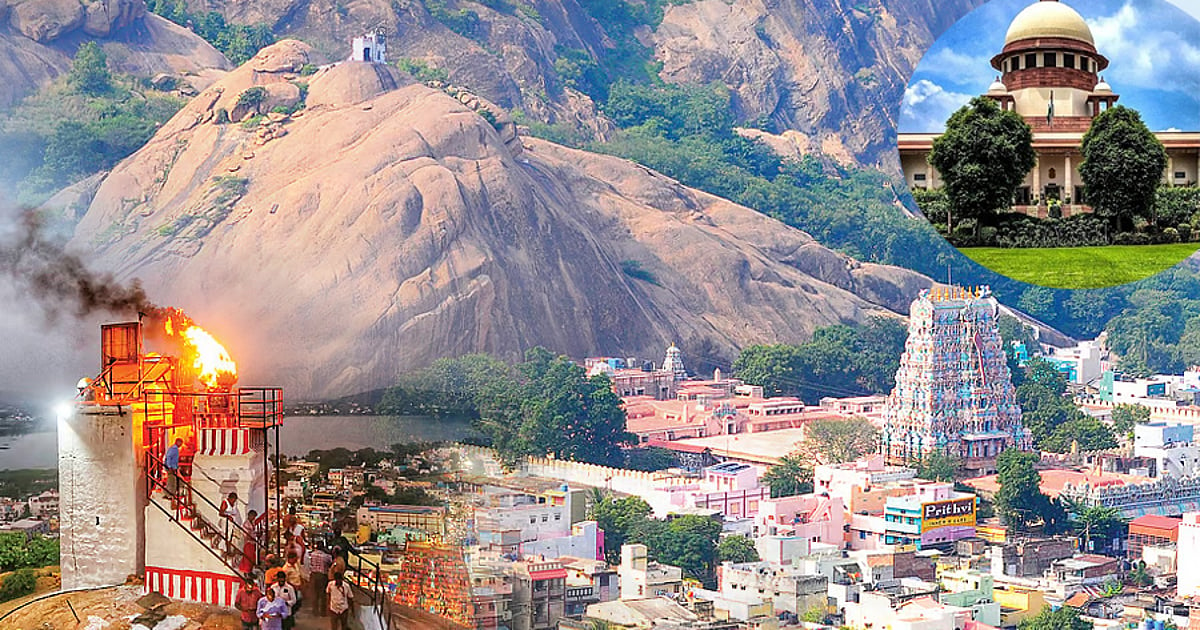
In the case filed seeking permission to light the Karthigai Deepam on the hilltop of the Madurai Thiruparankundram Subramaniya Swamy Temple and to hand over the entire hill to the Archaeological Survey of India, a detailed 18-page counter affidavit has been filed in the Supreme Court on behalf of the Tamil Nadu government and the Hindu Religious and Charitable Endowments Department.
What is the background of the case?
Let us take a detailed look in this report at the legal and historical grounds on which the Tamil Nadu government has rejected the petitioners’ demands.
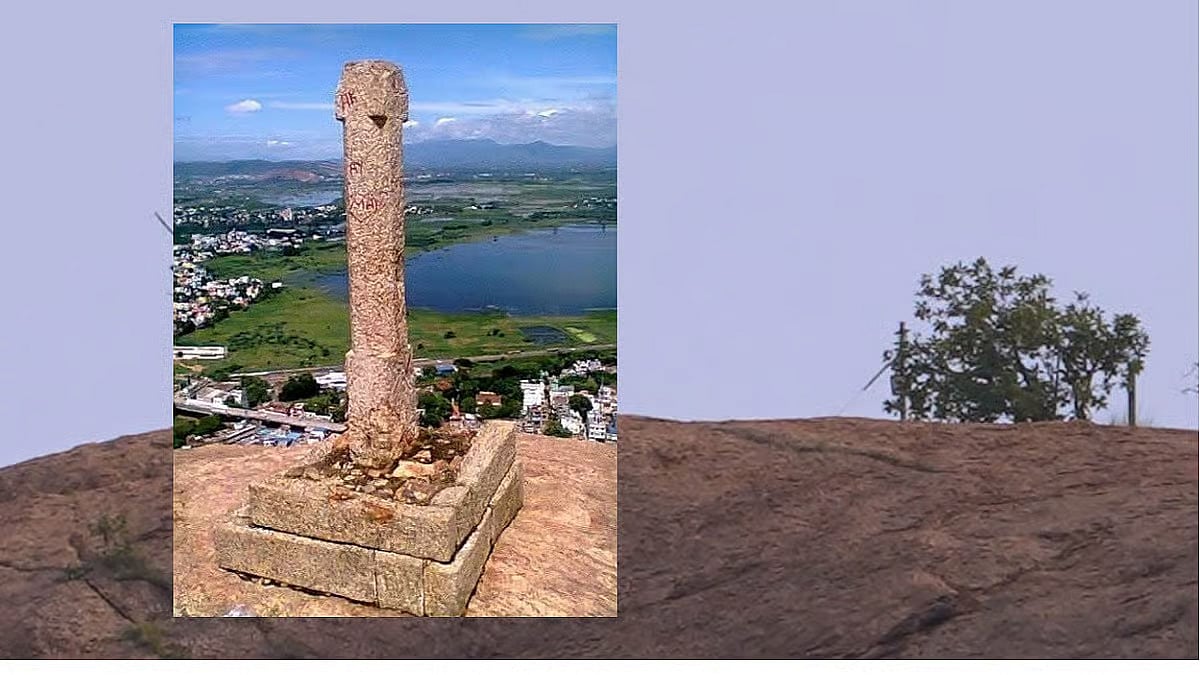
Rama Ravikumar had filed a petition in the Madurai Bench of the Chennai High Court seeking an order to light the Karthigai Deepam on the ancient 'Deepa Thoon' at the hilltop, instead of at the Deepa Mandapam of the Uchipillaiyar Temple on Thiruparankundram hill. Hearing this petition, Justice G.R. Swaminathan had ordered that the lamp be lit on the Deepa Thoon at the hilltop.
However, on the temple administration’s side, as usual, the Karthigai Deepam was lit at the Deepa Mandapam of Uchipillaiyar Temple itself. Following this, the petitioner Rama. Ravikumar filed a contempt of court petition against officials of the Tamil Nadu government and the Hindu Religious and Charitable Endowments Department.
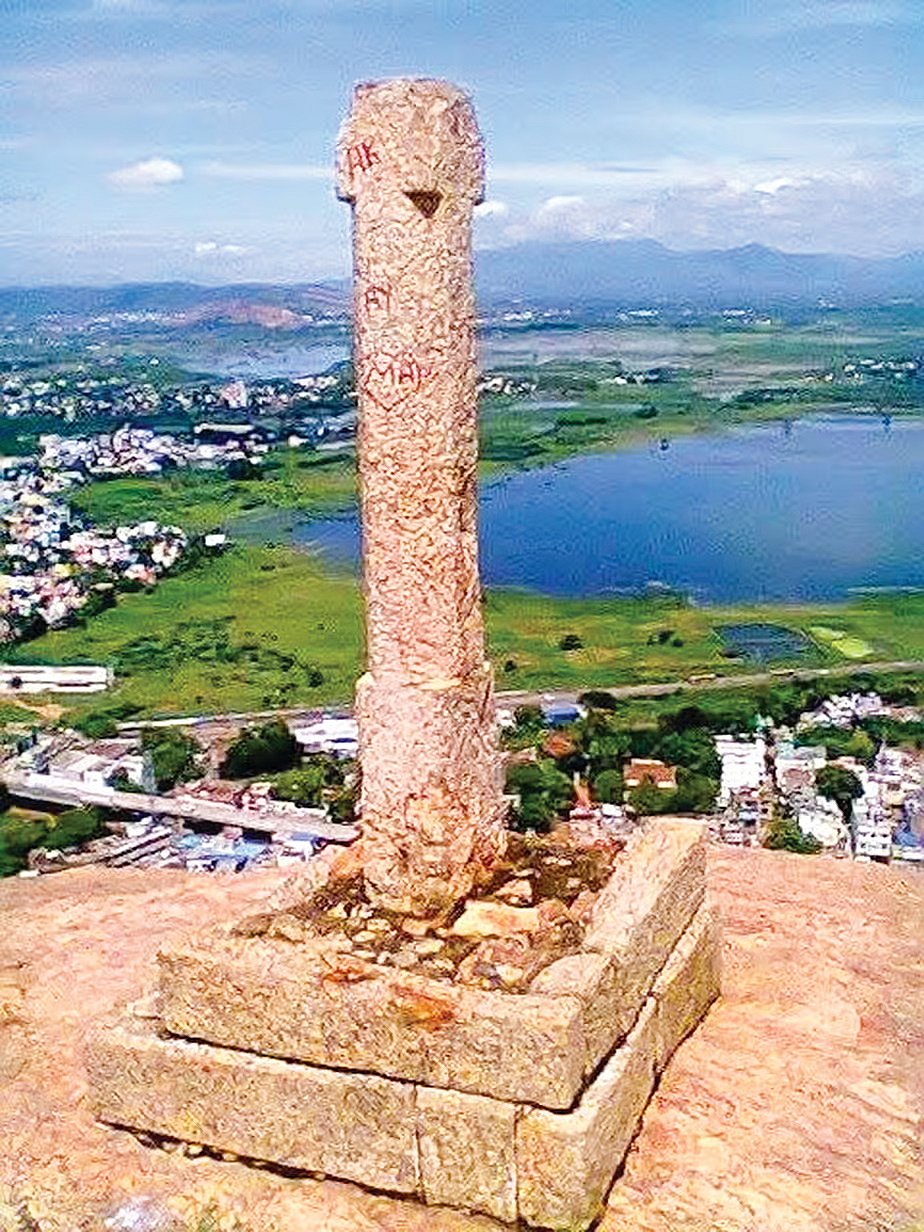
Justice Swaminathan, who heard the case, ordered that the petitioner and nine others go to the hilltop under the protection of Central Industrial Security Force personnel and light the lamp on the Deepa Thoon.
The appeal filed by the Tamil Nadu government against this order of the single judge was dismissed by a two-judge bench of the Madurai Bench of the High Court. Following this, the Tamil Nadu government appealed to the Supreme Court.
In the petition filed in the Supreme Court, it was stated, "The problem arose because the traditional place where the lamp has been lit for more than 100 years was changed, and permission was sought to light the lamp at a different place.
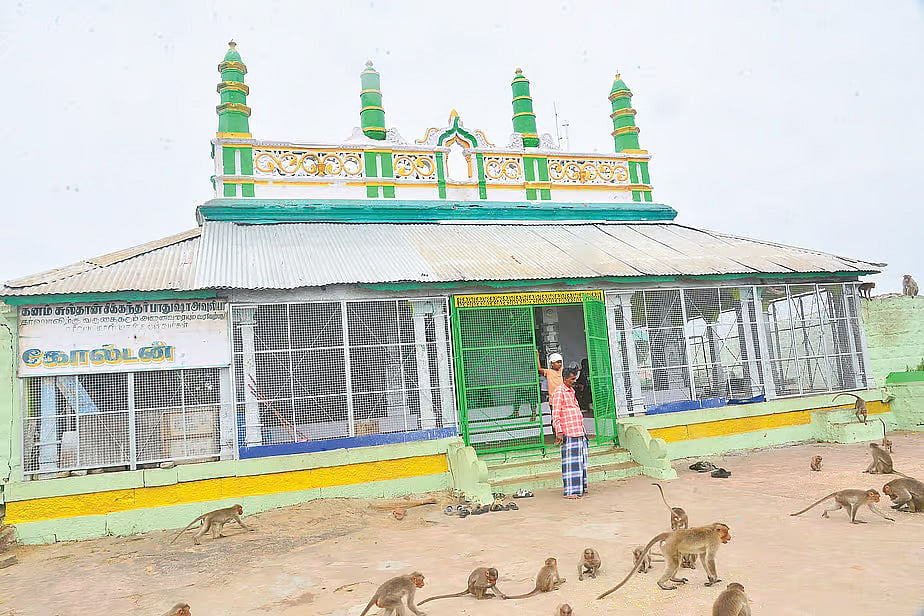
The government has not imposed any ban on lighting the Karthigai Deepam. As per the High Court’s 2014 ruling, the lamp is lit at the designated location. The Tamil Nadu government had stated that permission was not granted at the newly requested site because it is only 15 meters away from the dargah, and this was done to avoid unnecessary religious disputes and law-and-order problems.
Meanwhile, on behalf of the organization called the 'Hindu Dharma Parishad,' its president K.K. Ramesh filed a writ petition in the Supreme Court. In it, he requested that the entire Thiruparankundram temple and hill area be handed over to the Archaeological Survey of India.
While the Supreme Court had issued notice to respond to this petition, a detailed counter-affidavit has now been filed on behalf of Hindu Religious and Charitable Endowments Department Commissioner Dr. T.G. Vinay.
Key points of the Tamil Nadu government and HR&CE Department’s response affidavit
The petitioner’s three main demands and the government’s denial:
First, the Archaeological Survey of India should take over and manage the entire Thiruparankundram temple and hill.
Second, at the place known as the “Deepa Thoon,” a lamp must be lit permanently and kept burning without interruption 24 hours a day.
Third, on the day of the Karthigai Deepam festival, lights should be lit all over the hill, and devotees should be allowed to worship throughout the hill.
The Tamil Nadu government has categorically stated that the petitioner has no legal right or established customary practice for any of these three demands, and that, since no fundamental right has been violated, entertaining this petition under Section 32 would amount to an abuse of the court process.
The petitioner has attached only newspaper clippings and website information as support for his arguments; the government has pointed out that none of these constitute legal evidence.
The century-old title deed and the Privy Council judgment:
Among the six abodes, the first abode, the Thiruparankundram Arulmigu Subramaniyaswamy Temple, is an ancient public religious institution administered under the Tamil Nadu Hindu Religious and Charitable Endowments Act, 1959.
A historic judgment was delivered on 05.08.1923 in the case filed by the temple administration in the Madurai Additional Subordinate Court in 1920. Accordingly, except for the valued lands in the Nellithoppu area, the new mandapam, the steps leading from Nellithoppu to the mosque, and the summit of the rock where the mosque and flagstaff are located, the temple administration was declared to be the sole owner of the entire Thirupparankundram hill and the Girivalam path.
Although the Madras High Court overturned this judgment in 1926, the London Privy Council in 1931 set aside the High Court’s ruling and upheld the 1923 civil court judgment. Later, through a 1958 case and a 1962 execution petition, the Nellithope area was measured at about 33 cents and its boundaries were defined. Therefore, the government has stated that no one can question the temple’s ownership, which has been established for more than a century.
The 150-year tradition of lighting the lamp and the truth about the 'Deepa Thoon':
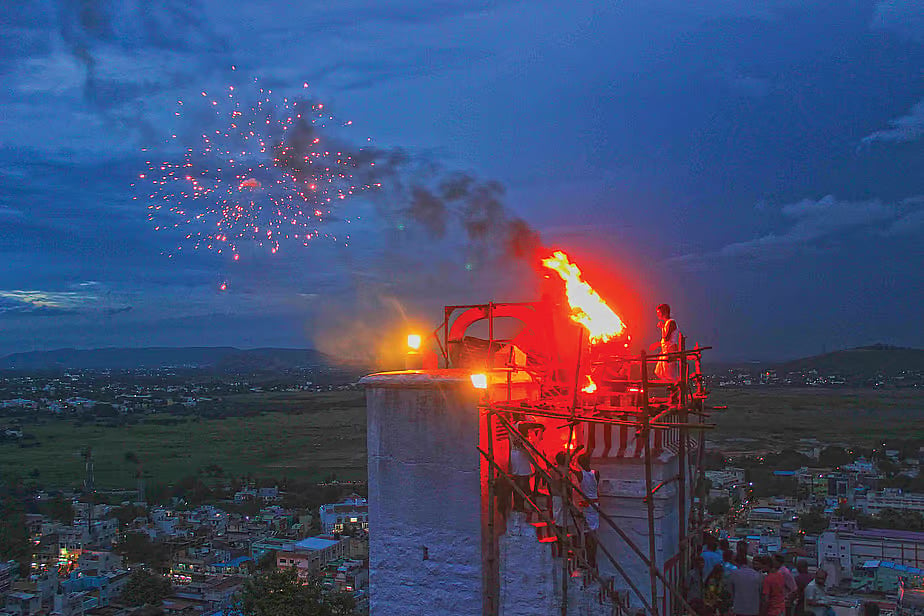
For more than the past 150 years, in accordance with Agama rules and on the advice of the temple priests, the Karthigai Deepam has been lit by the temple administration only in the 'Deepa Mandapam' near the Uchipillaiyar Temple.
Calling the stone pillar on the hilltop the 'Deepa Thoon' and claiming that lighting a lamp there is an ancient Tamil tradition is a recently created myth. The term 'Deepa Thoon' does not appear in the 1923 civil court judgment, the 1931 Privy Council case, the High Court cases in 1996, 2014, and 2017, or even in the petition submitted by Rama. Ravikumar on 28.10.2025. The government has exposed that this term was used for the first time only in the 2025 case.
The petitioner’s claim that the place for lighting the lamp was changed due to wartime restrictions is completely false and baseless. On the contrary, the 1923 court judgment itself records that when some people attempted to light lamps near the summit of the hill where the dargah is located in 1862 and 1912, they were prevented because "lighting lamps there is not a traditional custom" and because "it would disturb the peace."
Conflicting claims deny the tradition:
The Tamil Nadu government has also pointed out that each petitioner mentions different locations
Rama. Ravikumar is requesting that a lamp be lit on the Deepa pillar. The Hindu Dharma Parishad is requesting that a permanent lamp be lit 24 hours a day and that the entire hill be illuminated. In previous cases, some people requested that lamps be lit at the places known as 'Kuthirai Sunai' and 'Kuthirai Sunai Thittu'. A true tradition is something that is stable and uniform; requests that vary from person to person cannot be accepted as tradition. If temple rituals are altered according to each person's preference, the temple administration itself will become unable to function.
Previous court rulings and restrictions:
In the case filed in 1994, the order issued by the Chennai High Court on 21.11.1996 is still in force today. Accordingly, everyone must respect the 1920 judgment; only the Devasthanam should light lamps in the traditional place, the mandapam of the Uchipillaiyar Temple; it has been ordered that no other person should be allowed to light lamps elsewhere. If the location is to be changed in the future, only the Devasthanam can decide, with prior approval from the Commissioner of the Hindu Religious and Charitable Endowments Department; it has also been clarified that it must be at least 15 meters away from the dargah, the steps, and the Nellithoppu area.
A case filed in 2014 with the same demand was dismissed by a single judge (04.12.2014), and the appeal filed in 2017 was also dismissed by a division bench of two judges (07.12.2017). The court had then ruled that there was no evidence to show that the temple administration was acting against the Agama rules.
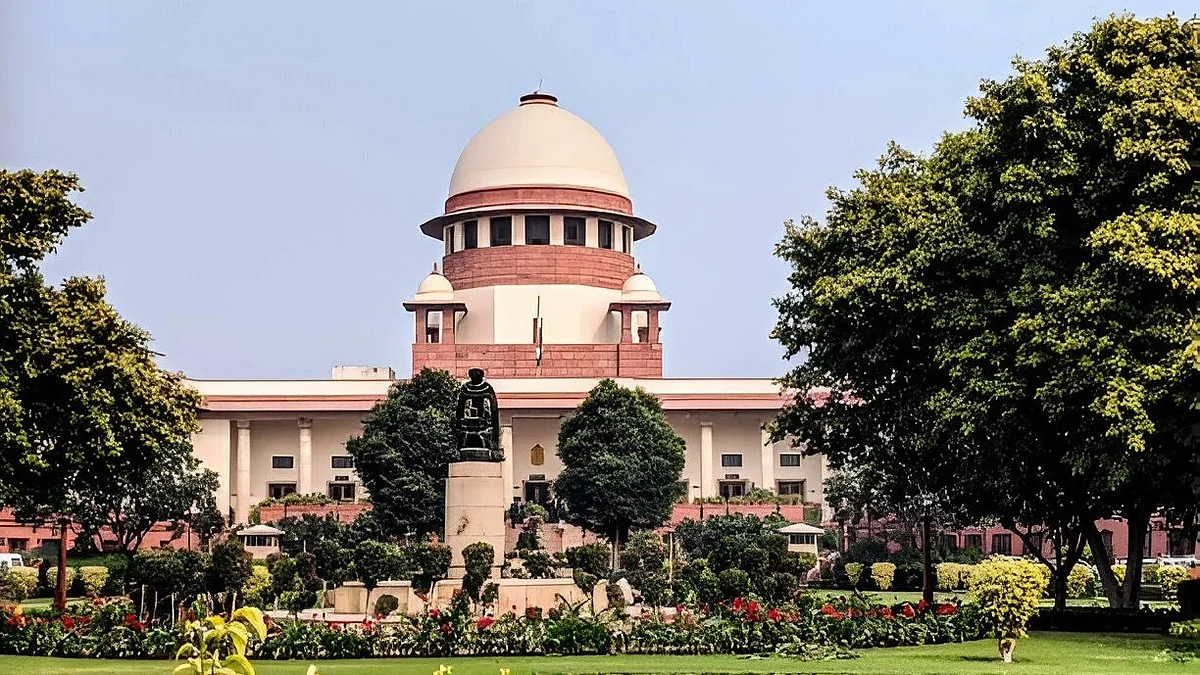
In a matter concerning public interest, a matter that has already been decided by the court cannot be litigated again and again merely by changing the petitioner’s name, the government argued, citing Supreme Court judgments.
Legal explanation for why the Archaeology Department cannot take possession:
The petitioner’s argument that the entire hill is a protected monument of the Archaeology Department is incorrect. Under the Ancient Monuments Preservation Act of 1904, as per the notification issued on 01.09.1908 , only an area of about 50 cents on the hill, comprising the cave temple and inscriptions, has been declared a protected monument.
In the Government Order issued on 08.02.1909 , the Government has clearly recorded that there was no need to declare the entire Thiruparankundram hill as a protected monument. The notification issued in 1923 also confirms this.
Furthermore, the Archaeology Department’s role is only to maintain protected monuments and safeguard them from damage; taking over and administering a living temple that is in worship, or maintaining law and order, does not fall within the Archaeology Department’s jurisdiction. The petitioner himself has admitted in his petition that police personnel are engaged in security duties at the foothills.
Supreme Court’s interim stay on places of worship:
The petitioner has already filed a contempt of court case on the same issue in the Madurai Bench of the High Court, and it is pending. In its order dated 08.09.2026, the Supreme Court directed that arguments on this matter be presented before the High Court itself and also instructed that the stay order issued by the Supreme Court on 12.12.2024 in the Ashwini Kumar Upadhyay case concerning places of worship be taken into account.
The Supreme Court has imposed a ban stating that courts should not issue any interim or final orders to alter or inspect the current status of places of worship across the country. The Tamil Nadu government has pointed out that filing this writ petition directly in the Supreme Court, in violation of that order and while related appeal cases are still pending, is unlawful.
As the administration of the Thiruparankundram temple is being carried out efficiently, and in a situation where there are no complaints of any administrative irregularities, the Tamil Nadu government has firmly urged the Supreme Court that the petition filed by the Hindu Dharma Parishad organization, which seeks to disrupt century-old judgments and 150-year-old Agama traditions and harm religious harmony, should be dismissed at the outset with costs.