
A review petition has been filed on behalf of the Hindu Religious and Charitable Endowments Department, seeking reconsideration of certain parts of the Supreme Court’s interim order that allowed the lighting of Karthigai Deepam in the 'Deepathoon' area on Thirupparankundram hill.
In the case related to the Karthigai Deepam festival at Thirupparankundram Arulmigu Subramaniya Swamy Temple, the Commissioner of the Hindu Religious and Charitable Endowments Department has filed a review petition seeking to withdraw certain parts of the interim order issued by the Supreme Court on November 20.
It also seeks an interim stay on the order permitting lamps to be lit on the stone pillar referred to as the 'Deepathoon' during the Karthigai Deepam festival to be held on November 24.
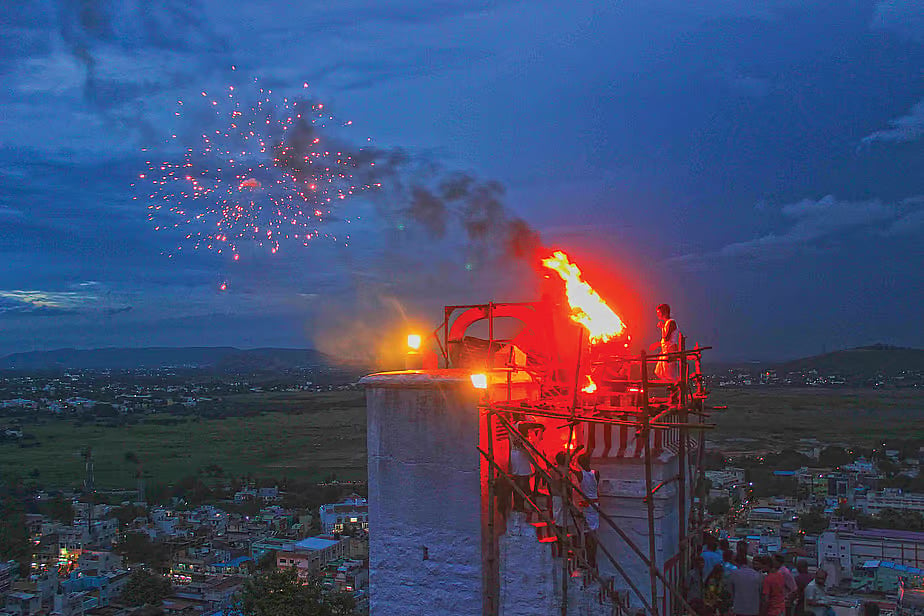
At the Thiruparankundram Subramaniya Swamy Temple, one of the six abodes of Lord Murugan located in Madurai, the Karthigai Deepam has been lit for many years in the Deepa Mandapam near the Uchip Pillaiyar temple. In October and November 2025, petitions were filed seeking permission to light the Karthigai Deepam in the area referred to as the “Deepathoon.” The temple administration issued orders citing traditional practice, safety, and law-and-order concerns. Following this, in cases filed before the Madurai Bench of the High Court, a single judge (December 1, 2025) and a division bench of two judges (January 6, 2026) ordered that the lamp be permitted to be lit at the Deepathoon.
Appeal petitions and writ petitions were filed in the Supreme Court challenging these High Court orders. A bench comprising Justices Aravind Kumar and Vipul M. Pancholi conducted a detailed hearing on interim relief from November 17 to 20 and issued an order on November 20.
In it, an interim stay was imposed on the judgment of the High Court Division Bench. However, taking into account the unique circumstances of the festival to be held on November 24, 2026, the court permitted a one-time temporary arrangement for a ceremonial lamp to be lit on the stone pillar identified as the 'Deepathoon' by a specific group approved by the Devasthanam. The court clarified that this permission shall not be construed as recognizing or enforcing any traditional, religious, or property right, and that it applies only to the 2026 festival.
Furthermore, restrictions were imposed on public gatherings, processions, and protests; the Madurai District Collector was directed to act as the coordinating authority, the Police Commissioner to provide security, the CRPF to be called in if necessary, and the Archaeological Survey of India to set the rules, with the condition that no disruption should be caused to religious worship at the dargah or other places of worship. In addition, the District Collector was ordered to submit a report within three days after the festival concluded.
In this situation, a review petition has been filed on behalf of the Commissioner of the Hindu Religious and Charitable Endowments Department. The petition points out that, even though no decision has been taken on whether the stone pillar is a traditional religious place of worship, and even though no right has been recognized, a mandatory interim order has been issued in a manner that alters the existing status quo. It is stated that, while the main case is still pending, granting the relief sought by the petitioners as an interim order for the year 2026 would undermine the very purpose of the appeals.
Although permission to light the lamp at the Deepathoon was denied, no one has been denied the festival since the lamp will be lit near the traditional site of Uchip Pillaiyar Temple; if the case later turns out favorably, it can be implemented in the following years. However, it has been argued that granting permission at a place very close to the dargah would alter the long-standing status based on an unproven claim of right and create irreversible consequences.
It has been stated that the rules requiring inquiry into the customary practices under Section 28(1) and Section 63(e) of the Tamil Nadu Hindu Religious and Charitable Endowments Act, 1959, were not taken into consideration. Further, according to the 1923 civil court judgment (affirmed by the Privy Council in 1931), the 1996 High Court order, the views of local residents, and documents relating to the 'Great Trigonometrical Survey', the nature of that stone pillar has still not been examined on the basis of evidence. The petition states that the need for stringent arrangements such as police protection, CRPF deployment, restrictions on the public, and a ban on processions itself indicates the sensitive atmosphere in the area and the risk to law and order.
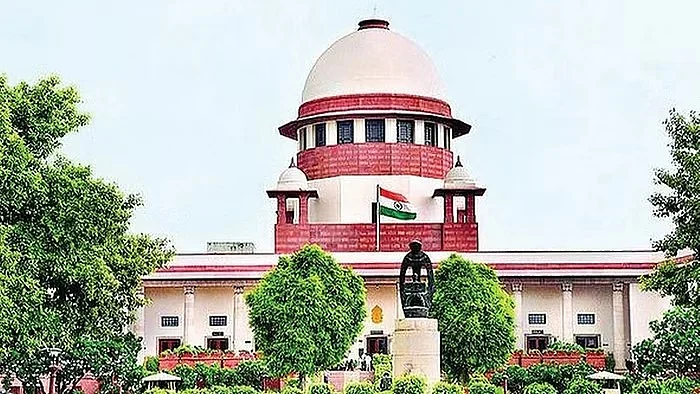
The petition states that there is a fear of harm to the religious harmony prevailing in Thiruparankundram as well as throughout Tamil Nadu, and that it is bringing to the court’s attention the practical difficulties and law-and-order issues involved in functioning as the coordinating authority in the capacity of District Collector. Since the festival is scheduled to be held on November 24, and if the date passes before the usual circular procedure is completed the review petition would become futile, interim petitions have been filed seeking an immediate stay on paragraphs 13 to 20 of the order and permission to argue in open court.
In this matter, all the main cases have been listed for the second week of January 2027, and the November 20 order has directed that all parties complete their arguments and counterarguments by then.