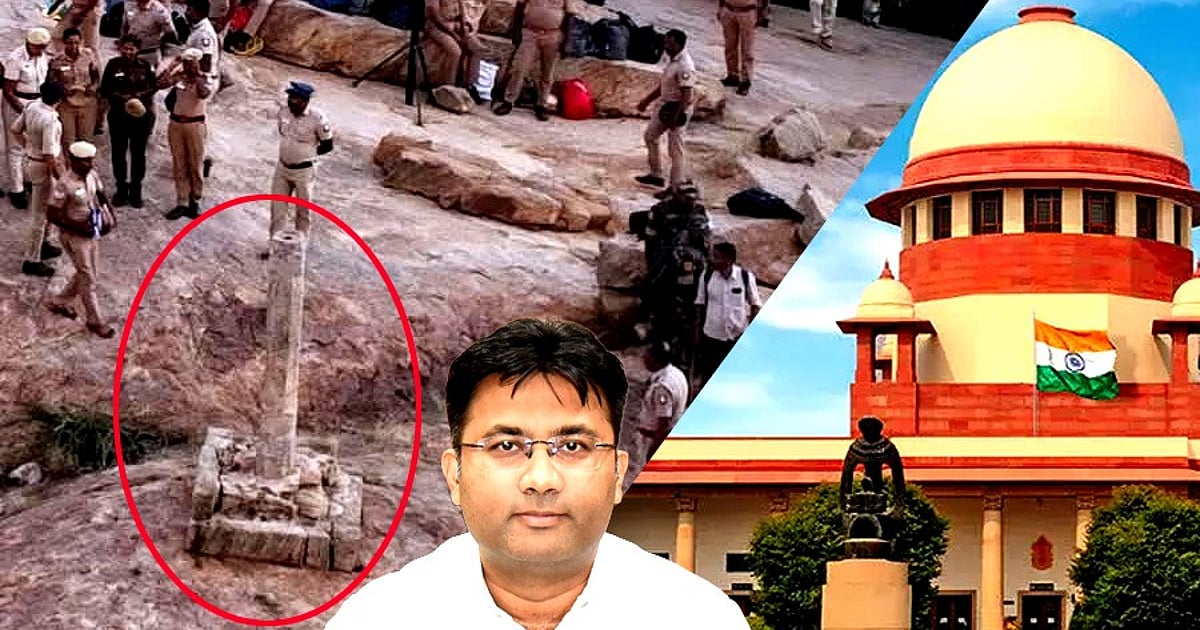
Thiruparankundram Deepathoon issue:
“You are shedding crocodile tears; we will suppress this with an iron hand!” - Supreme Court issues a sweeping order to dissolve the trustees’ committee and hand over the hill to the CRPF!
Severe criticism of Tamil Nadu officials for failing to implement the order; directive to take a flame from the lamp lit on the 24th and light the lamp on the pillar; bench of Justices Aravind Kumar and Vipul M. Pancholi springs into action, sending contempt notices to 13 people including the Chief Secretary and DGP!
Background of the case:
In the case concerning the lighting of Karthigai Deepam on the stone pillar at the summit of Thiruparankundram hill in Madurai, following the order dated 06.01.2026 of the Madras High Court, the Supreme Court had issued an important interim order on November 20, 2026.
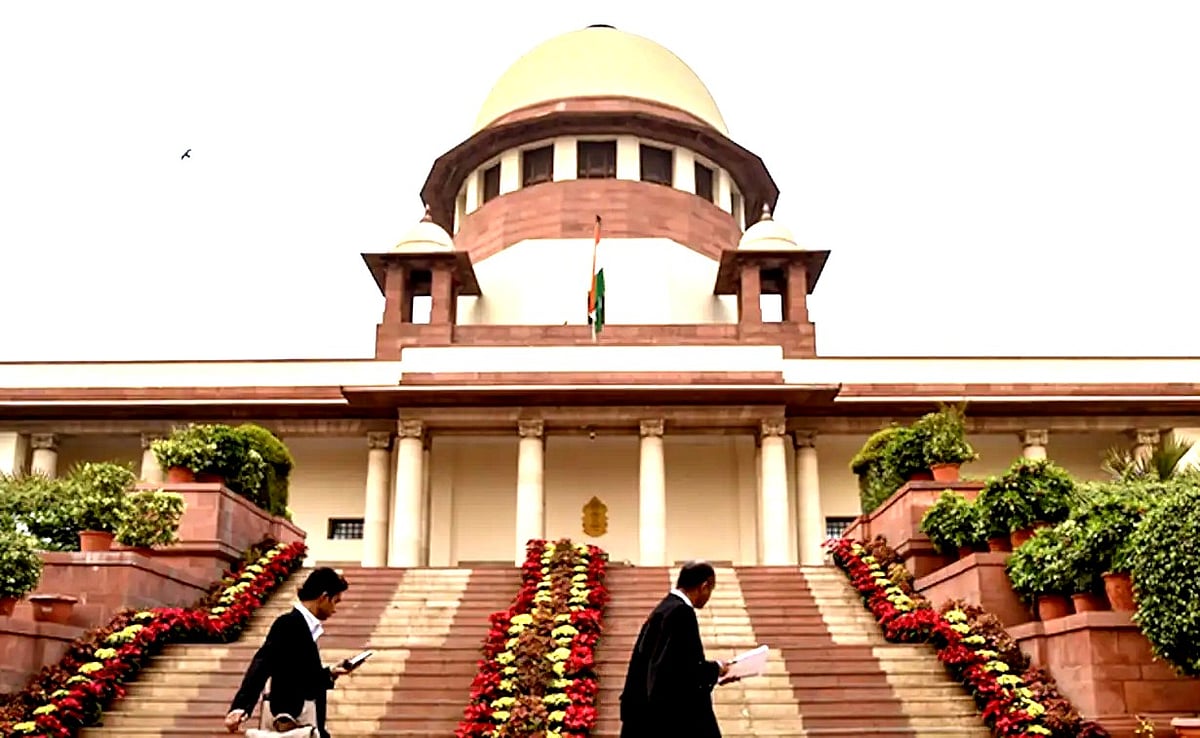
Accordingly, as a temporary measure, the Supreme Court had clearly ordered that the Karthigai Deepam should be lit on that particular pillar, that paramilitary forces could be used if necessary, and that the Madurai District Collector should act as the nodal officer for this.
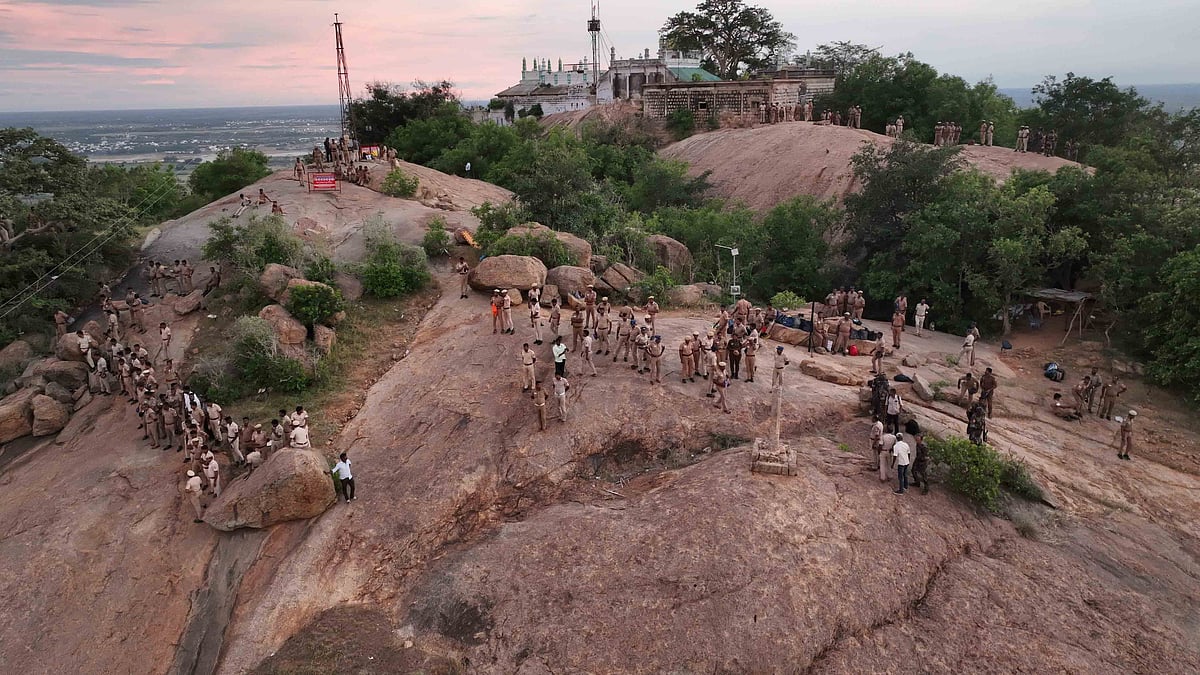
However, on November 24, during the Karthigai Deepam festival, the lamp was lit only at the usual Deepa Mandapam near the Uchipillaiyar Temple. The lamp was not lit on the Deepa Thoon ordered by the Supreme Court. Claiming that this amounted to contempt of the Supreme Court’s order, contempt petitions and intervention petitions were filed on behalf of the original petitioners, including Rama Ravikumar, Karthikeyan, and V. Ramasubbu. These petitions came up for hearing today (November 27, 2026) before a bench of Supreme Court judges Aravind Kumar and Vipul M. Pancholi.
Arguments put forward by the petitioners and their lawyers:
The original petitioner who filed the contempt of court case, Rama Ravikumar, and on behalf of the petitioners, senior advocates Guru Krishnakumar and J. Sai Deepak presented forceful arguments:
All the actions of the Madurai District Collector have centered around just one thing: that the Supreme Court’s order must not be implemented under any circumstances.
The Devasthanam (trust board) officials have nothing to do with carrying out the order. The Madras High Court also made this clear in its order. Even if the Devasthanam officials had objected, the district collector was under no obligation to accept it.
Just a week before the Supreme Court order was issued (November 13, 2026), a five-member board of trustees was appointed for the Thiruparankundram temple. Anticipating such an order, people were selected and included based on who would oppose it.
Among them, K. Regina is not a follower of Hinduism; another member had led a protest saying that a lamp should not be lit on this pillar. This committee has been turned into a tool to withstand attacks on the state government and to launch attacks from their side. Therefore, they should be removed from office immediately.
5 major allegations:
The District Collector did not implement the Supreme Court order.
The District Collector accepted the resolution of the Devasthanam members as it was, without verifying anything.
The officials did not fully cooperate with the Archaeology Department.
The temple priests (archakas) were not informed at all about the decision of the trustees’ committee.
The preliminary report filed by the District Collector on the 25th of last month was a planned act to cover everything up.
The order dated November 20 did not grant any authority for the trustees to make decisions on their own. After the 6:00–6:30 p.m. time slot for lighting the lamp had passed, a resolution was passed at 7:30 p.m., and the executive officer signed it.
Furthermore, filing a review petition the very next day and then using that as a reason to violate the order is the Tamil Nadu government's tactic. Since Tamil Nadu ministers had already spoken before Deepa Thirunal that a lamp would not be lit on the lamp pillar, it is certain that they have no intention of implementing the order.
Since the Karthigai Deepam festival lasts for 11 days, and since the month of Karthigai continues until December 15, they argued that, based on the tradition of lighting lamps every day, permission should be granted immediately to light the lamp on that specific Deepa pillar at any time (before December 15).
The forceful arguments put forward by Solicitor General of the Government of India Tushar Mehta, appearing on behalf of the Central Archaeology Department:
``We were ready to implement the Supreme Court’s order. But this is the highest form of overreach by the executive branch and an expression of administrative arrogance.
The trustees are government-appointed; they do not have religious faith. On November 24, when officials from the Archaeology Department went near the dargah at 3:15 p.m., senior police officers there stopped them from proceeding further. Permission was denied again at 4:15 p.m. As a result, they were unable to reach the stone pillar or inspect it.
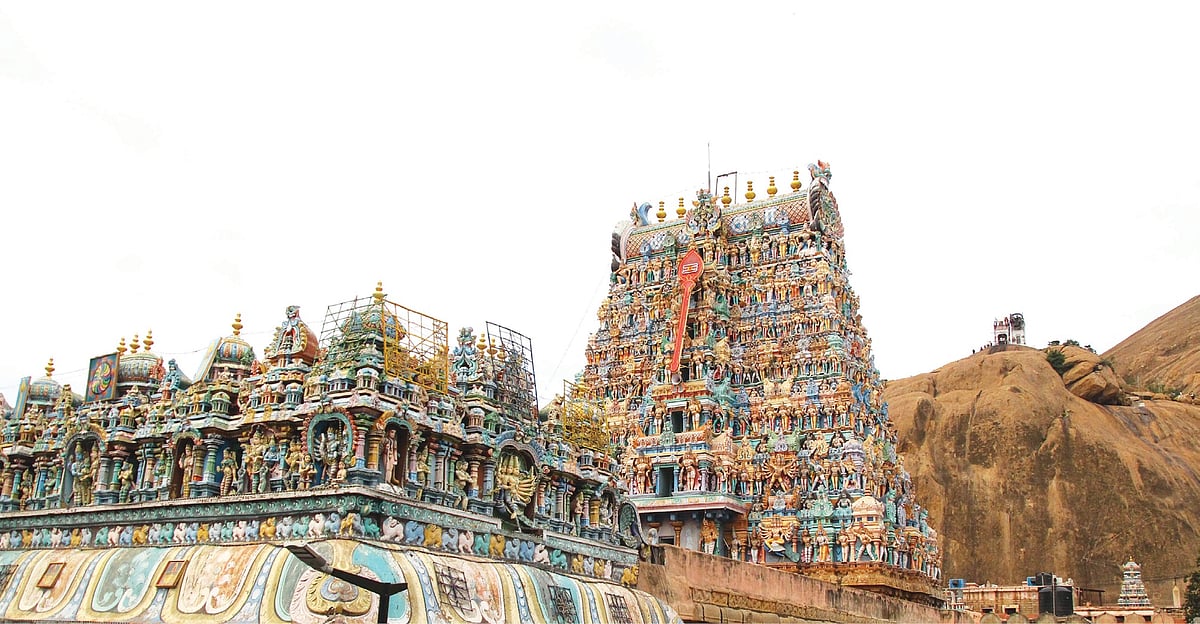
As soon as the information was received that the Madurai Bench of the Chennai High Court had issued an order at 5 p.m., the Superintendent of Police (SP) instructed them to leave the hill. However, the archaeology department officials remained in the hill area to monitor the next steps. With neither the Hindu Religious and Charitable Endowments Department nor any other department making any arrangements, they returned to the foothills around 7:45 p.m. without conducting an inspection.
This is not an ordinary insult; it is a deliberately committed, extremely serious criminal contempt of court. Before hearing the arguments of the prosecution, they should first be ordered to light the lamp on that pillar and thereby cleanse their contempt. From now on, the Tamil Nadu Police should not interfere in this matter in any way, including security. The Supreme Court should form a separate committee and ensure that the lamp is lit under the supervision of an outside committee."
Arguments on behalf of the Tamil Nadu government and officials!
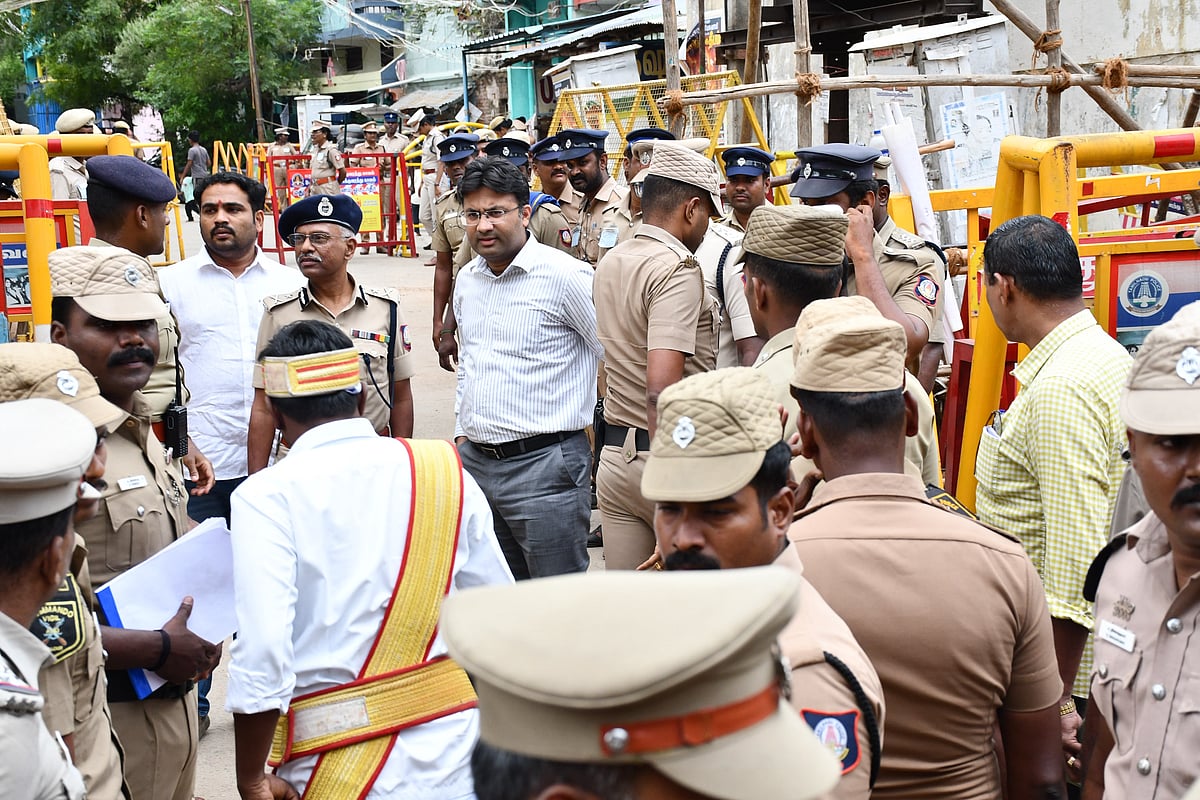
Madurai District Collector (Senior Advocate Gopal Sankaranarayanan) :
``The three-day time granted by the Supreme Court ends today. Before that, we have filed a preliminary affidavit explaining the reason why the lamp was not lit. I only said that I would follow the Supreme Court’s order; I did not say that I myself would go and light the lamp. Lighting the lamp is not my job; it does not fall within my authority.
I did not stop the archaeology department officials; we have submitted photographic evidence showing that they went to that place. Those who say the SP stopped them are making accusations like an anonymous letter, without specifying who that SP is or what his name is.
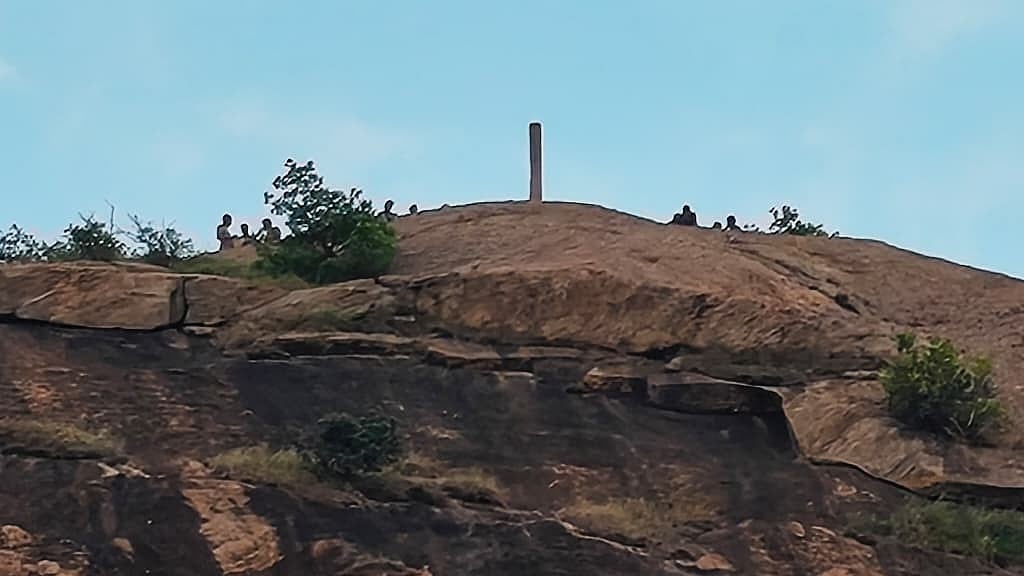
Madurai District Police Commissioner / Police side: On that day, more than one lakh devotees came for darshan. We were very clear that there should be no law-and-order problem. For security duty, a massive force was deployed: 24 special company troops (1,755 personnel), 2,400 police personnel, 1,200 armed police personnel, 332 home guard personnel, 61 DSPs, and 130 inspectors. Only fewer than 300 people who tried to disrupt the peace were arrested, and 4 cases were registered.
Temple Executive Officer (Senior Advocate Jaydeep Gupta):
The administrative officer cannot interfere in decisions taken by the trustee board on religious matters.
Hindu Religious and Charitable Endowments Department Commissioner (Senior Advocate Abhishek Manu Singhvi):
The Supreme Court did not make a final decision on the merits in this matter. Because of this, we assumed that there was scope for the department and the trustee board to independently make certain relaxations in the Supreme Court orders based on traditions and Agama rules; perhaps there was a misunderstanding.
Dargah administration (Senior Advocate Husefa Ahmadi):
The entire area at the top of the hill belongs to the dargah. No one should act there in a way that disturbs public peace.
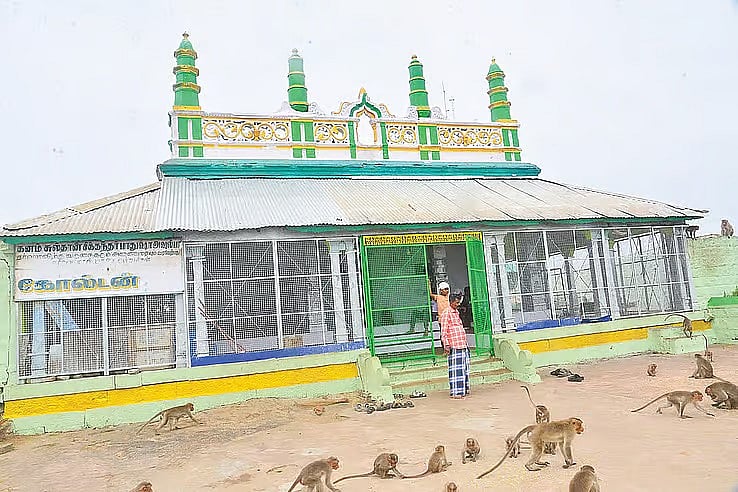
During the hearing, the judges’ interruptions and questions angered Judges Aravind Kumar and Vipul M. Pancholi, who heard the officials’ arguments:
Judges (to the District Collector): "Did you implement our order or not? Answer in one word.
Collector’s side: "Yes, we implemented it."
Judges: "No! If you had done that, why would these contempt of court cases be coming up? We will investigate and find out whether the tears you are shedding are real tears or crocodile tears."
Judges (regarding the Devasthanam): "Who exactly are these Devasthanam members? On what basis did the Board of Trustees convene?
Executive Officer’s side: "They convened on their own.
Judges: "No, they cannot convene on their own. For that, an authorized officer must issue a formal notice, and only then can they meet and take decisions. That is what your law says."
Judges (to Abhishek Manu Singhvi): "We did not say anything like that! We only said that a lamp should be lit on that particular pillar as a temporary measure. We have not given the trustees any freedom. Do not, on your own, try to interpret this and alter the order."
Judges (to the dargah administration): "How many people come to the dargah to worship in a day?
Dargah side: "100 to 200 people will come."
Judges: "There is no other reason; we are asking only to know. If anyone tries to commit constitutional violations, we will not stand by and do nothing; we will stop them firmly."
During the hearing, the judges noted down the names of Tamil Nadu Chief Secretary M. Sai Kumar and Director General of Police (DGP) Mahesh Kumar Agarwal after asking for them.
After the lunch break, the bench of Judges Aravind Kumar and Vipul M. Pancholi, which reconvened, read out its order in very strong words:
After hearing both sides, the first word that comes to mind is 'oh no'. We say this with great pain and deep anguish.
The time has come to suppress such situations with an iron hand; otherwise, they will lead to constitutional breakdown. "The Supreme Court's order is not an invitation to negotiation;
it will bind the state government, officials, and religious institutions. Article 144 of the Constitution mandates that all civil and judicial authorities within the territory of India must act in support of the Supreme Court.
Firm action will be taken under Section 129 and the Contempt of Courts Act, 1971, without any misplaced sympathy. No attempt to pollute the stream of justice will be tolerated, no matter how high the position. "An administrative breakdown has occurred in Madurai district. It appears that the officials acted on the orders of their political masters.
The powers of the Collector, who also serves as the District Magistrate, are extensive; his reach is very long. But he has shed crocodile tears and tried to place the blame on the temple administration. We reject the Collector’s initial report."
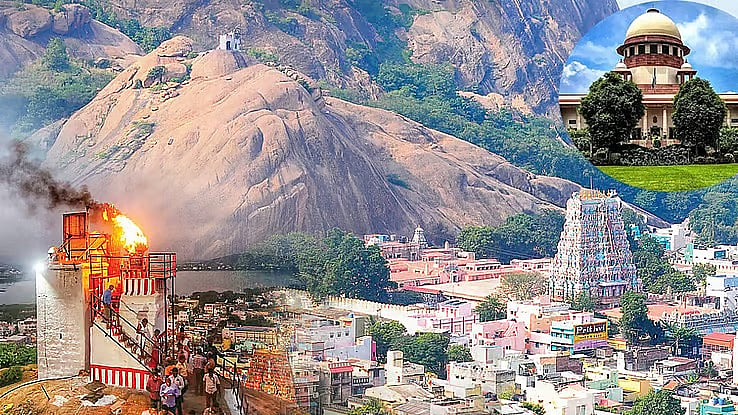
The lamp that was lit at the Uchip Pillaiyar temple on November 24 should be used to take a flame and, tomorrow (November 28, 2026), light the lamp on the lamp pillar at the hilltop. The restrictions/prohibitions imposed in the order dated November 20 are being lifted.
At the lamp-lighting spots and other places located at least 50 meters away on all sides of the dargah, every devotee should be allowed to light a lamp and worship.
Security must be provided for this. The entire area where Thiruparankundram Hill is located should be taken under the control of the Central Reserve Police Force (CRPF), which should provide security.
The CRPF has full freedom to protect the dargah. The CRPF must ensure that devotees coming to the dargah are able to pray without any hindrance. Furthermore, a fence may be erected in that area to distinguish between the dargah and the temple area.
The Thiruparankundram temple trustee committee, which caused obstruction in implementing the court order, is being immediately dissolved (suspended).
They are prohibited from functioning until further orders. A separate panel of receivers, comprising retired judges S. Vaidyanathan and V. Parthiban, has been constituted to manage the temple administration. Orders have been issued to send a show-cause notice asking why contempt of court proceedings should not be initiated against the following 13 people:
M. Sai Kumar - Chief Secretary, Tamil Nadu
Mahesh Kumar Agarwal - Director General of Police (DGP), Tamil Nadu
Rajaram - Secretary, Hindu Religious and Charitable Endowments Department
D.G. Vinay - Commissioner, Hindu Religious and Charitable Endowments Department
Nishanth Krishna - District Collector, Madurai
L. Devanathan - Superintendent of Police (SP), Madurai
R. Pon Swaminathan - Joint Commissioner, Hindu Religious and Charitable Endowments Department, Madurai
G. Selvi - Executive Officer, Arulmigu Subramaniya Swamy Temple
V. Shanmugasundaram - Chairman, Board of Trustees
C. Rajapandian - Trustee
K. Alagappan - Trustee
K. Regina Devi - Trustee
K. Chitra - Trustee
The Tamil Nadu Chief Secretary shall ensure that notice is personally served on the above 13 persons within 3 days from the date this order is issued and shall file a personal affidavit. Failing this, he must appear in person.
Furthermore, the judges rejected the request to allow the Chief Secretary and the DGP to appear via video and ordered that all the concerned officials must appear in person at the next hearing. The judges adjourned the case, announcing that the next hearing in this case will be held on December 15, 2026!