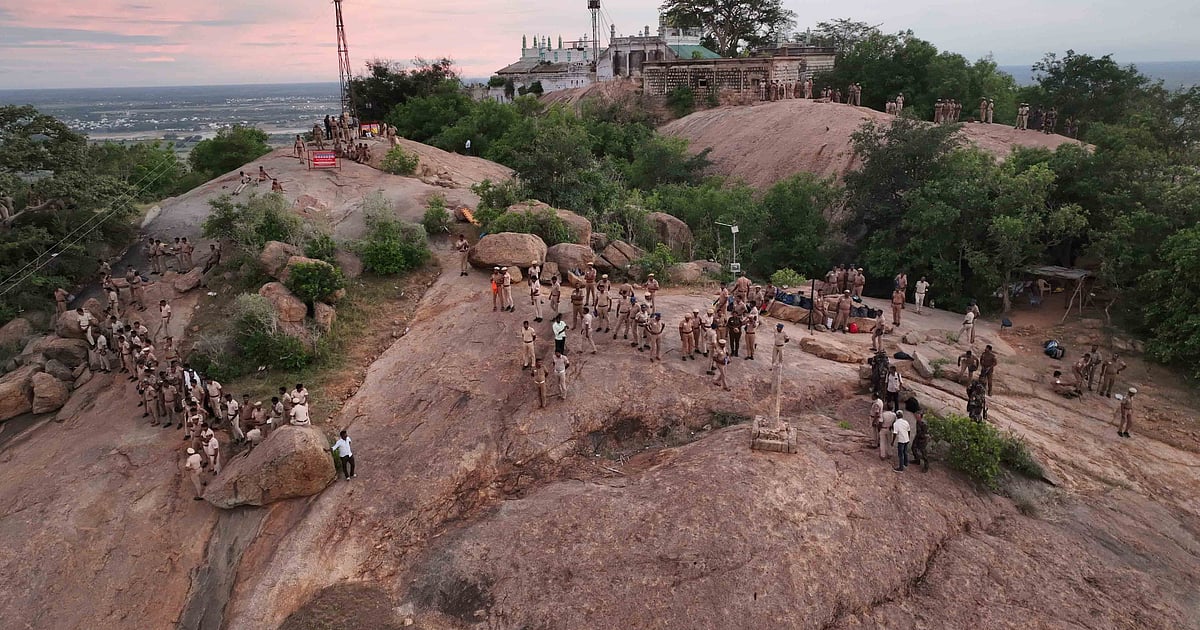
Regarding the Supreme Court order on lighting the Karthigai Deepam at the 'Deepathoon' area on the summit of Thiruparankundram Hill, and the events that followed, Madurai District Collector Nishanth Krishna has filed a detailed 17-page preliminary status report in the Supreme Court.
All consultation meetings held from November 20 to November 24, 2026, correspondence, security arrangements, the High Court hearing, the resolution of the temple trust board, and the reasons why the lamp was not lit at Deepathoon are accurately recorded in this report.
November 20, 2026: First consultation meeting...
Immediately after the Supreme Court order was issued, even before it was uploaded online, the District Collector held the first consultation meeting with revenue department officials on the evening of November 20. In this meeting, the law-and-order situation, the next steps to be taken, and inter-departmental coordination strategies were discussed, and important decisions were made.
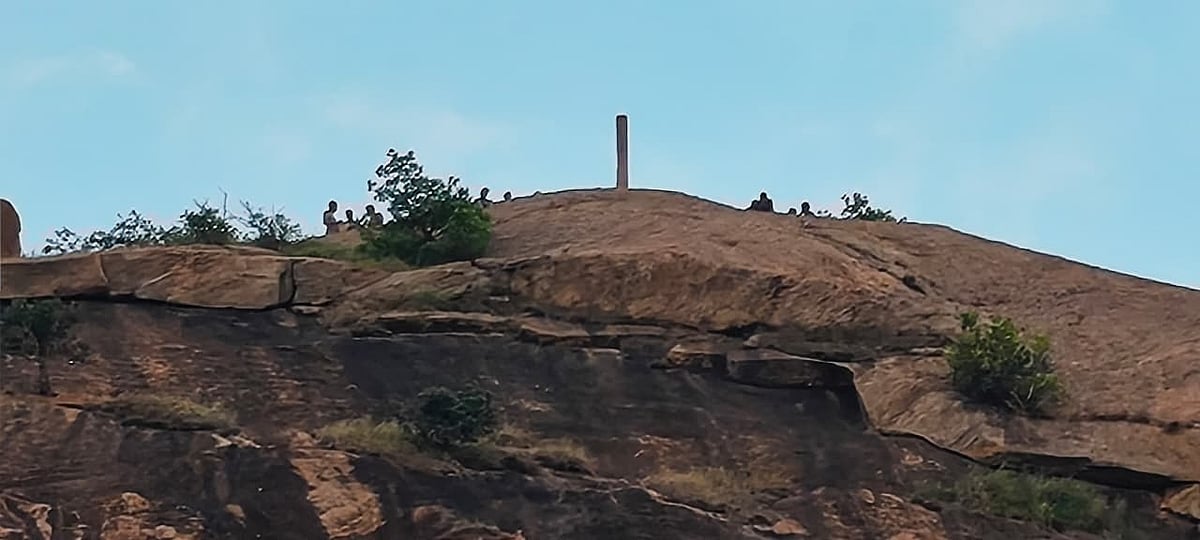
November 21, 2026: Letter and coordination meeting...
The Commissioner of the Hindu Religious and Charitable Endowments Department, by letter dated November 21, forwarded the Supreme Court order to the District Collector and the temple Executive Officer for information and further action.
On the same day, a coordination meeting was held from 7.00 p.m. to 9.00 p.m. under the chairmanship of the District Collector. Officials including the Madurai City Police Commissioner, the Deputy Commissioner of the Hindu Religious and Charitable Endowments Department and the temple Executive Officer, the District Revenue Officer, the Thirumangalam Revenue Divisional Officer and Sub-Divisional Magistrate, the Thirupparankundram Tahsildar, and others participated. The Supreme Court order was explained paragraph by paragraph, and the following decisions were taken:
On November 24, 2026, between 6:00 p.m. and 6:30 p.m., the lamp should be lit by a group of no more than 10 persons authorized by the Devasthanam. One observer each should be appointed from the Revenue Department, the Police Department, the Fire and Rescue Services Department, and the Archaeological Survey of India. The Executive Officer should decide the method of lighting the lamp in accordance with temple custom. The Police Commissioner stated that the Central Reserve Police Force is not required and that the security plan is ready. Action plans and deadlines for submitting reports were fixed for each department. It was recorded in the minutes that if a report is not submitted within the deadline, it will be reported to the government and in the compliance report to the Supreme Court. Since officials of the Archaeological Survey of India did not participate in this meeting, it was decided to hold an additional meeting with them on November 22.
November 22, 2026: Emails, the temple administration proposal, and the security plan On November 22, several important correspondences and the third coordination meeting took place:
Email correspondence: In the first letter sent to the Devasthanam, the Deputy Commissioner and Executive Officer of the Hindu Religious and Charitable Endowments Department were instructed to immediately implement the court orders, pointing out that only the authorized group should light the lamp. In the second letter, since the temple is functioning under the control of the Hindu Religious and Charitable Endowments Department, the Commissioner’s intervention was sought to ensure that the court orders are carried out. Copies of both letters were emailed to the Government Secretary and the Commissioner at 7:28 p.m.
Temple administration’s proposal:
In the proposal submitted by the Deputy Commissioner and Executive Officer of the Hindu Religious and Charitable Endowments Department, it was stated that an iron or wooden scaffold would be erected on the level ground near the pillar, and that the pillar would be protected by spreading wet jute sacks and wet clay, on top of which an earthen lamp would be placed and lit. It was also noted that this method had been accepted in consultation with the Archaeological Survey of India. Furthermore, the plan included installing temporary electric lights from the foothills of Palaniandavar Temple to the hilltop, a preparatory team of 27 members (2 fire ritual technicians from Tiruvannamalai, 10 electrical workers, and 15 scaffold-erecting workers) going up the hill at 6.00 a.m. on November 24, and a 10-member team consisting of two temple priests, the chairman of the trustee committee, the superintendent, the chief clerk (festival section), the technical assistant, the peskar, an office assistant, and two fire ritual technicians going up at 2.00 p.m. It also included lighting the Baladeepam in the sanctum sanctorum and then lighting the lamp on the pillar at 6.00 p.m. and completing it by 6.30 p.m., removing the materials after the event, and arranging an emergency medical team. However, no document showing that the persons were approved by the Devasthanam was attached to this letter.
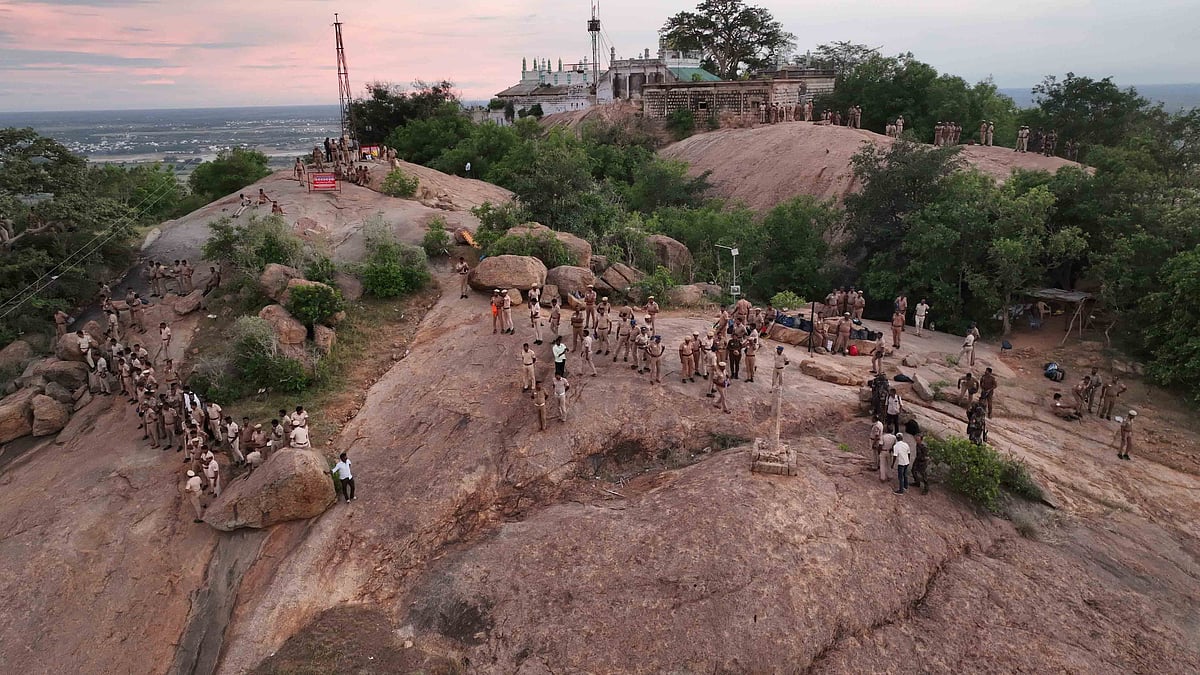
Police Security Plan: The police submitted the 'Thiruparankundram Karthigai Deepam Security Plan.' Accordingly, a total of 5,797 police personnel from the armed forces, Tamil Nadu Special Police, and Home Guard units, including 11 deputy commissioners, 61 assistant commissioners, and 130 police inspectors, were deployed at locations including the Deepa Thoon, dargah, Kasi Viswanathar Temple, Nellithoppu, Moksha Deepam junction, Palaniyandavar and Kasi Viswanathar steps, hill paths, the foothills, and the girivalam path. Executive magistrates were appointed at 20 locations, and medical teams were deployed on the hill and at the foothills. The Assistant Commissioner of the temple jurisdiction was appointed as the police observer, and 4 officials from the Archaeological Survey of India were appointed as observers. Third meeting: A third meeting was held from 3.00 p.m. to 5.00 p.m., attended by the Police Commissioner, the Madurai South Deputy Commissioner of Police, the Hindu Religious and Charitable Endowments Department Deputy Commissioner/Executive Officer, the Tiruchi Circle Superintendent of the Archaeological Survey of India and 3 officials, the District Revenue Officer, the Thirumangalam Revenue Divisional Officer, and the Thiruparankundram Tahsildar.
November 23, 2026: Issuance of prohibitory order: At 2:30 p.m., the District Collector held consultations with the District Fire Officer and the Deputy Director of Health Services. Based on reports submitted by the Police Commissioner, the Superintendent of Police, and the Thirumangalam Revenue Divisional Officer that various groups were likely to gather both in support of and against lighting the lamp, and that protests could take place, the District Collector issued a prohibitory order under Section 163 of the Bharatiya Nagarik Suraksha Sanhita (BNSS).
Accordingly, a ban was imposed on holding meetings, protests, demonstrations, and processions, and on anyone climbing Thirparankundram Hill, from 9:00 p.m. on November 23 until 10:00 a.m. on November 25. At the same time, this restriction was exempted for gatherings or processions held during religious rituals, festival events conducted by personnel authorized by the temple administration, actions taken to implement the Supreme Court’s order, and the regular lawful worship of other religious institutions, including dargahs.
November 24, 2026: Festival day events and High Court order: 9:30 a.m. – 12:30 p.m.: The District Collector, who held a consultation at the Police Commissioner’s office, along with the Police Commissioner, personally inspected the arrangements on Thiruparankundram Hill. He ensured that revenue officials, police, Indian Archaeological Department observers, executive magistrates, and fire and rescue personnel were on duty, and appointed the District Revenue Officer to remain there throughout the day.
10:08 a.m.: Since the preparatory team had not yet gone up the hill, the District Collector sent an email to the Deputy Commissioner/Executive Officer of the Hindu Religious and Charitable Endowments Department, asking that the team be sent immediately and that a written explanation for the delay be provided. 11:30 a.m.: It was conveyed by the Executive Officer’s side through two letters that approval had been sought from the Devasthanam Board of Trustees for the selected 10 persons, and that only after approval is obtained would the preparatory work and the lighting of the lamp be carried out. 1:15–3:30 p.m.: The District Collector appeared in the High Court hearing. Meanwhile, at 3:00 p.m., the Revenue Divisional Officer reported that all observers, as well as the security and medical teams, had reached their assigned places on the hill and that law and order were normal. 3:47 p.m.: Since Devasthanam approval had still not been received, the District Collector sent a reminder letter requesting that approval, along with the list of approved persons, be issued immediately. 4:00–4:45 p.m. (High Court ruling): In the hearing attended by the District Collector via video conference, the High Court issued an interim order at around 4:30 p.m.
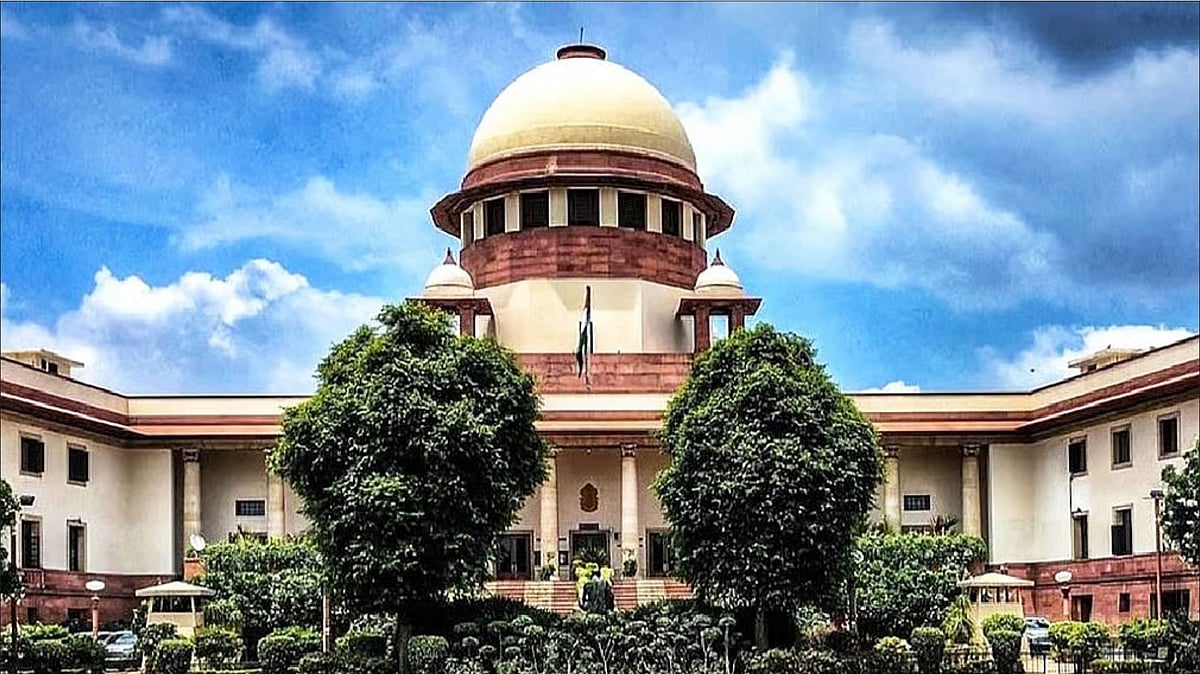
In it, the court recorded the Collector’s assurance that he would comply with the Supreme Court’s order and stated that, under Article 144 of the Constitution, the Collector is answerable only to the Supreme Court. It also said that the pendency of a review petition is not a reason for not implementing the order, and that the Collector, the Police Commissioner, the Executive Officer, and the trustees are all bound to implement it. Further, it ordered that devotees should not use the injunction as a pretext to prevent them from going on the Girivalam or from viewing the Deepam from below, and it restrained any call to the public to violate the Supreme Court’s order, thereby disposing of the petitions. 5.03 p.m.: After the High Court’s verdict, the Collector, in his capacity as the coordinating officer, sent an email stating that all arrangements were ready and that, without any administrative obstacles, they should immediately go with the approved team and light the lamp on the Deepam pillar. 6.00 – 6.30 p.m.: At the scheduled time, no team approved by the Devasthanam arrived; no extension of time was requested either. 7.32 – 8.30 p.m.: At 7.32 p.m., the temple’s press release was issued. When the Collector contacted him, the Executive Officer said he was unable to proceed because of the trustees’ resolution.
This information was conveyed to the coordinating lawyer at 8:21 p.m. In the report submitted by the executive officer at 8:30 p.m., it was stated that, as per the resolution of the Board of Trustees, it was decided to light the lamp at the customary place, and accordingly the Maha Deepam was lit at 6:00 p.m. in the Deepa Mandapam near the Uchipillaiyar Temple, and that the lamp was not lit on the Deepa Thoon. The Collector’s report also pointed out that the district administration has no authority to recognize anyone other than those approved by the Devasthanam. Key points of Board of Trustees Resolution No. 1... The following points were included in the Board of Trustees resolution passed on November 24: Thiruparankundram Arulmigu Subramaniyaswamy Temple is an ancient place of worship. Its festivals and rituals are conducted in accordance with religious traditions and Agama rules followed for generations. As per the age-old custom, the Karthigai Maha Deepam is lit in the Deepa Mandapam near the Uchipillaiyar Temple on the hill, directly above the head of the presiding deity.
Such traditions are the temple’s distinctive religious identity. Based on historical continuity documents, Agama evidence, and the views of the local stakeholders, it was unanimously decided that, in order to preserve these traditions, the lamp would again be lit this year at the usual place, and that the temple traditions would then be brought to the court’s attention. In accordance with this decision, the Maha Deepam was lit at 6:00 p.m. in the Deepa Mandapam of Uchipillaiyar Temple. At no stage did the Devasthanam inform the District Collector of any authorization for any person to light the lamp on the Deepa Thoon. The District Collector’s final submission and regret: In his report, the District Collector stated that from the evening of November 20 until the evening of November 24, he acted continuously in good faith within the powers and responsibilities entrusted to him. He noted that he had no intention whatsoever of willfully violating the orders of the Supreme Court, that he held the highest respect for the court’s orders, and that he was prepared to comply with any order issued by the court. Although the district administration made every effort to secure the Devasthanam’s authorization and to have the lamp lit on the Deepa Thoon, the Trustee Board decided to light the lamp at the usual place, and therefore the lamp could not be lit on the Deepa Thoon. The District Collector has sincerely expressed regret and apologized for this. He has further requested that the additional status report, along with supporting documents, be submitted, and humbly asked that this preliminary report be taken on record.