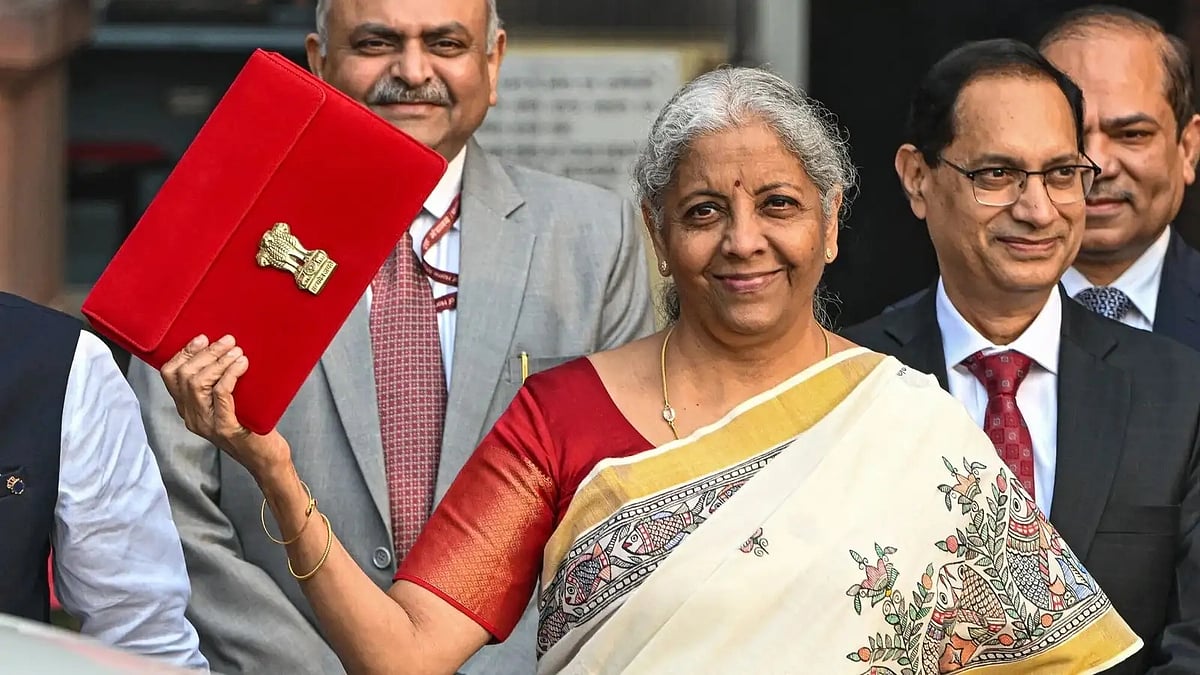
Nirmala Sitharaman, Union Finance Minister
To build a developed India, an economic environment in which every business, big or small, can thrive and grow is essential. Introduced in 2017, GST (Goods and Services Tax) created an integrated indirect tax system across the country. Based on practical experience, the experiences of taxpayers, and the experiences of the states, the next-generation GST has been introduced as its next evolution.
Its two objectives, shaped by Prime Minister Narendra Modi’s visionary outlook, are to simplify tax rates and make tax compliance easier. The tax rate changes came into effect on September 22, 2025. The next phase of procedural reforms will soon come before the GST Council. Their goal is relief for families, certainty for businesses, and a hassle-free process for taxpayers. In this journey, states are participating with their priorities and experience, and are playing an important role in both decision-making and implementation.
The benefits of the reform are reflected in the statistics. In the April–September 2026 period, gross goods and services tax revenue amounted to Rs. 12.46 lakh crore. This is 11.6 percent higher than the previous year. From June to September, double-digit growth was recorded every month, and revenue for those four months rose by nearly 15 percent. Net revenue, after deducting refunds, increased by 10.4 percent.
This growth has spread across 11 sectors and major states. Sales of consumer goods have increased by 26.7 percent. When tax relief is reflected in the prices of goods, households’ purchasing power and saving capacity increase. That, in turn, creates demand and growth throughout the economic chain, from retailers to manufacturers.
Small and medium-sized enterprises have gained the opportunity to reach new customers. As industry grows in second- and third-tier cities, employment and business infrastructure expand.
As of the end of August, the total number of registrations for the goods and services tax stood at about 17.1 million. This is nearly a 15% increase over the past year. Monthly tax returns filed on time during the April–July 2026 period also rose by 12.6%.
Tax refunds are also important. During the April–September period, about ₹1.80 lakh crore was refunded. If the certainty of receiving the eligible amount increases, companies can plan procurement and production with confidence. The refund process is also a key indicator for measuring the quality of tax administration.
The revenues of the states have also strengthened. The states’ revenue from State Goods and Services Tax and Integrated Goods and Services Tax together rose by about 16 percent in the April–September period this year. As a result, investment in infrastructure and public services is increasing.
The proposals to be placed before the GST Council on October 7 have been developed through continuous work with the states. They are aimed at reducing the time and cost of compliance, and include registration, returns, refunds, disputes, and improvement of input tax credit.
The maturity of the next-generation GST system has laid a strong foundation for the next phase of reforms. The approach of clarity, certainty, and respect for taxpayers continues in direct taxes as well. A reliable tax system gives businesses the confidence to plan long-term investments. That confidence, in turn, will further strengthen the economic journey toward the goal of a developed India by aligning industry, consumption, employment, and government revenue.