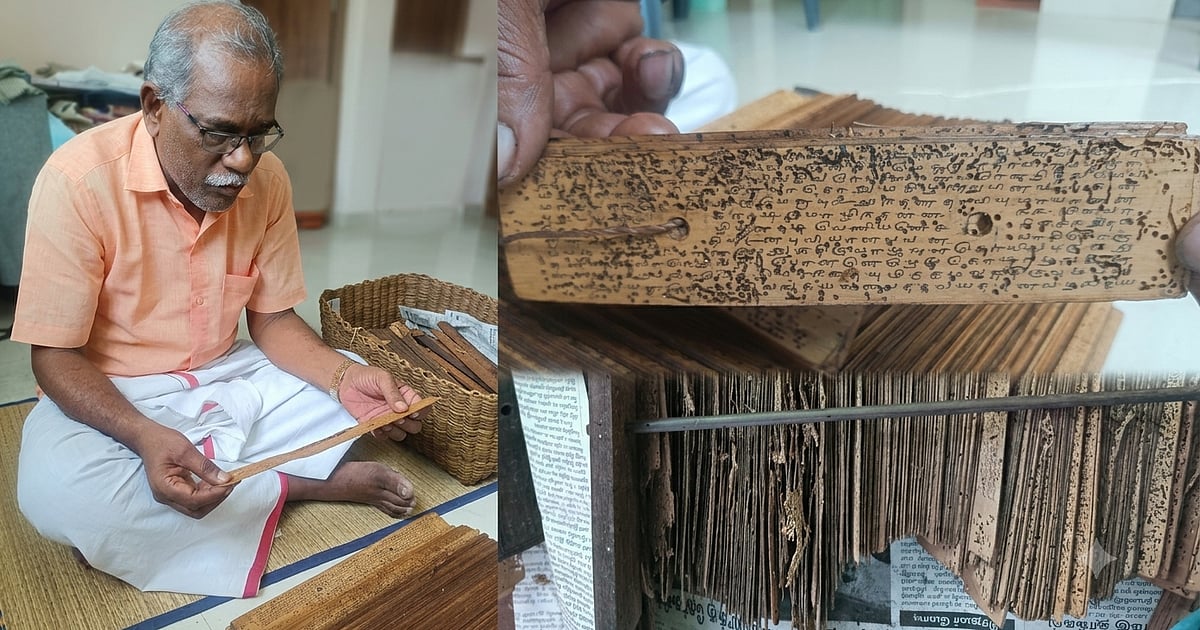
However many rapid changes time may undergo, there is a special joy in preserving the manuscripts that carry within them the cultural greatness and wisdom of our ancestors, without letting them perish.
In Nachanthupatti, in Pudukkottai district, members of the Nagarathar community have, for generations, worshipped in their homes and treasured and safeguarded ancient palm-leaf manuscripts such as the Ramayana and Mahabharata. They have now been successfully digitized and given new life through the Tamil Nadu Department of Archaeology’s 'State Manuscript Group'.
In Natchanthupatti, Arimalam, Kadiyapatti, Rayavaram, Ponnamaravathi, and the surrounding villages where the Nagarathar community of Pudukkottai district lives, ancient palm-leaf manuscripts have been preserved from generation to generation for more than 200 years.
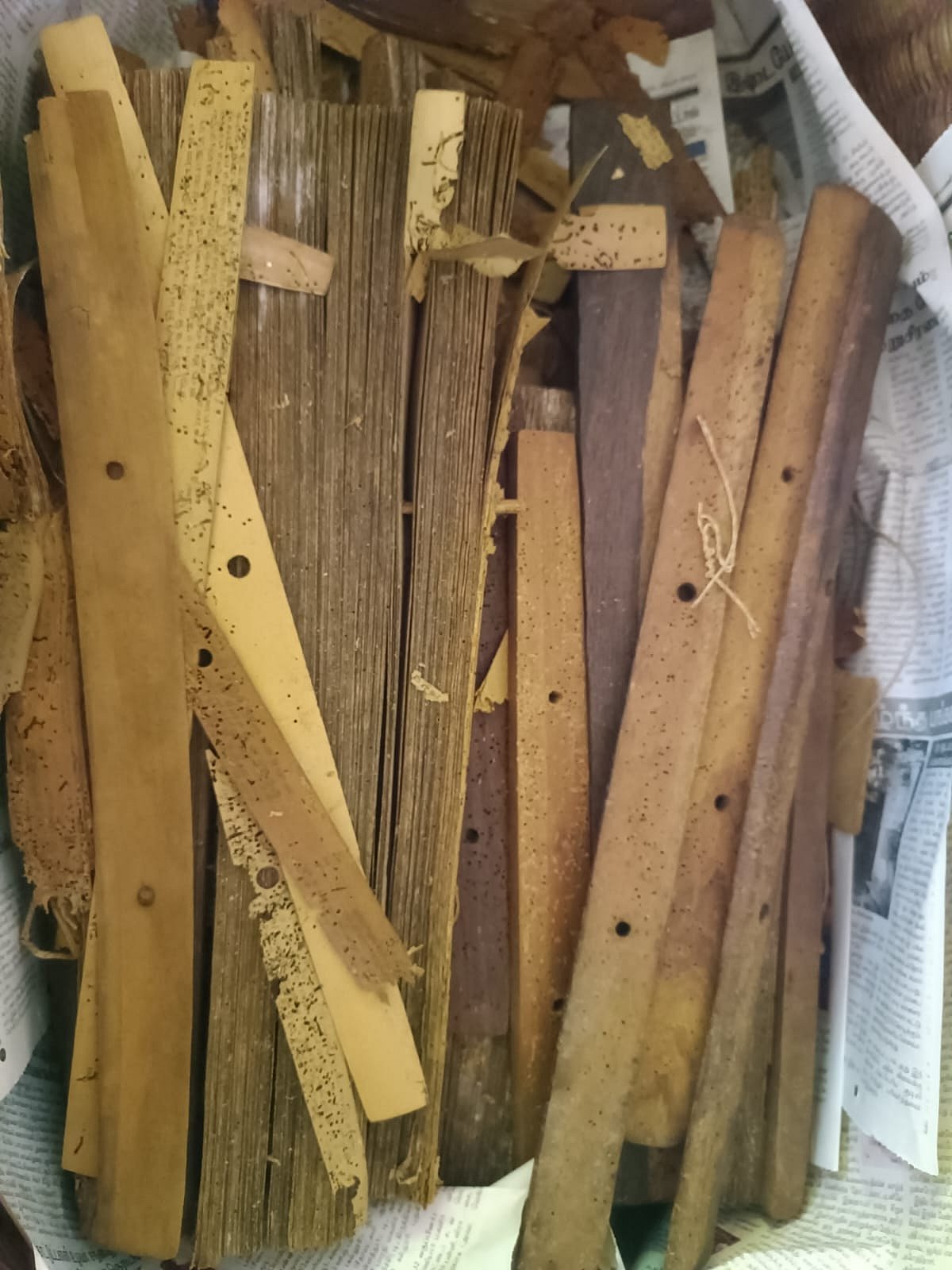
In the homes of three traditional families from Natchanthupatti—Samiyadi Chettiar, Kumman Chettiar, and P. Rama Chettiar—the stories of the epics Ramayana, Mahabharata, and Thiruvilayadal Puranam have been preserved in the form of palm-leaf manuscripts.
Only a few of these manuscripts had been converted into book form about 30 years ago. Every year, on Saturdays in the Tamil month of Purattasi, these sacred palm-leaf manuscripts were taken out of the box and preserved by applying lemon grass oil to prevent them from being damaged by termites and insects. They have also made it a way of life to gather with neighbors and read the Ramayana verses in the manuscripts, finding spiritual joy.
The Archaeology Department that gave the manuscripts a new lease on life!
Determined that these rare manuscripts, which were on the verge of being lost due to the lack of proper scientific preservation, should not be destroyed over time, the Tamil Nadu Department of Archaeology took up the historic task of digitizing them after learning about them.
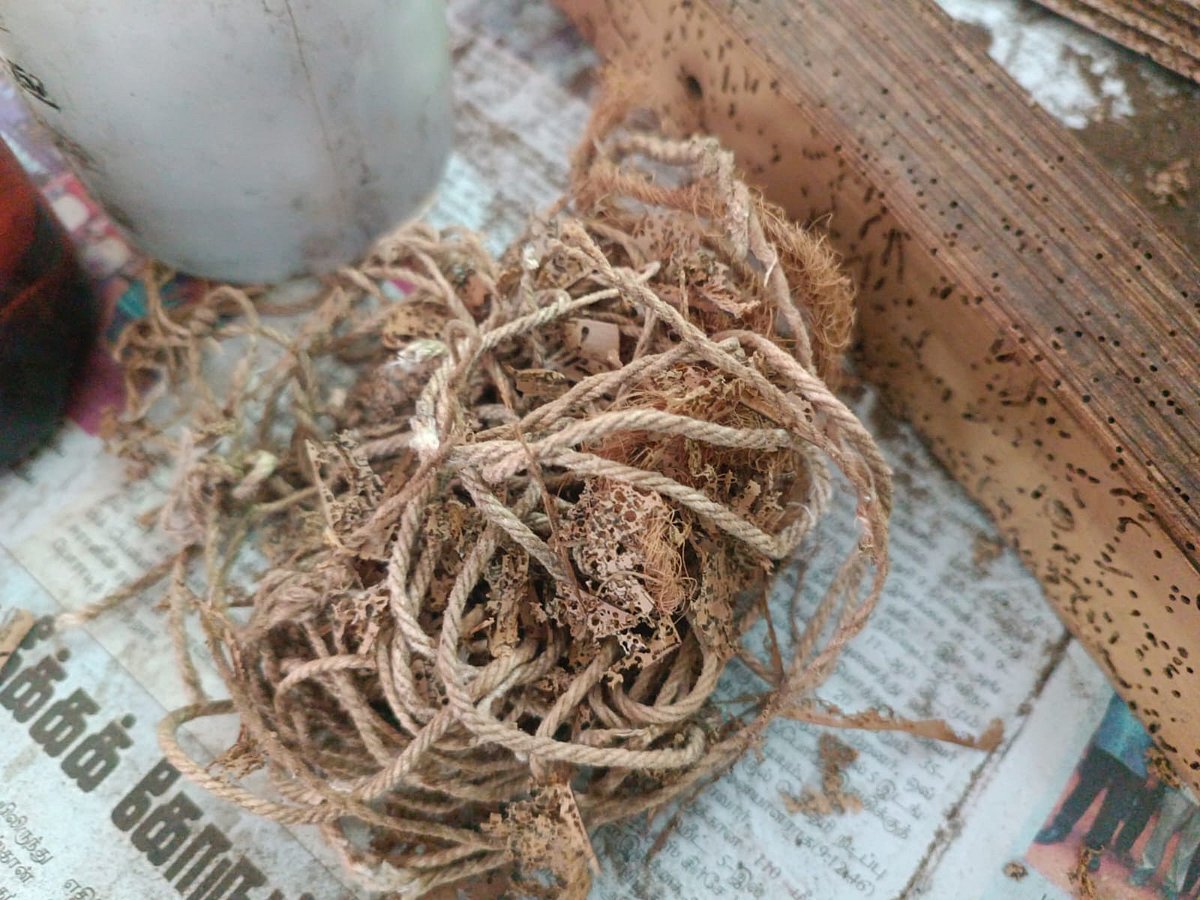
In this preservation effort, which began in Nachanthupatti on August 15, 2025, a team of epigraphy experts from Chennai cleaned each manuscript by dusting it carefully. To protect the manuscripts from insect damage, lemongrass oil was applied, and then precise photographs were taken using high-end cameras.
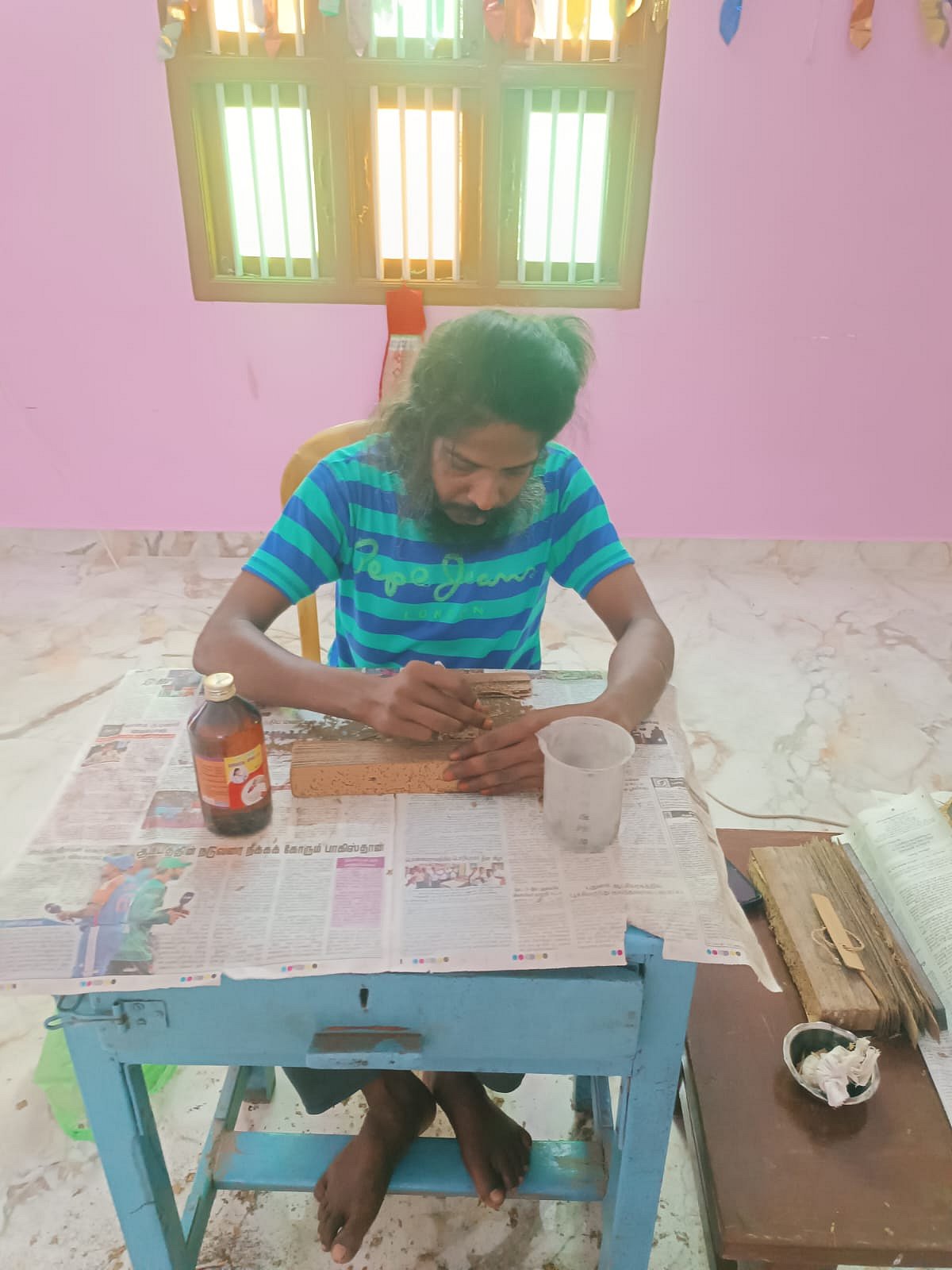
Through this meticulous work carried out over the course of a year, the Ramayana: 19 bundles - 7,266 pages, Mahabharata: 5 bundles - 4,812 pages, for a total of 12,078 pages. Two pages per manuscript leaf. Thus, according to the inventory of palm-leaf manuscripts, a total of 6,039 palm-leaf manuscripts have been converted into digital format.
Following the full completion of all the work, the copy of the digitized manuscripts and the Pen Drive version were recently formally handed over to the descendants of Samiyadis Chettiar by Dr. G. Sasikala, the State Coordinator of the Manuscriptology Group of the Tamil Nadu Archaeology Department. It is noteworthy that this is the first manuscript preservation work undertaken by the Archaeology Department in Pudukkottai district.
A challenging and remarkable achievement…!
We spoke about this with Dr. G. Sasikala, the State Coordinator of the State Manuscript Group of the Archaeology Department of the Government of Tamil Nadu, who searched for and discovered these rare treasure-like palm-leaf manuscripts, preserved them, and digitized them.
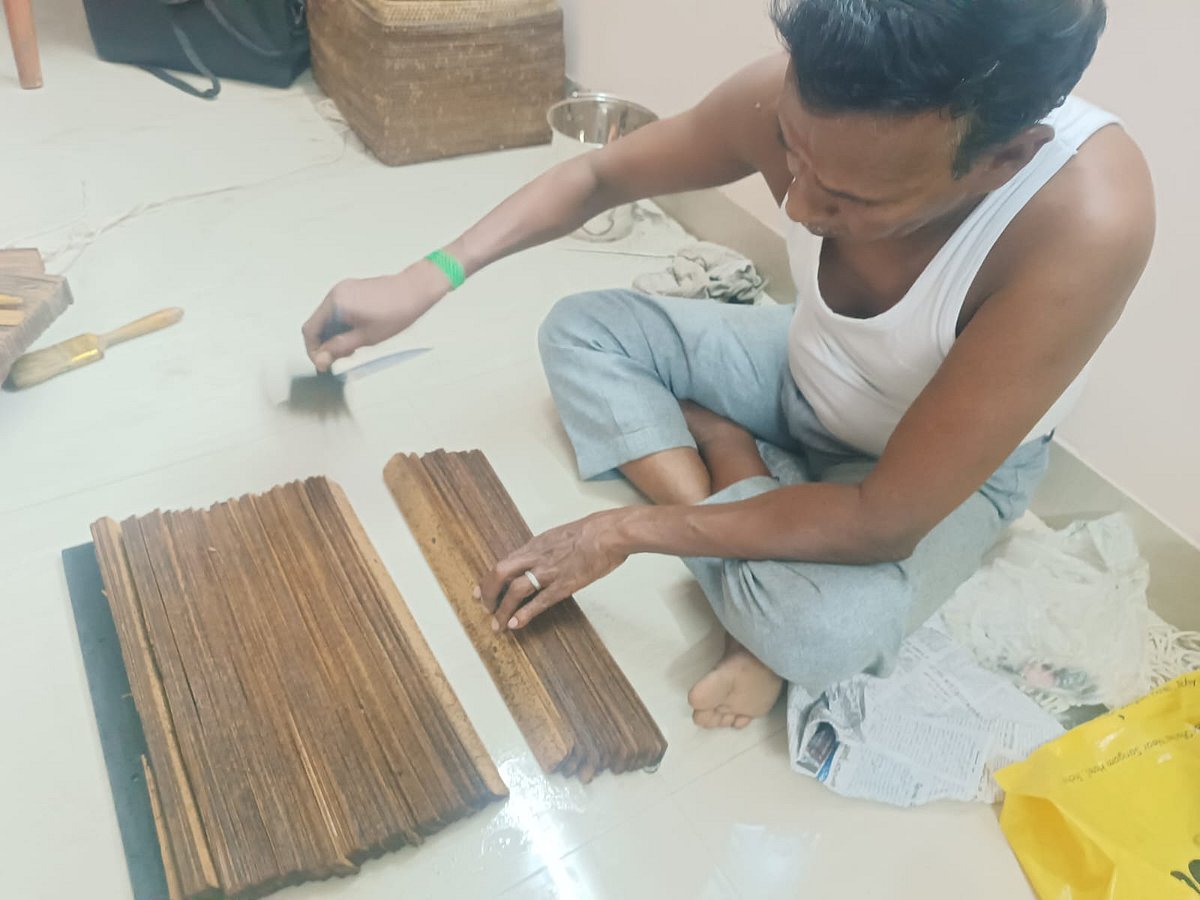
"Under the Tamil Nadu Government Archaeology Department, the 'State Epigraphy Group' was established in 2019 by government order. For me, who holds a doctorate in archaeology and works as an archaeologist, searching for inscriptions and ancient temples gives a thrill; in the same way, this manuscript search has also become a historical task."
Although our head office operates in Chennai, our team of 15 experts is divided into five regions—Chennai, Madurai, Tirunelveli, Thanjavur, and Coimbatore—and we conduct field research by searching for traces in every nook and corner of Tamil Nadu. Among these, the 'Madurai region' has yielded and preserved the largest number of palm-leaf manuscript treasures.
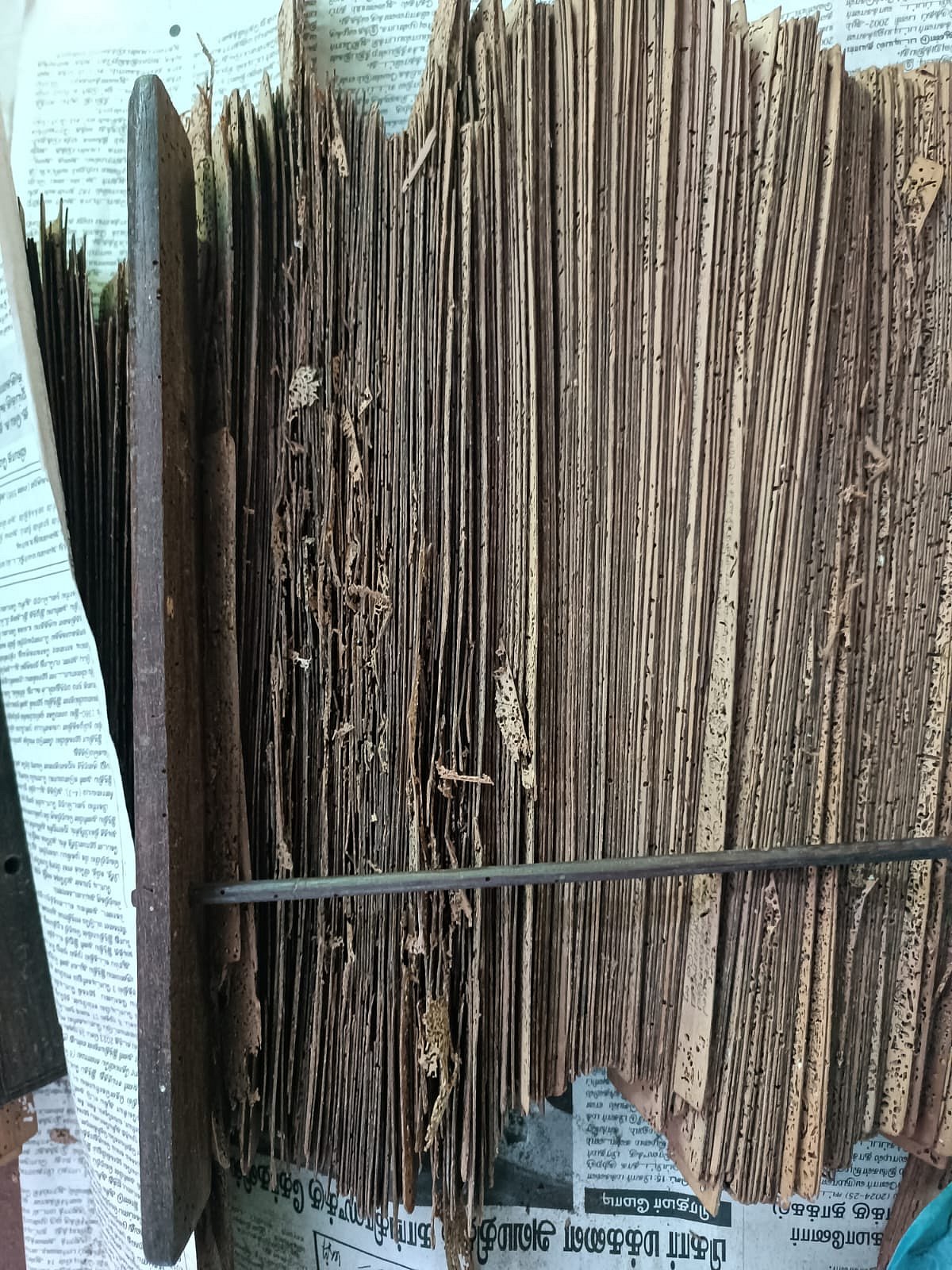
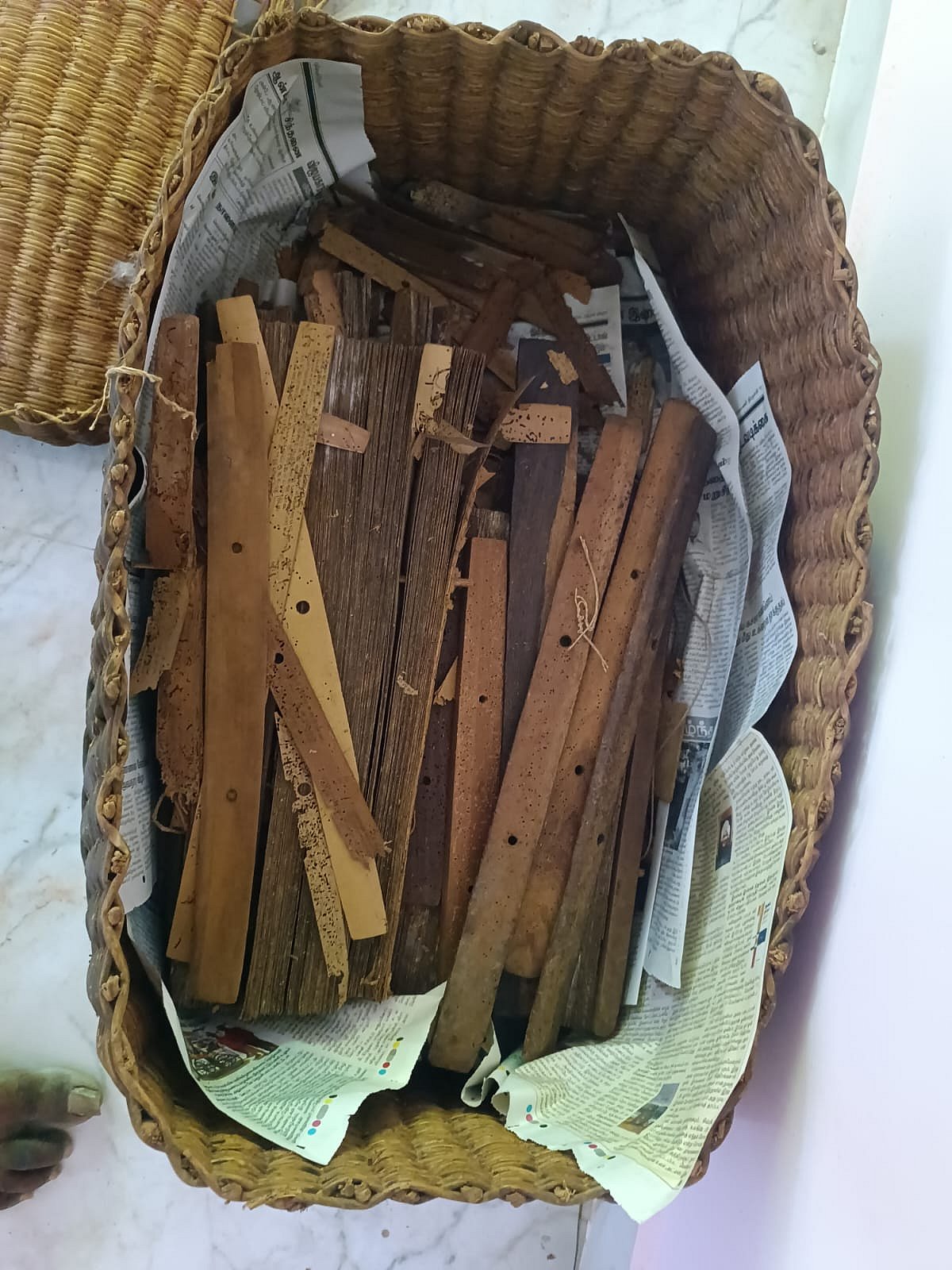
In rural areas, especially in villages, such manuscripts lie treasured and dormant in the homes of two Sivadiyars or astrologers. When we first examined those Ramayana manuscripts that the Nagarathar families in Nachanthupatti had kept safely in a basket, they were in a very poor condition, crumbling into dust from the ravages of time; but today, we have carried out proper scientific conservation and digitization of those same manuscripts. The peace and pride visible on the faces of the elders as they worship and read them on Purattasi Saturdays is the greatest reward for our efforts.
The challenges we face in this work are not ordinary. Having passed through many years, the manuscripts have been eaten away by insects and by various kinds of fungi, including 'Ramabanam', and lie in a crumbling state. Recovering all of that is like a great penance. An even greater challenge is the fear and lack of awareness among the people. Many are not immediately willing to hand them over, out of the mistaken fear that, 'The government will come and snatch this away,' or that 'If it is digitized, our ancestral property will be taken away from us.'
Some business-minded gangs also exploit this ignorance and deceitfully buy these treasures from the public at low prices, which is a sad reality. That is why we repeatedly speak to people in person and create awareness by saying, “This is your ancestral property; do not lose it. The government will not seize it from you; instead, it will safeguard it in your own home and hand it over to you.”
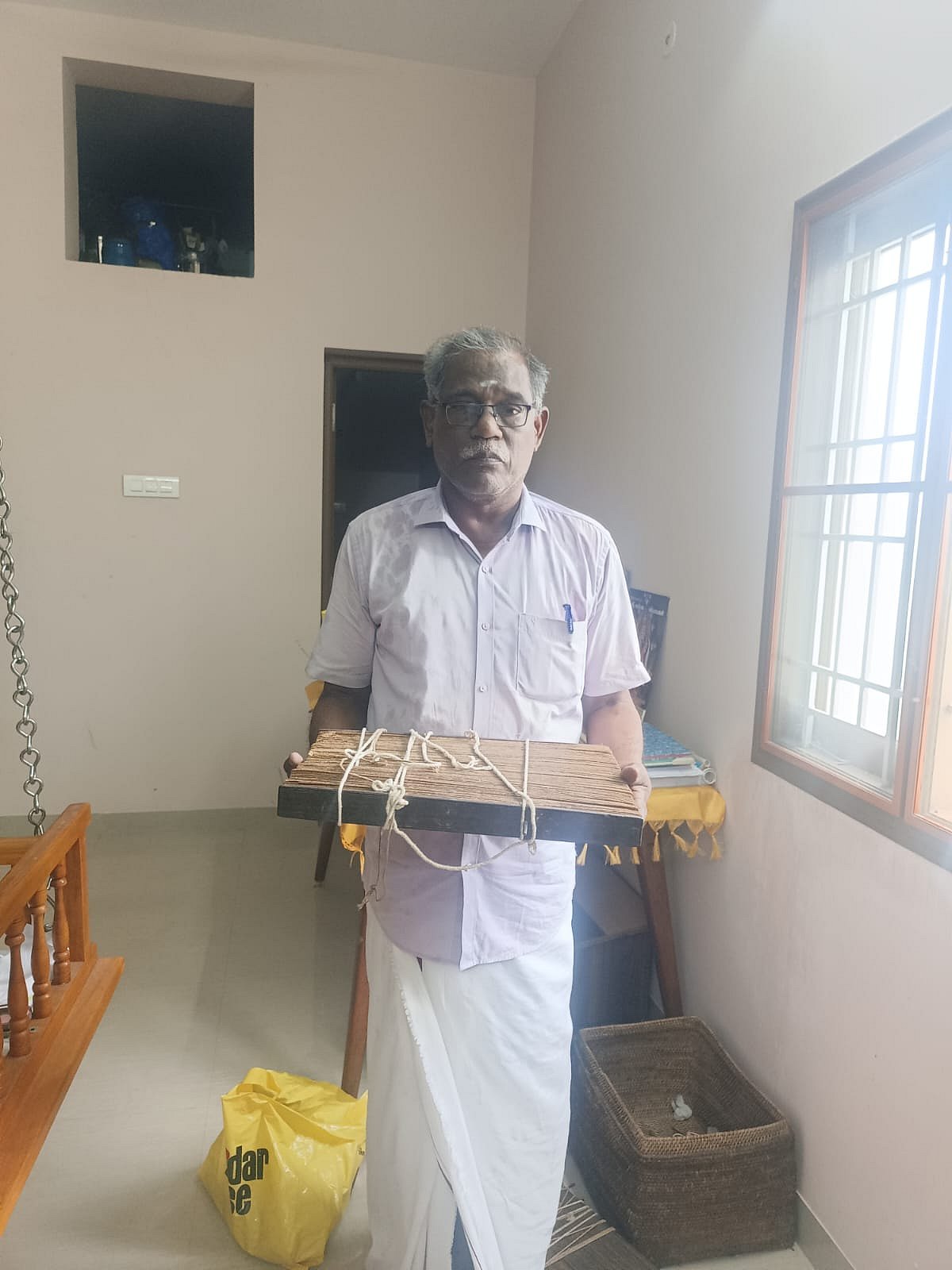
If, in any corner of Tamil Nadu, in any village, at your home or at the homes of people you know, there are ancient palm-leaf manuscripts (whether it is a bundle or only five leaves), please do not discard them or be deceived by giving them to strangers. Be cautious if private individuals or intermediaries approach you claiming they will digitize them. Recognize the antiquity value of the manuscripts and do not get caught by the wrong people. Instead, contact the 'State Manuscriptology Group' of the Tamil Nadu government's Department of Archaeology and inform them.
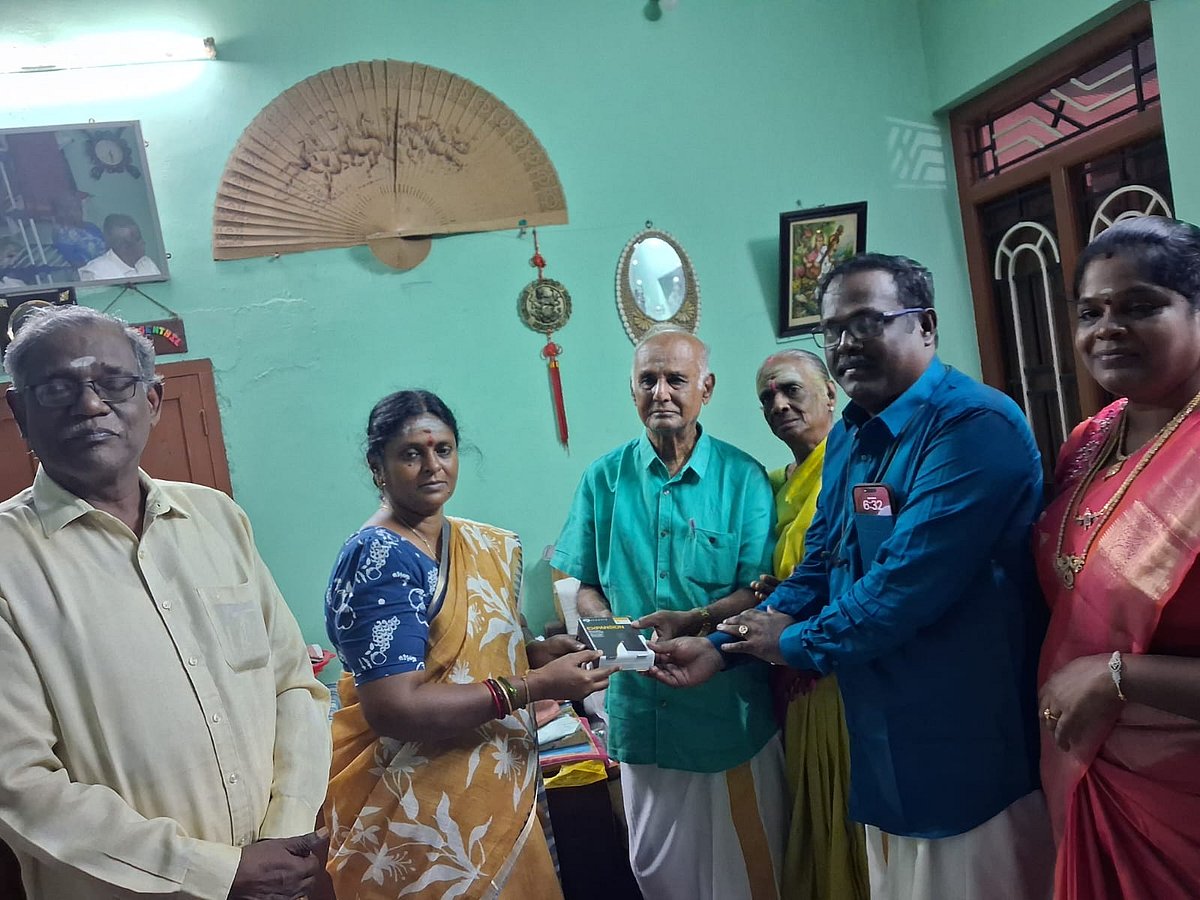
The government extends its hand only to protect your property; it provides you with security and restores the rare historical records within it to you as your hereditary identity. All our digitized records have been made available through official web pages such as the 'Tamil Virtual Academy' and the Government Oriental Manuscripts Library, for the viewing of Tamils living across the world today and as intellectual property for future generations."
Our heritage... the great weapon that protects us!
One of those who initiated this digital effort, retired Tamil teacher Pulavar Ku.Ma. Thirupathi, told us,
“The public should also support these efforts undertaken by the government to protect our Tamil heritage and literary richness. Those who have ancient manuscripts at home should not hesitate to hand them over to the Department of Archaeology for safekeeping. It is each of our duty to pass on such rare treasures to the next generation.
“Because I was involved in the preparation of lessons in the Tamil Nadu Government Curriculum Committee, I came to know about the Department of Archaeology. This became possible through them. Koozhipirai M. Ilango also helped with this work. We were the ones who informed the Department of Archaeology and requested that these ancient literary manuscripts be preserved. It gives me great joy that they have accordingly digitized them and handed over a copy,” she said with pride.
Dr. G. Sasikala also made an appeal that if members of the public have palm-leaf manuscripts, they may contact the following phone numbers or address to hand them over to the government.
Contact Address:
Dr. G. Sasikala
State Coordinator,
State Manuscript Group,
Department of Archaeology, Government of Tamil Nadu,
Tamil Development Department Campus, Tamil Road,
Egmore, Chennai - 600 008.
Cell: 8838173385, 9944035740.
The wisdom and literary richness of our ancestors, long dormant in manuscripts, have now been granted an everlasting, indelible form in digital format through the internet...!