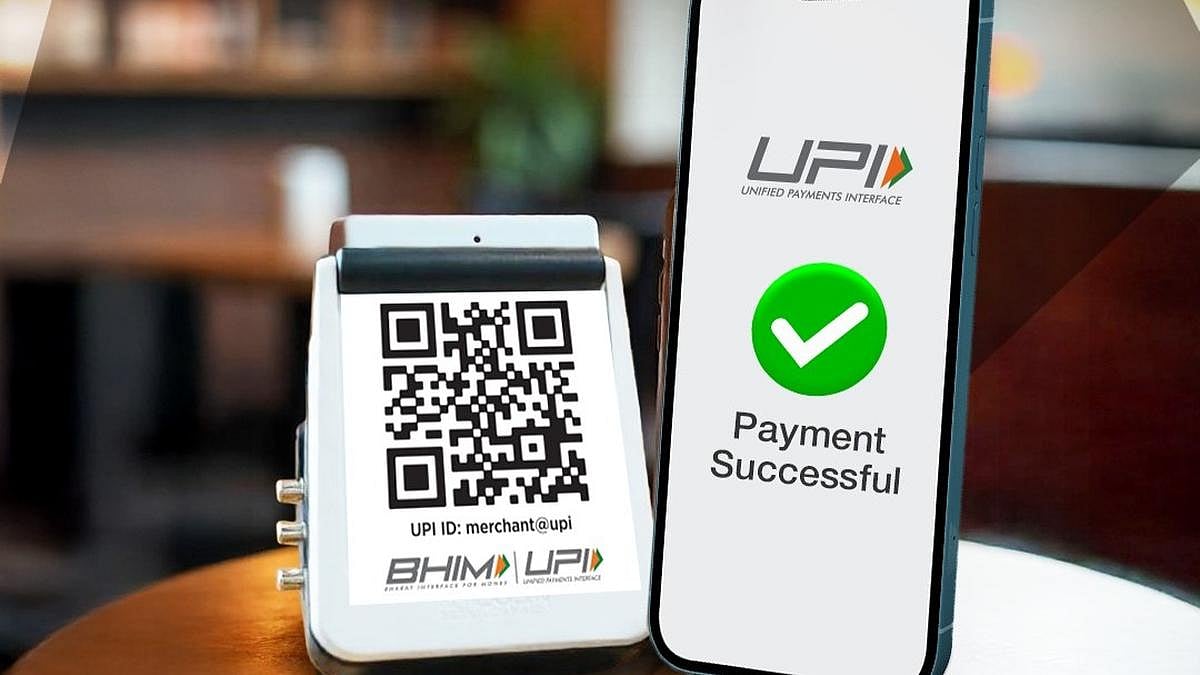
New Delhi: The National Payments Corporation of India (NPCI) has announced that merchants must pay a 0.4% fee on transactions made via UPI above Rs. 2,000. These charges come into effect from October 15.
At the same time, the government has said that banks have been instructed to ensure that merchants do not pass on this charge to customers.
This fee, known as the 'Merchant Discount Rate' (MDR), has been capped at a maximum of Rs. 300 per transaction. In other words, even if a merchant receives Rs. 75,000 or more through UPI, the fee for it will not exceed Rs. 300, the National Payments Corporation of India said.
These charges will be reviewed at intervals ranging from 6 months to 1 year.
The Ministry of Finance issued the following press release on this: ‘To empower the government to notify specific electronic payment methods on which no charges are levied, the Central Government has amended the Payment and Settlement Systems Act, 2007. This amendment provides a legal foundation to ensure low charges and transparency in digital transactions.
On 14 September 2026, the Central Government issued a notification under this Act. Accordingly, it has been stated that no 'merchant discount rate' will be levied on UPI transactions up to Rs 2,000.
Furthermore, regarding performance metrics, fee-sharing models, and category-wise limits, after consultations with the UPI Steering Committee, the National Payments Corporation of India issued a detailed circular on 15 September 2026.
Key highlights of that circular:
For money transfers between individuals, there will be no fee regardless of the transaction value. Among total UPI transactions, person-to-person transactions account for 37% by volume and 70% by value.
These charges apply only to person-to-merchant transactions exceeding Rs 2,000. A nominal fee of 0.4% will be levied on person-to-merchant transactions above Rs 2,000.
For high-value transactions of Rs 75,000 and above, the fee will be capped at Rs 300 per transaction.
It has been stated that a fixed fee of Rs. 5 per transaction will be levied on each transaction above Rs 2,000 in essential sectors such as railways, telecommunications, insurance, fuel, and agricultural inputs.
In a statement issued by the National Payments Corporation of India on this, it said, "Merchants themselves accepting small charges for digital transactions are considered routine operating expenses.
These are offset by an increase in the number of customers visiting stores, a rise in average sales value, and a reduction in the risks involved in handling cash. Therefore, consumers will continue to pay the same specified price for goods and services," it said.