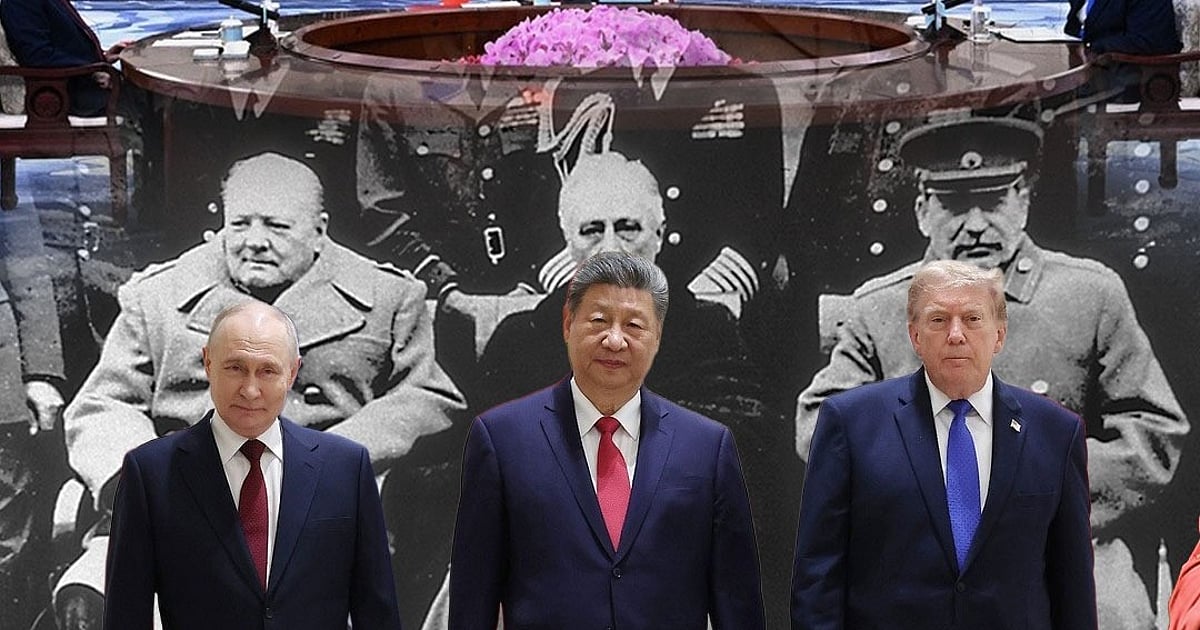
In a major turning point in world politics, U.S. President Donald Trump, Russian President Vladimir Putin, and Chinese President Xi Jinping met and held talks on Thursday in Shenzhen, China. This 90-minute meeting, held as part of the Asia-Pacific Economic Cooperation (APEC) summit, was the first trilateral meeting in which the three leaders sat together and spoke. Until now, they had met only separately. This comes at a time when America’s war against Iran and Russia’s war against Ukraine have severely affected the global economy and people.
"Declaration of Peace" under Xi's leadership
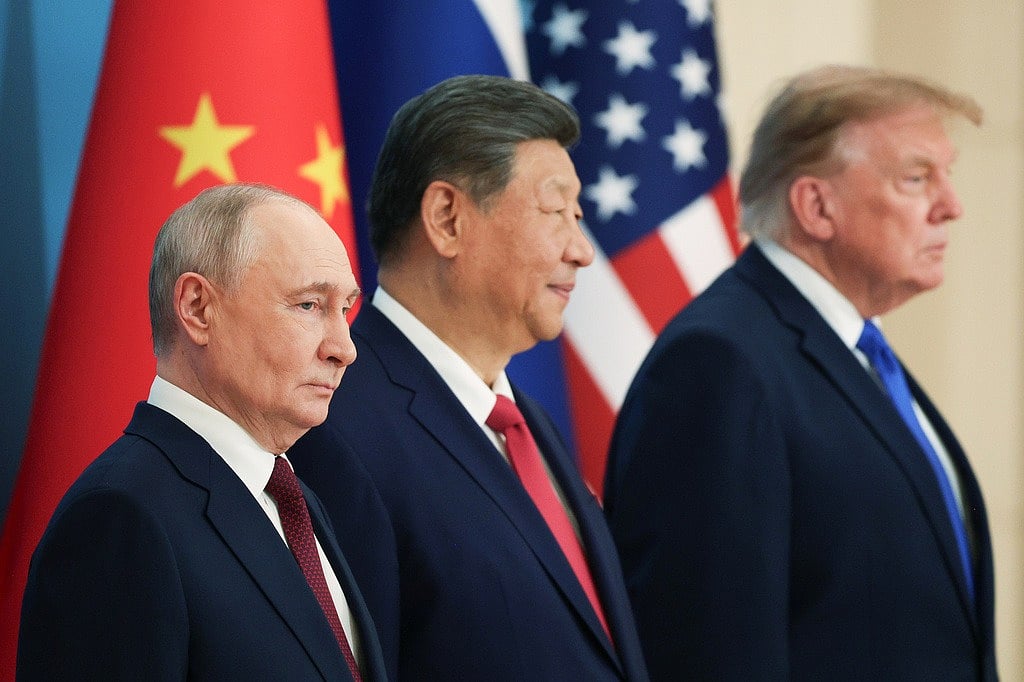
Xi Jinping chaired this meeting. At the end of the talks, which lasted more than an hour, the three issued a "Joint Peace Declaration."
Key points of the declaration:
A nuclear war cannot be won, and it must never be fought.
The importance of a stable energy supply was reaffirmed. The three countries plan to increase petroleum production and distribution.
The three countries pledged to discuss reducing nuclear risks and preventing proliferation. In this, the essence of the statement issued by Xi before the meeting was accepted. His view was that "for a world without nuclear weapons, they must be completely banned and destroyed."
Commitment to reforming the United Nations so it can respond more effectively to global challenges.
A call for the International Criminal Court (ICC) and "such institutions" not to "abuse" their jurisdiction.
Trump:
"Past leaders avoided speaking with those who held differing views. Peace does not come by denying opportunities. All three leaders have a special responsibility to sustain constructive dialogue"
Xi Jinping:
"Positive engagement between major powers is not an optional choice, but an essential necessity. Countries must abandon the 'Cold War mentality' and become friends"
Putin:
"There is a common interest in ending the war in Ukraine. Food and energy security will also be discussed. If the three countries cooperate constructively, global stability will be strengthened"
After the meeting, he described the discussion as "very candid, helping the leaders understand each other better" and as "an important chapter in diplomatic history."
This February, the United States attacked Iran. Tehran closed the Strait of Hormuz, through which one-fifth of the world’s oil trade passes. As a result, the global energy supply has faced a major crisis. Ukrainian attacks on Russian energy hubs have further intensified the crisis. With no sign that either war will end, it is unclear how the promise of a steady energy flow will be fulfilled.
Starting nuclear weapons talks involving three countries is one of Trump’s key priorities on this trip. But Russia and China, which is rapidly expanding its nuclear strength to match the United States, have been hesitant about it.
In an interview with Reuters by phone from the plane returning to Washington, Trump said he likes the idea of nuclear arms control very much, but doing it on a "negotiation" basis is very difficult as president.
Xi accepts the idea. But it is very hard for someone to say, `We have 4,000 nuclear weapons, and we’re giving up half.'
It must be done, but psychologically it is difficult to do. Still, I will continue to raise this issue,” he said,
Joint opposition to the ICC
Another important aspect of the declaration is its strong criticism of the ICC. None of the three countries are members of the ICC. However, each has its own reasons for opposing the ICC:
United States: investigations into its military personnel.
Russia: the arrest warrant against Putin in connection with the war in Ukraine.
China: allegations and petitions related to the Uyghur people.
While the three superpowers were seated in Shenzhen discussing global issues, European leaders gathered anxiously in Berlin. This has raised the question of whether a new center of power is emerging on the world stage.
Next month, Trump will host the G20 summit in Miami, USA. Xi’s participation is almost certain.
Putin had been skipping recent G20 summits because of the ICC arrest warrant. But Trump has invited him to the Miami summit. Since the United States is not a member of the ICC, it is under no obligation to arrest Putin.
These have strengthened the “new G3 axis” debate. Whether this is truly the beginning of a G3 alliance will become clear in the coming weeks.
Even as talks were under way in China and Putin was saying he was ready for peace, Ukraine’s capital, Kyiv, was attacked by Russian drones.
Putin has rejected all ceasefire proposals put forward by Ukraine and is insisting on his maximalist demands. Kyiv and its European allies say this amounts to unconditional surrender.
Putin said that Ukraine and Europe are still not ready for compromise. He also said that EU representatives had been invited to Moscow to understand Europe’s position.
This trilateral meeting is said to have been Putin’s idea. With Western leaders having tried to isolate him after the invasion of Ukraine, some Russian newspapers called it a “diplomatic victory.”
The other two countries had their own agendas..
For Trump, it’s a tally of election defeat.
For China, it’s a leadership tally..
This meeting is being compared to the 1945 Yalta Conference. When asked about this, Putin said, "At Yalta, no one divided the world. It formalized the realities after World War II. In today’s conflicts too, the realities on the ground must be accepted."
Yalta Conference (1945): It was held in Yalta, in the Crimean Peninsula of the then Soviet Union, from February 4–11, toward the end of World War II. U.S. President Franklin Roosevelt, British Prime Minister Winston Churchill, and Soviet leader Joseph Stalin participated.
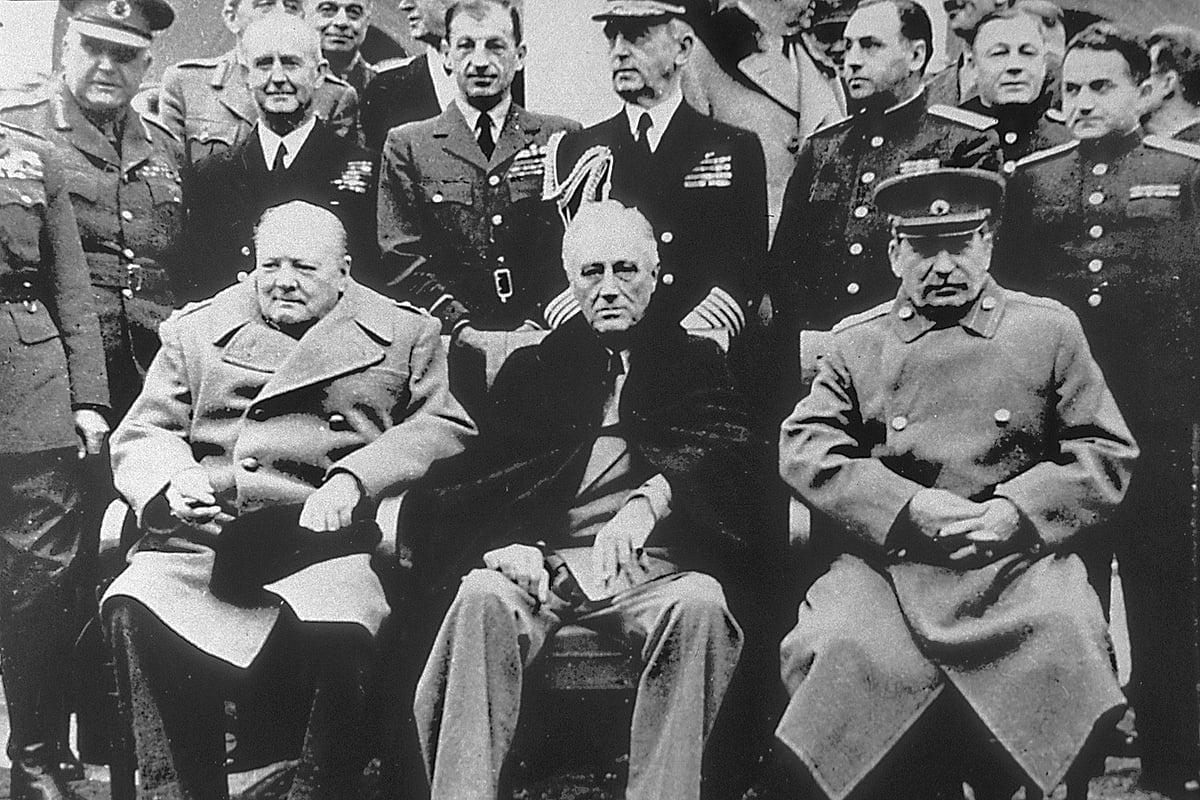
Key decisions:
Division of Germany: They agreed to divide Germany and Berlin into zones of control under the four countries—the United States, Britain, the Soviet Union, and France—and to reduce its military strength.
Formation of the U.N.: It was finalized to create the United Nations and to grant the permanent members of the Security Council veto power.
Eastern Europe, Poland: Stalin promised that free democratic elections would be held in the liberated Eastern European countries. Poland’s borders were changed.
War against Japan: A secret agreement was signed that the Soviet Union would join the war against Japan within 2–3 months after Germany’s surrender.
Back then, the leaders divided the world into their spheres of influence. Today’s meeting discusses regional security, trade, and global dominance. Historians say that the failure to implement some of the Yalta decisions paved the way for the later U.S.–Soviet Cold War.
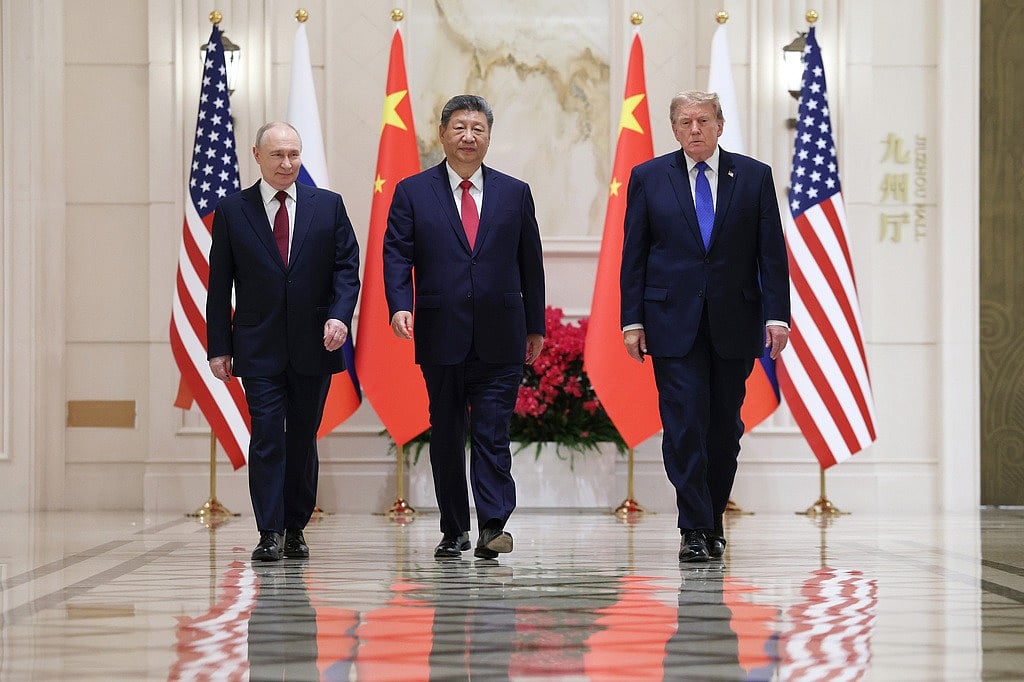
In 1945, the United States, Britain, and the Soviet Union had immense power to shape the postwar world. Today, such control is not possible.
America is not the world’s only superpower. Russia is not as powerful as the former Soviet Union. China has risen into a major global power in its own way. When China joined the WTO in 2001, the West believed it would become like them, but that turned out to be wrong.
The wars in Ukraine and Iran show that even superpowers cannot always achieve what they want. Russia thought it could conquer Ukraine in three days, but even after nearly five years, Ukraine is still fighting. The United States and Israel expected to achieve their goal in a few weeks, but even after nine months, Iran has not given in.
Even if superpowers wage war in violation of the rules, other countries do not stand still. They seek new trade partners and shift energy sources. Because countries are interconnected through trade, technology, and energy, power has become dispersed among many nations. This is the "multipolar world."
India has understood this.
As a member of everything from the SCO and BRICS to the Quad, India, through Prime Minister Modi, can speak with all the conflicting leaders: Zelensky–Putin, Xi–Trump, and Netanyahu–Pezeshkian.
In conclusion, rather than allowing three powerful countries to divide the world, the voices of many nations must be heard.
So, this is not G3. Nor is it Yalta. The era of three people dividing the world is over. Today, Ukraine still stands, and Iran has still not submitted. Power is spread across many countries. In this world, countries like India, which can speak to Zelensky and Putin, and can speak to Xi and Trump, cannot be ignored. The superpowers must understand this!