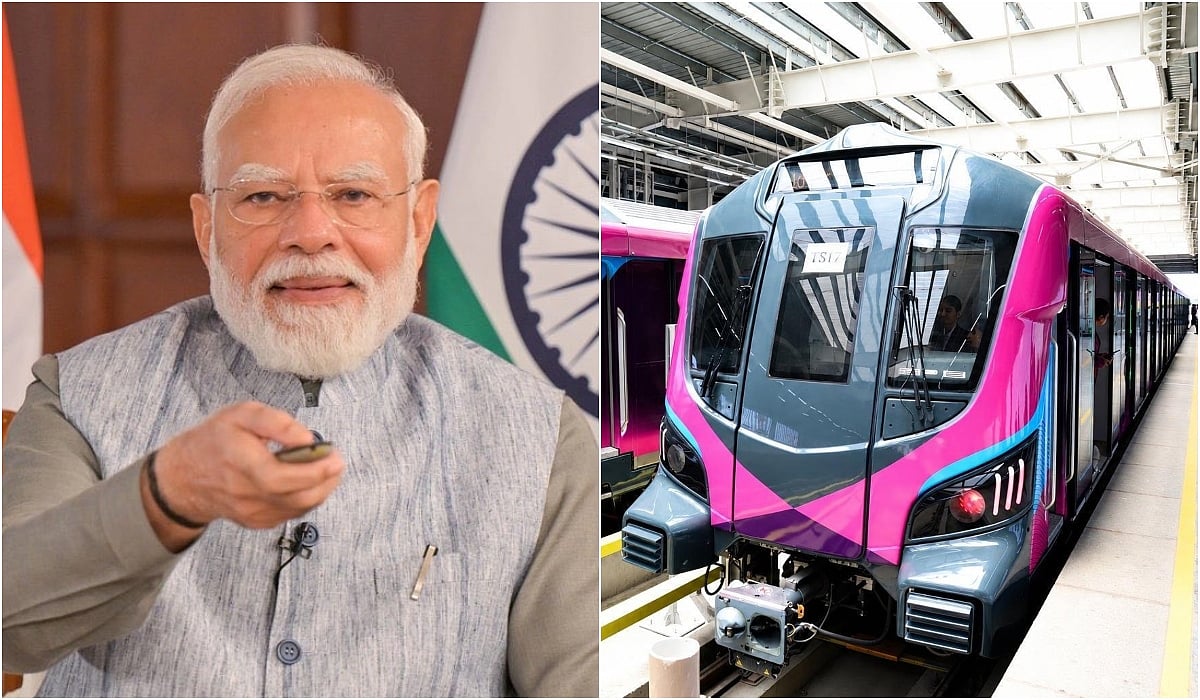
Pune: Prime Minister Modi inaugurated the third metro rail line in Pune city yesterday.
The third metro rail project in Pune, Maharashtra, known as the “Pink Line,” has been built at a cost of Rs. 8,300 crore over a distance of 23 km. With the project work completed, Prime Minister Narendra Modi inaugurated this metro rail line via video conference yesterday at 12:30 p.m.
This is expected to be an important project in strengthening Pune’s urban transport infrastructure. Following this, Prime Minister Modi laid the foundation stone via video conference for the second phase of four new metro lines in Pune. This will be implemented at a cost of Rs. 21,800 crore.
The funds for this will be allocated soon. Following that, he said via video conference: In 2014, the length of metro rail operation in our country was only 248 kilometers. After the National Democratic Alliance government (NDA) came to power, we gave priority to metro projects.
As a result, the metro rail project has now grown tremendously over the past 12 years, reaching 1,200 kilometers. Improved urban infrastructure will accelerate the country’s economic growth.
When the NDA alliance was given the opportunity to serve the people in 2014, we began working with the resolve to ensure an easier life and better transportation facilities for the middle class living in cities. We are now moving forward accordingly. The metro rail project in Pune city is like a boon for the people of this city. He said this.
In Pune city, this rail project is expected to improve the daily commute of thousands of information technology professionals, reduce traffic congestion, and help lessen dependence on private vehicles. Specifically, this metro line will operate from the Hinjewadi IT Hub station to the District Court metro station.
A train operated by women
All trains operating on this ‘Pink Line’ metro rail route will be driven by women drivers. 30% of the metro rail’s power requirement will be met through solar energy. In Pune’s Phase 2 metro rail project, trains will operate on four routes. These are intended to connect the city’s major areas.