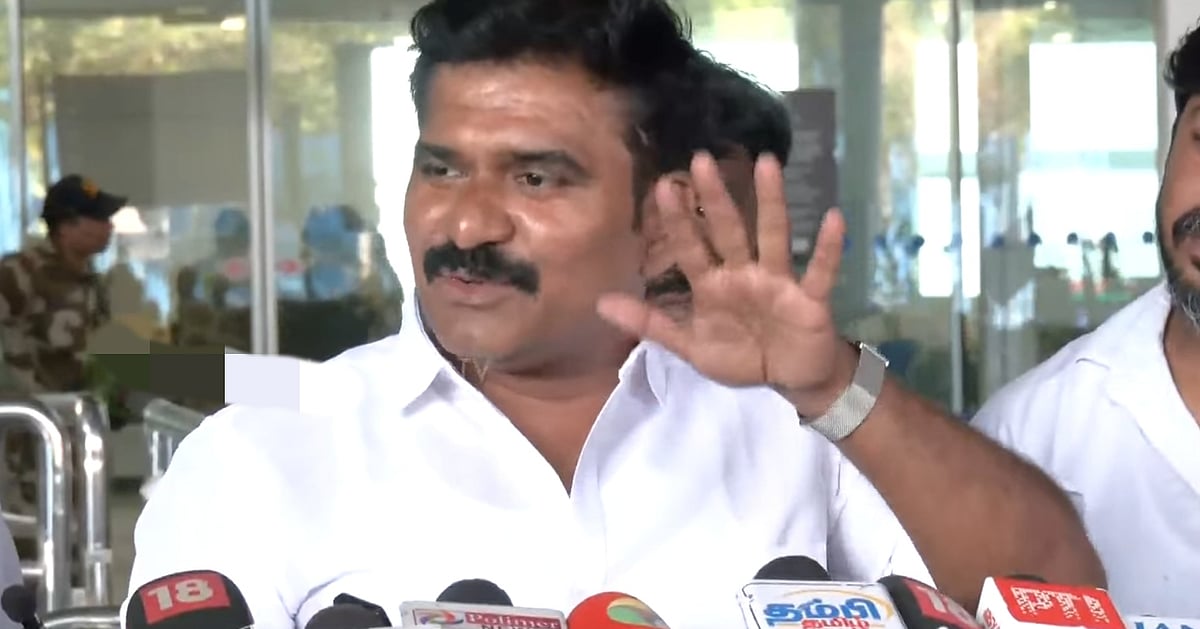
The news that the Electricity Department is set to buy one unit of electricity for Rs. 35 has sparked a major debate in Tamil Nadu politics. Opposition leaders, including DMK chief Stalin, AIADMK general secretary Edappadi Palaniswami, and several others, including CPM’s Shanmugam in the TVK alliance, have criticized it. In this situation, Electricity Minister Nirmal Kumar met reporters in Chennai today. At that time, he said, ``A tender had been called yesterday to address the power shortage. While explanations regarding that had already been given, final decisions related to that tender have now been taken.
To meet the peak-hour demand in the evening and night, which is part of our overall power requirement, it has been decided to purchase electricity to the extent of 1,000 MW. This power purchase is only for the period from the 15th to the 31st of the coming month. For this, quotations received from various companies have been reviewed, and electricity will be purchased at a price ranging from Rs. 3.30 to Rs. 3.50 per unit.
Due to this additional power purchase, the government will incur an extra expenditure of Rs. 5 crore to Rs. 7 crore per day.
The Electricity Board has already begun initiatives to enter into long-term power purchase agreements. In Tamil Nadu, the last long-term power purchase agreement was signed in 2013. In the future, long-term agreements will be entered into to the maximum extent possible, and the state’s power needs will be fully met.
Furthermore, since there are plans to make battery storage policy mandatory, no new solar applications have been received for the past four months.
Although a tender has currently been announced for 3,500 MW of electricity, these decisions have been taken so that only about 1,000 MW is purchased in line with our requirements.
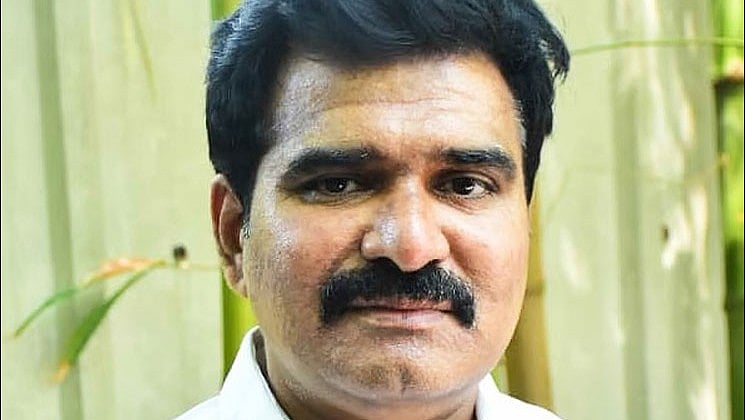
In the event of a power shortage during the upcoming Diwali festival period, decisions regarding additional power purchases have not yet been fully made. A decision on this will be taken within a day or two. If necessary, power may be purchased only for those two days of the Diwali festival, from 6:00 p.m. to 12:00 midnight. Similarly, such arrangements may be needed for that one week during the Christmas festival period as well. This is because the long-term power purchase agreements we are currently entering into will begin supplying electricity only after February or March next year.
Until then, such short-term arrangements have to be made. Tamil Nadu is the only state to have invited an open tender for the first time, unlike any other state. All other states are directly negotiating with companies and buying gas-based electricity at a higher price of more than Rs. 30 per unit. The Tamil Nadu government has adopted this tender process to openly find out whether anyone else in the market is willing to supply electricity at a lower price. There is no possibility of any irregularities in this.
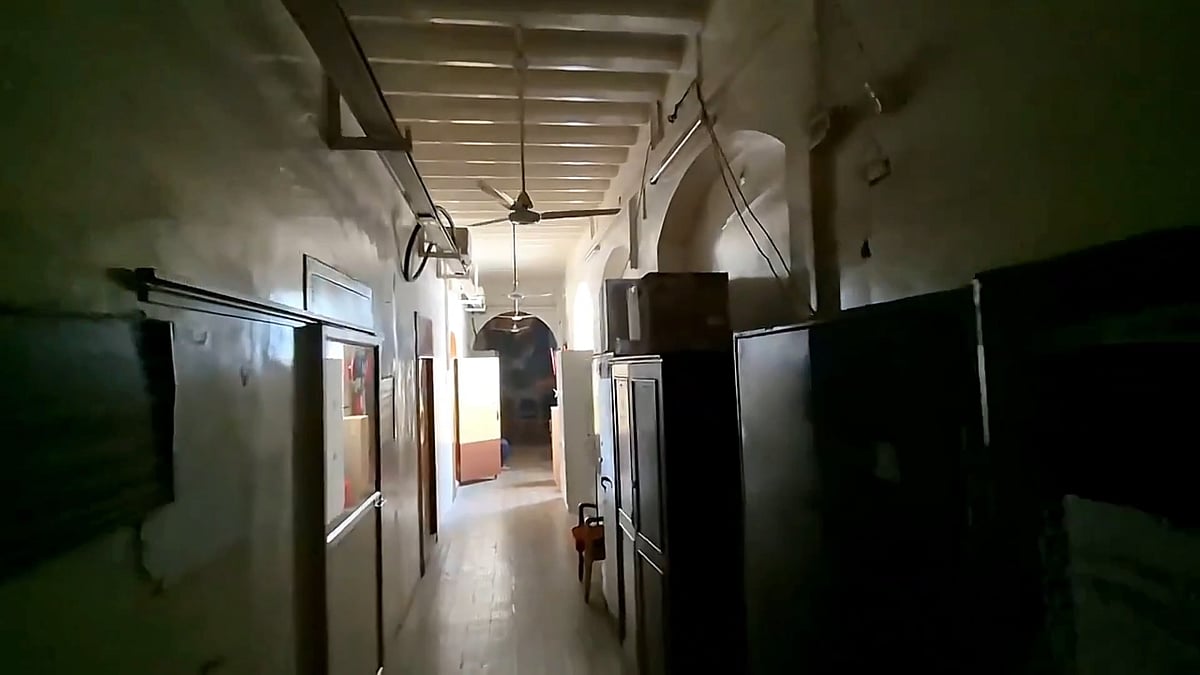
In Maharashtra, an official power cut has been announced as the state is unable to cope with the severe electricity demand currently prevailing. In Karnataka too, power cuts have been in effect for the past week. However, in Tamil Nadu, to ensure uninterrupted power supply without any power cuts, gas-based electricity is being purchased even at additional cost. Tamil Nadu’s current power demand has risen to 21,000 megawatts. This is 5,000 megawatts more than last year.
Of this, 3,000 megawatts of electricity is being obtained through other low-cost agreements. It is planned to meet only the shortfall of 500 to 1,000 megawatts through this emergency purchase.
Maintenance work should have been carried out at the thermal power stations last September. However, since power demand was high at that time, it was not possible to carry out full maintenance work. Nevertheless, through interim maintenance work, the generation capacity of the thermal power stations has been increased from 50% last year to 73% now.
Although no new projects have come into operation in the past 5 years, work is currently under way in earnest to bring 1,600 MW of power generation online immediately. Tamil Nadu government's own generation capacity is only 5,300 MW. The remaining bulk of the power demand is being met entirely through purchases from solar, wind, the Central Grid, and private companies such as Adani. Therefore, these important decisions have been taken with the aim of increasing own power generation and providing uninterrupted electricity.
Although implementing power cuts would save the government additional expenses, the industrial, trade, and MSME sectors would be severely affected. A few hours of power cuts would cause business losses worth several hundred crore rupees. Therefore, the decision has been taken to purchase electricity even at additional cost in order to protect industry and the public. During the previous administration, tenders were awarded to letterhead companies, and they brought in and installed substandard transformers from states like Uttar Pradesh and Maharashtra, refurbished from units that were 30–40 years old.
Since there has been a major irregularity and quality compromise in this, a CBI investigation into it is currently underway. During the previous regime, solar/wind power approvals were granted without proper regulation by accepting bribes of ₹25 lakh to ₹30 lakh per megawatt. Power generation was affected due to technical faults at NLC and the Kalpakkam nuclear power station. Similarly, of the 2,000 megawatts expected from the Adani Group, only 1,500 megawatts are being received. Although the long-term agreement signed in 2013 will remain in force until 2028, new long-term agreements will be sought by the end of this month.
The opposition parties have been making false allegations either without knowing the basic facts or even after knowing them. A legal response will be given to the legal notice sent by AIADMK General Secretary Edappadi Palaniswami. I only pointed out the truth that senior leaders themselves had said: that he betrayed the party and its cadres, and came to be Chief Minister and General Secretary only through financial muscle and the tender system.
Rain and disaster preparedness measures are being intensified in 14 districts, including Chennai. Disaster Recovery Teams are on standby. Materials have been kept ready, and a 'dry run' has been conducted twice. A comprehensive dry run will be conducted next week to ensure full preparedness to face even major disasters like Cyclone Gaja," he noted.
Junior Vikatan's exclusive Whatsapp Group...
Click here to join... https://tinyurl.com/2b963ppb
Hello,
From BIG BREAKINGS to politics, society, crime, cinema, and more—unmissable updates and in-depth articles from every area.
Attention-grabbing articles from Junior Vikatan magazine and digital, here instantly... https://tinyurl.com/2b963ppb