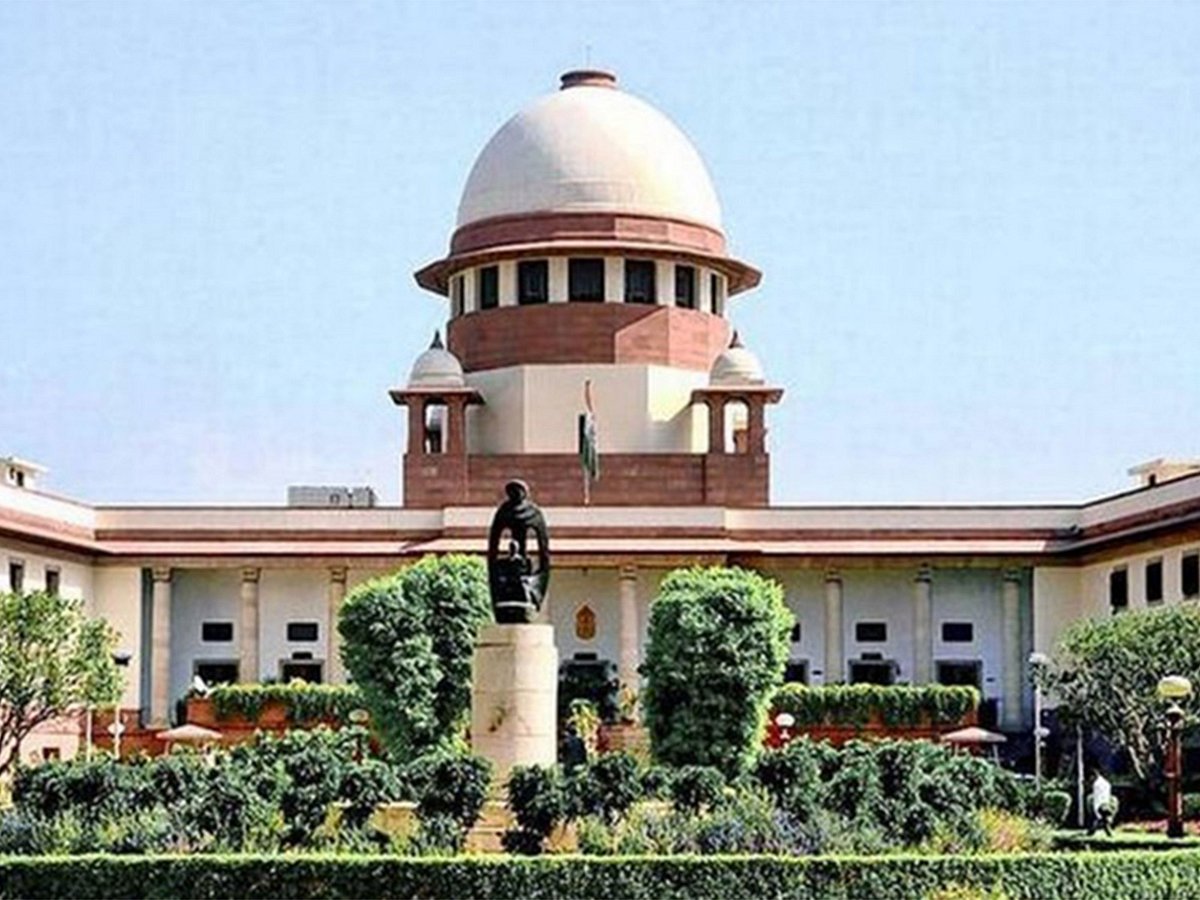
The Supreme Court on Friday issued contempt notices to all office-bearers of the Congress party’s state unit in Kerala for posting on the party’s official social media page criticizing Chief Justice Surya Kant.
The judges strongly remarked that “the Constitution is supreme in the country; not any individual or political organization.”
As part of protests demanding the resignation of Chief Election Commissioner Gyanesh Kumar, INDIA alliance leaders, including Leader of the Opposition in the Lok Sabha Rahul Gandhi, who marched to the Supreme Court on Oct. 12, filed a petition regarding SIR and electoral irregularities.
Earlier, Rahul, Kharge and others had planned to meet and speak with Chief Justice Surya Kant. However, he declined, citing reasons including the pending SIR cases. On that day, a post criticizing Surya Kant was published on the Congress’s official social media page in Kerala. As the post spread rapidly and caused a major controversy, it was removed. In addition, Congress removed the person who had posted the controversial content from the party post.
Meanwhile, in this matter, an advocate named Vineet Jindal sent a complaint letter to the Chief Justice. The letter also requested that officials be directed to investigate not only the controversial Kerala Congress post, but also the disruptions caused to lawyers, litigants, judges, and staff by the protests and slogans raised when Rahul and other political leaders came to the Supreme Court परिसर. The Supreme Court registered it as a writ petition.
The petition was heard on Friday before a bench comprising Justices Aravind Kumar and Vipul M. Pancholi.
Then, the lawyer appearing on behalf of the Kerala Congress stated, “The concerned post was published without the knowledge of the senior leaders and without obtaining their approval. An unconditional apology was also sought for this,” he said.
Judges’ rebuke:
Following this, the judges said: Judgments are always subject to criticism. At the same time, freedom of expression should not be used as a threatening tool to interfere in the administration of justice. No matter how high a position a person holds, if they engage in an attempt to undermine the authority of the courts, they must be dealt with firmly.
The authority of the judiciary does not require political recognition. It is based on the rule of law. The independence of the judiciary is not a matter of political convenience. Judges strongly stated that the judiciary’s restraint should not be wrongly seen as an institutional weakness, and issued contempt of court notices to all office-bearers of the Kerala unit of the Congress.
It will be examined whether the apology sought by the state Congress side was superficial or sincerely made; the judges said that advocates Arvind Datar and Siddharth Agarwal would be appointed to assist the court in this matter, and they also sought the views of Attorney General R. Venkataramani.