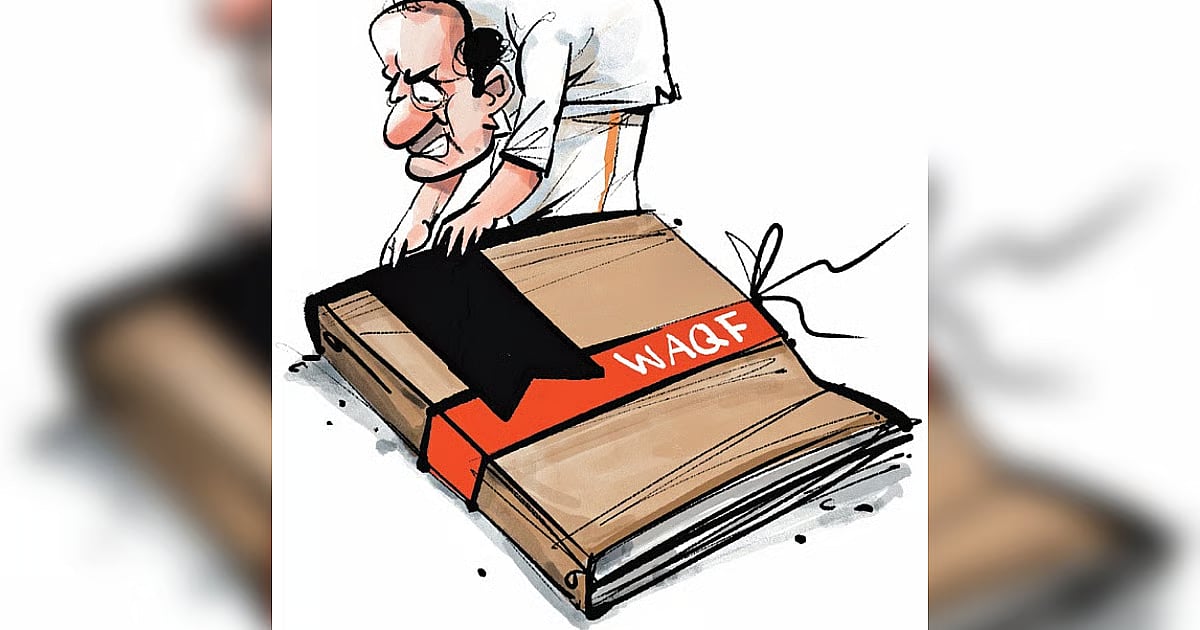
The Supreme Court adjourned the hearing on petitions challenging the constitutional validity of the Waqf Amendment Act, 2025, to January 21 next year.
The Waqf Board administers lands and properties donated by Muslims as charity and endowments. In this context, with the aim of streamlining the administration of Waqf properties, the Central government introduced the Waqf Amendment Act to make amendments to the Waqf Act of 1995.
Following President Droupadi Murmu’s approval of this Waqf Amendment Act 2025, which was passed in Parliament, the Union government implemented the law in April last year.
More than 70 petitions were filed in the Supreme Court challenging it. After examining them, the Supreme Court selected only 5 petitions for hearing and, titling the case “Review: Waqf Amendment Act 2025,” heard arguments on imposing an interim stay on three provisions in the law.
In the interim ruling issued at the end of the hearing, it imposed an interim stay only on certain important provisions of the law. It stayed the provision that only those who have followed Islam for at least 5 years can donate property to the Waqf Board, and the provision granting the district collector the authority to determine whether a Waqf property is government land.
It also ordered that the number of non-Muslim members in the Central Waqf Council must not exceed four, and in state Waqf boards this number must not exceed three.
This case came up for hearing again on Tuesday before a bench of Supreme Court judges M.M. Sundresh and P.B. Varale.
At that time, the coordinating counsel for the case, said, “Among the petitions filed earlier in this case, only 5 main petitions were admitted for hearing. The other 135 petitions were converted into interim petitions. If all these interim petitioners file new written petitions, they will all be consolidated.”
After hearing this, the judges said, “The petitioners who have filed interim applications in this case must file fresh applications within two weeks. The petitioners must also submit copies of the same to the advocate appointed as the coordinating counsel in the case.
For these written applications to be submitted, the Additional Solicitor General on behalf of the government must file a counter-affidavit. All filings of these applications must be completed by December 31,” and adjourned the hearing to January 21, 2027.
Earlier, Solicitor General Tushar Mehta opposed the interim petitions being taken up for hearing in the case. Pointing to the Supreme Court’s order issued on April 17 last year, which stated that only five main petitions would be taken up for hearing in order to prevent the number of petitions from increasing uncontrollably, he argued that the court should not deviate from that position.