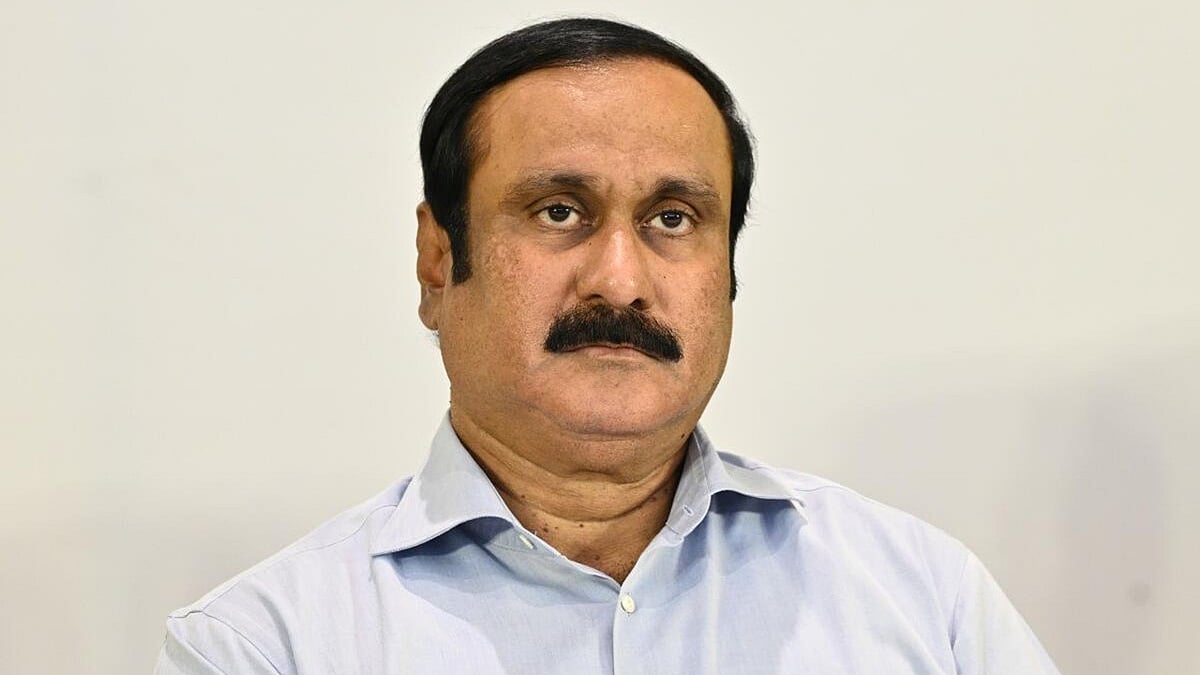
Chennai: “Since tyres have not been purchased for the government transport corporations in Tamil Nadu for the past two months, more than 1,500 buses have been kept off the road. Moreover, reports that buses are being operated with damaged tyres and are meeting with accidents are worrying. The negligence shown in operating buses meant for public use is condemnable,” said PMK leader Anbumani.
In a statement issued by him on this, he said, “In Tamil Nadu, there are a total of 8 transport corporations operating: the State Express Transport Corporation, the Metropolitan Transport Corporation, and 6 Tamil Nadu State Transport Corporations. These are divided into 26 regions in total, and 21,198 buses are being operated from the 317 depots belonging to them.
Since the already implemented Vidiyal Payanam scheme was upgraded and renamed the Vetri Payanam scheme, the losses incurred by the state transport corporations were not compensated. Due to the resulting financial crunch, spare parts were not purchased for the buses, affecting their operation. Even before that issue was resolved, a shortage of tyres has now led to more than 1,500 buses across the state being kept out of service, with 5 to 10 buses in each depot not being operated.
Since government buses are not being operated, the public, especially people in rural areas, has been severely affected. In places where 2 or 3 buses used to run to and from rural areas, one of those buses has been suspended. As a result, people are now unable to travel to urban areas even for urgent needs.
The very purpose of the free bus travel scheme for women introduced by the Tamil Nadu government was for rural women to travel to urban areas and earn a livelihood. With government buses lying idle, the Tamil Nadu government's objective itself has been affected.
On the other hand, buses operated with worn-out tires are frequently getting punctures and suffering accidents of various kinds, such as tire bursts that cause the driver to lose control and run off the road. The reason for this problem is that new tenders for tire procurement have not been called for the past 8 months, and as a result, tire manufacturers have refused to supply new tires.
Tenders are invited once every 6 months to procure tires for government transport corporations. Under this arrangement, companies that win the contract to supply tires are required to provide tires at the old price until the next tender is called.
Tenders for the purchase of tyres for government transport corporations were last invited in September last year. The contracts for supplying tyres to the companies that won those tenders expired in March this year. Even after that, the companies that had agreed to supply tyres at the prices fixed six months earlier continued to do so until September, but citing increased production costs, they have refused to supply tyres for the past two months.
The reason new tender calls for tire purchases have not been issued is the financial crisis prevailing in the transport corporations. It is because financial assistance, including the subsidy to be provided by the government, has not been released that the state transport corporations are languishing. If this situation is not corrected immediately, the condition of the transport corporations will worsen further.
The role of government buses in providing livelihoods to rural areas is significant. It is government buses that transport the human resources of rural areas, as well as all goods produced in rural areas, including agricultural produce, to the cities and help generate revenue.
Therefore, he has stated that the funds due to the state transport corporations should be released immediately, and that with those funds, tires should be purchased at once and steps should be taken to operate state buses safely without accidents for the benefit of the public.'