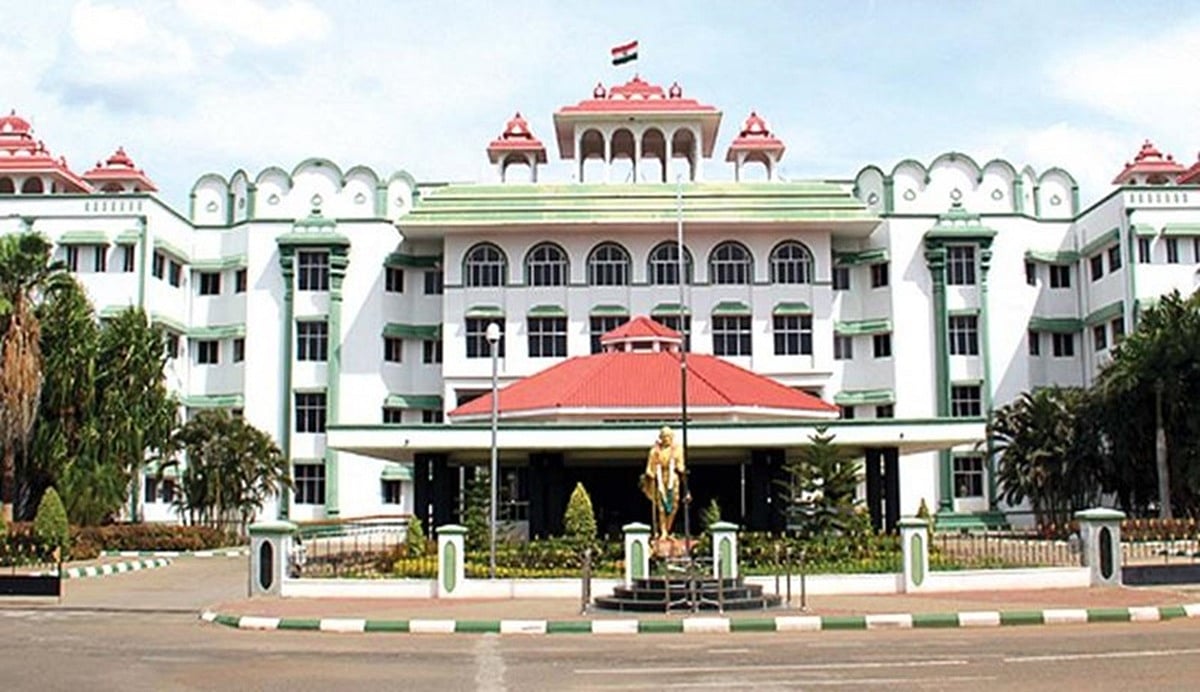
Madurai: The Madurai Bench of the High Court has ordered that organizations involved in religious conversion activities should not be allowed to receive funds from abroad.
On behalf of the Kodaikanal Conscience Public Trust, an application was submitted seeking a certificate to receive foreign funding under the FCRA Act (Foreign Contribution Regulation Act). Rejecting this application, the Deputy Secretary of the Union Home Ministry issued an order on 19.1.2025. An appeal petition was filed in the Madurai Bench of the High Court seeking to quash this order.
This was heard by Judges G.R. Swaminathan and M.D. Sumathi. On behalf of the petitioner, it was argued, “On behalf of our trust, we are running a Zen meditation center. This is not a religious organization. Meditation-related activities should not be considered religious. Our activities cannot be branded as religious. Therefore, permission should be granted to receive foreign funding.”
On behalf of the Central Government, it was stated: ‘The petitioner trust has been engaging in religious activities. It is the policy of the Central Government to regulate the inflow of foreign funds that could be used for conversion and other activities that undermine the secular character of the country. On that basis alone, the petitioner’s request has been rejected. Therefore, the petition should be dismissed.’
Following this, the judges issued the order: The word “Zen” has an attractive quality. Many celebrities have supported the Zen method. Anyone seeking the highest wisdom and clarity cannot ignore Zen. We therefore wondered why FCRA registration should be denied to someone who follows the Zen path. At that point, the Central Government counsel stated that the founder of the trust, and the main driving force behind the trust, is a Christian priest.
It cannot be forgotten that Christianity is a religion centered on the Savior. Their theological and religious aim is to bring everyone into the flock of Jesus Christ. Unlike Hinduism, which has an inclusive nature, other religions are inherently exclusive or separatist in character. Among Jews, Christians, and Muslims, those who are deeply devoted believe that their own religion is the true and complete revelation of God. Their sacred texts say the same.
On this basis, we visited the petitioner trust’s website. In the meditation center there, we saw a cross-like structure above the Buddha statue. The reason stated in the order refusing to grant the petitioner trust a foreign contribution certificate is entirely valid. The application was rejected because the petitioner trust did not correctly describe its nature as “religious” in the application.
Organizations like trusts cannot claim registration under the FCRA Act as a matter of right. The Supreme Court has already made it clear that receiving foreign donations is not a legal right or an absolute right. The Supreme Court has also pointed out that foreign funding may affect the country’s political environment.
Financial assistance directly provided by large countries or their organizations to people in the public life of other countries can be as dangerous as it has been in the past, when existing governments were overthrown and new ones were brought to power. The FCRA Act gives the Central Government the powers needed to deal with such situations.
Although the petitioner trust was engaged in religious activities, it has portrayed itself as secular. Religious organizations whose activities do not affect the country’s secular character and social harmony are eligible for registration under the FCRA. At the same time, organizations involved in converting people from one religious faith to another should be denied FCRA registration.
For these reasons, the order issued by the FCRA refusing to grant a certificate to the petitioner trust is upheld. The appeal petition is dismissed. This is what the judges have stated in the order.