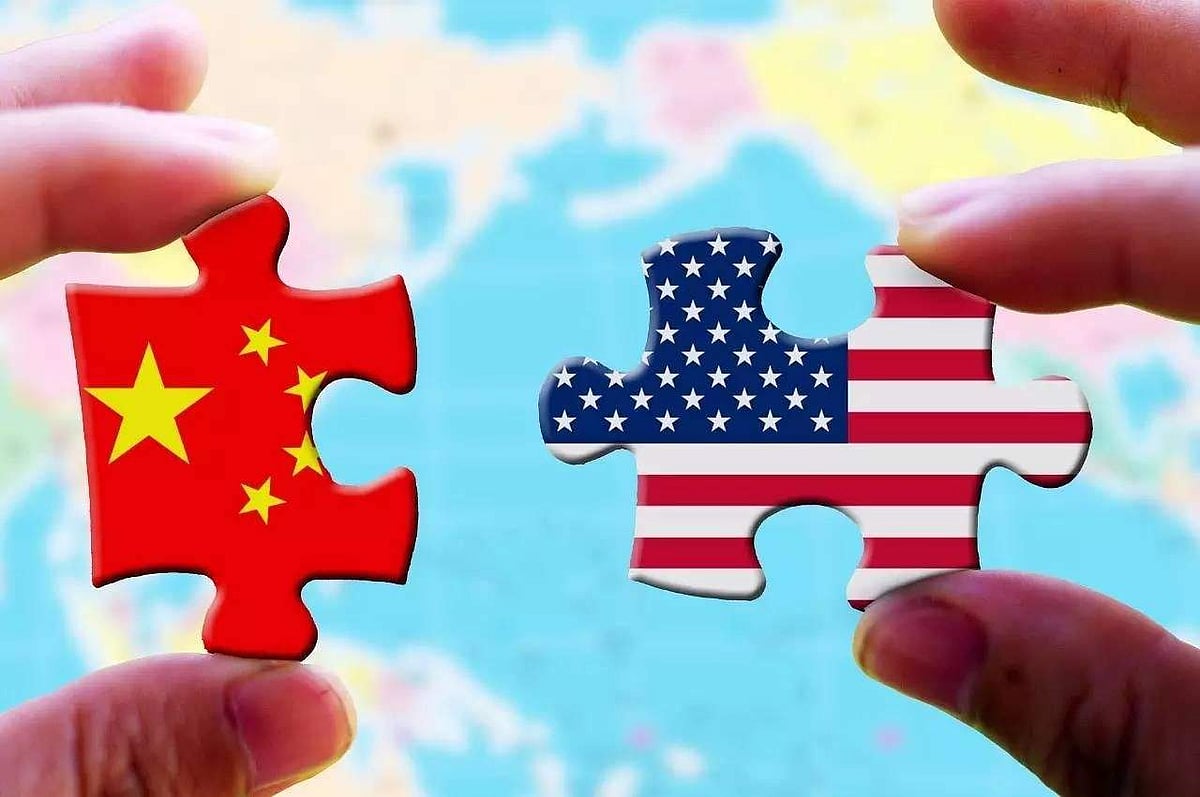
With Chinese President Xi Jinping and U.S. President Donald Trump holding a meeting at the White House, it was expected that a more cordial atmosphere would emerge between the two countries.
However, U.S. officials have said that differences of opinion between the United States and China continue to persist.
Chinese President Xi Jinping visited the United States last week. It is said that there were some issues on both sides even before this visit, and that officials have been holding talks regarding them. This has been confirmed by Steve Daines, one of Trump’s close aides.
In an interview with a private news agency, he said, “It is very important to continue the talks between the two countries. Because it has been acknowledged that there are serious differences of opinion on both sides. But the solution to this is not to step back from it. Rather, the solution is to continue engaging constructively.”
He said this in response to U.S. Ambassador David Perdue’s allegation that China is using its dominant position as a weapon in matters related to critical minerals.
“Rare earth minerals,” which are essential inputs for products ranging from smartphones to fighter jets, continue to remain a major point of contention between the world’s two largest economies.
In a statement released last week by the White House regarding the summit, it was noted that both sides would continue working on U.S. concerns over supply chain shortages of rare earth minerals and other critical minerals, with the aim of restoring supply to normal levels.
China accounts for about 70 percent of the world’s rare earth mining and nearly 90 percent of their refining.
In addition, the Taiwan issue continues to be a major point of conflict between the United States and China.
Speaking about U.S. arms sales to Taiwan, Daines said, "The only person who knows the answer to that is Trump. It will remain a matter of ongoing debate; it is not going to be resolved," he said.
Even after approval from the U.S. Congress, the White House had temporarily put on hold a $14 billion arms sale before Trump’s visit to China last May.
Before that, in December, it had sparked strong objections from China to a $11 billion U.S. arms sales plan.
At a meeting held last Sept. 24, it was reported that Xi urged Trump to openly oppose Taiwan’s independence.
It is noteworthy that following the summit held in the United States, Trump and Xi also agreed to meet again at the APEC meeting to be held in Shenzhen next month, and then at the G-20 summit to be held in Miami in December.