
Jensen Huang, who had been the co-founder and chief executive officer of Nvidia, the world’s leading AI chip company, has stepped down amid controversies surrounding him, sending shockwaves through the tech world.
This sudden departure by a man who started out washing dishes in a restaurant and went on to build the world’s largest technology empire has pushed Nvidia into an unprecedented crisis.
Jensen Huang was born in 1963 in Taipei, the capital of Taiwan. He spent his childhood in Taiwan and Thailand. Later, he was sent with his brother to the Oneida Baptist Institute in Kentucky, USA. He was nine years old at the time. After that, his parents also immigrated to the United States.
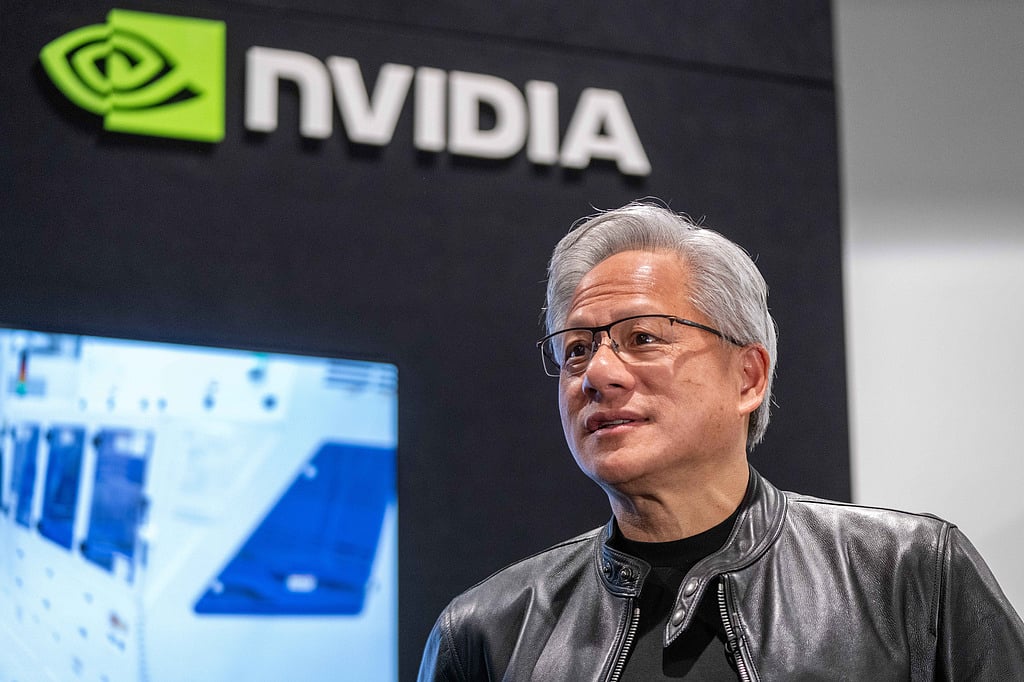
Huang, who continued his schooling in the United States, began working as a dishwasher at Denny’s at the age of 15. Later, he was promoted to a food server there. He later noted that the experience of working at that restaurant taught him hard work, time management, and the ability to make decisions in high-pressure situations.
At the same time, he remained fully focused on his studies and completed school at the age of 16. He earned a bachelor’s degree in electrical engineering from Oregon State University and a master’s degree from Stanford University.
After completing his studies, he began working at AMD in 1984 and later worked at LSI Logic. The experience he gained in chip manufacturing and computer technology laid the foundation for his idea of starting his own company.
In 1993, he co-founded Nvidia with his friends and fellow engineers Chris Malachowsky and Curtis Priem. Their initial goal was to improve three-dimensional graphics technology for computer games.
The three discussed the idea of starting this company while seated at a Denny’s restaurant in San Jose, California. The same restaurant where they once washed dishes later became the birthplace of one of the world’s most important technology companies.
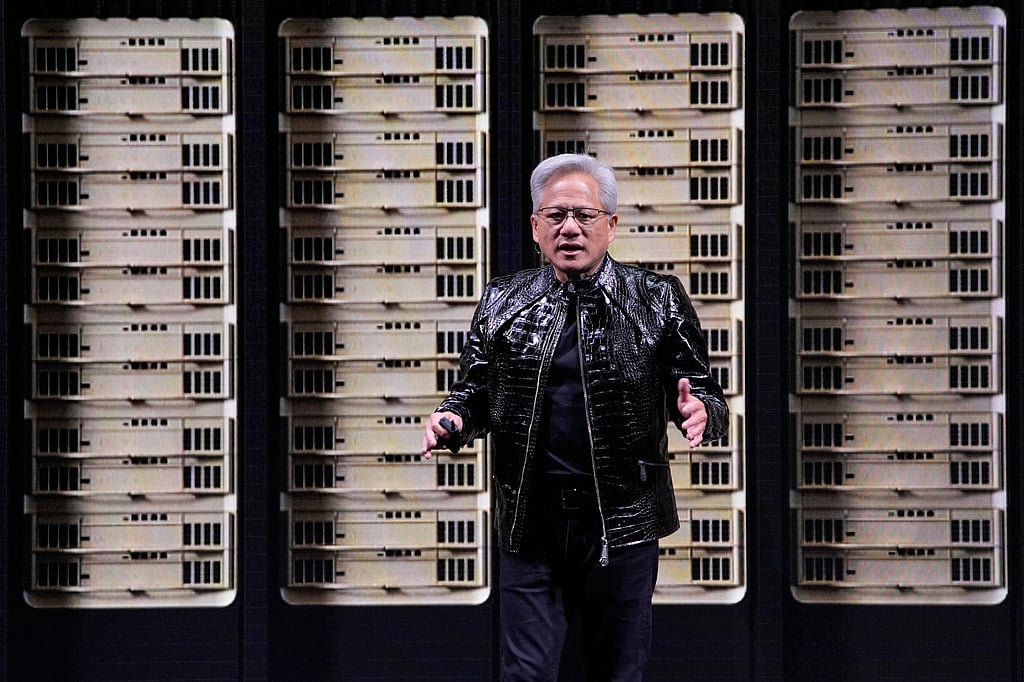
But success did not come immediately after the launch. Nvidia’s first chip product, NV1, did not achieve the expected success. The gap between market demand and its technology pushed the company into a major financial crisis.
The deal with Sega also ended in trouble. At that critical juncture, the $5 million in financial support provided by Sega was crucial in keeping the company going. By shifting away from its old technological approach and focusing on a new product, Nvidia returned to a growth path.
In 1999, the GeForce 256 was introduced. With this, Nvidia carved out a distinct place for itself in GPU technology, which accelerates a computer’s graphics functions. That same year, the company’s shares were also listed on the stock market.
Nvidia's long-term vision did not stop with its GPU products. In 2006, it introduced a software framework called CUDA. This made it possible to use GPUs not only for computer games, but also for a wide range of tasks including scientific research, data analysis, and artificial intelligence (AI).
At first, many did not realize its importance. But in 2012, a machine learning model called AlexNet brought a major breakthrough in image recognition. Behind it, Nvidia’s GPU technology played a crucial role. This became the turning point that increased the demand for GPUs in the AI field.
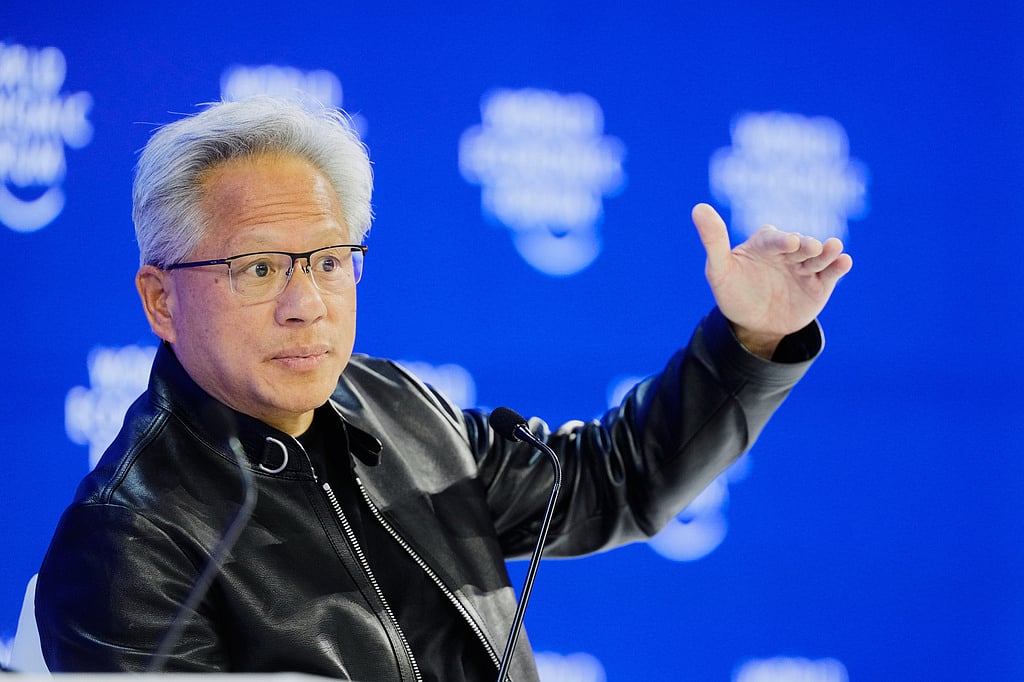
After that, Nvidia expanded its technology into many sectors, including data centers, cloud services, autonomous vehicles, and robotics. Chip architectures such as Hopper and Blackwell provided the computing power needed to build and run AI models. Today, the world’s leading technology companies and AI firms rely heavily on Nvidia’s chips.
As a result, the company’s revenue and market value reached unprecedented highs. In fiscal year 2026, Nvidia’s full-year revenue was $215.9 billion. The explosive growth of AI technology made Nvidia one of the world’s most valuable companies.
Jensen Huang’s leadership style is the main reason behind Nvidia’s extraordinary growth. His bold approach of anticipating technological shifts and making long-term investments laid the foundation for the company’s expansion.
In particular, his key turning point was setting the groundwork for using GPUs in other fields even before AI began to accelerate.

His appearance at technology conferences in a black leather jacket became synonymous with Nvidia itself. Closely connected with world leaders and heads of technology companies, he also emerged as a key face of the global AI revolution.
But the events of 2026 stand as proof of how much impact unexpected twists can have when a company’s success and its leader’s influence are at their peak.
News published in the media about Jensen Huang’s personal relationships caused a major stir within Nvidia. Information also spread about his relationships with company employees and his connection with Alice Huang, a former executive at Megaspeed, a customer company of Nvidia.

Furthermore, reports also emerged that U.S. intelligence agencies suspected Alice Huang may have provided information to China. China has denied the allegation. Jensen Huang’s side also said that the U.S. government had not directly conveyed such suspicions to them.
Independent directors at Nvidia began an investigation into these matters. Nvidia clarified that there was no reason to believe the company’s confidential information or national security-related matters had been compromised.
However, taking the situation into account, Jensen Huang stepped down from his roles as the company’s Chief Executive Officer, Chairman, and member of the Board of Directors.
In his place, Colette Kress, who had been serving as the company’s Chief Financial Officer since 2013, was appointed interim Chief Executive Officer. The Board of Directors is now intensifying its efforts to select a permanent Chief Executive Officer.
Jensen’s sudden resignation did not remain merely a personal matter. It also had a severe impact on the stock market. From the peak reached in early October, Nvidia’s share value has fallen by more than 30 percent by mid-November. As a result, more than $1.8 trillion in the company’s market value has evaporated.

Meanwhile, the U.S.-China technology war continues to pose a challenge for Nvidia. U.S. restrictions on exporting advanced AI chips to China are affecting the company’s business prospects in that market. At the same time, leading companies including AMD and Google are rapidly advancing their own AI chip technologies, further intensifying competition.
On the other hand, doubts have also arisen in the market over whether the huge sums AI companies are spending on data centers will generate profitable returns in the future. Even as AI investments continue to rise, investors are closely watching how much return those investments will yield.