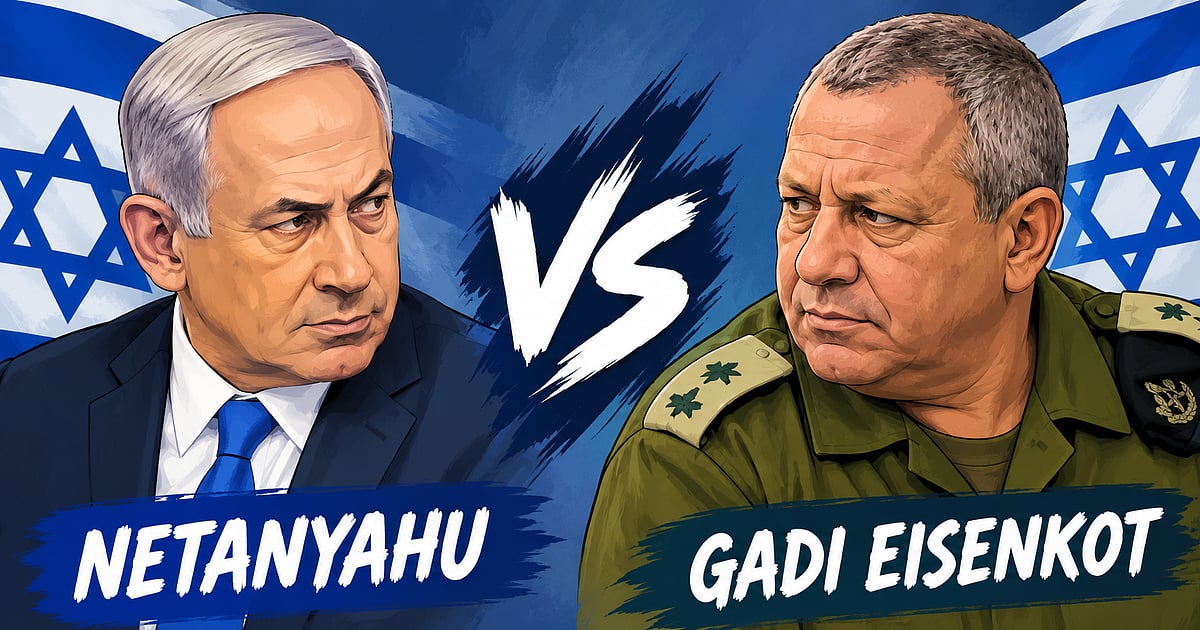
It has been almost two weeks since the election results came in in Israel. But no one has yet formed a government in that country.
Israeli parties without a majority
A total of 61 seats are needed to win a majority in Israel’s parliament, the Knesset. However, the coalition of Israel’s current president, Netanyahu, has won 53 seats.
The coalition of Gadi Eisenkot, Israel’s former military chief who ran against Netanyahu, has won 48 seats. Arab parties have won 19 seats.
None of them has secured a majority. As a result, no one has yet formed a government in Israel.
Arab parties...
Netanyahu, Gadi Eisenkot - whichever coalition forms an alliance with the Arab parties can easily form a government. But neither of them wants that option.
The Arab party is mostly made up of Muslims. They are a minority in Israel. In Israel, Jews are the majority.
Netanyahu believes that priority in Israel should be given only to Jews. Moreover, he is currently leading the war against Iran. Because of this, he has no desire at all to form an alliance with Arab parties.
Netanyahu made this clear right at the beginning, when the election results were announced.
The other leaders in Gadi Eisenkot’s alliance would also not want to form an alliance with Arab parties. In particular, if an alliance is formed with Arab parties, Gadi Eisenkot would face a setback among the Jewish people.
As a result, neither Netanyahu nor Gadi Eisenkot is ready to form an alliance with the Arab parties. However, the Arab parties are willing to support Gadi Eisenkot. They say they do not feel safe under Netanyahu’s rule, and
it is noteworthy that the Arab parties are saying they do not want a share in power... all they want is for the violence against them to be stopped.

Only two options
The two options still available to these two are: one, hold elections again; the other, Netanyahu and Gadi Eisenkot joining together to form a national unity government.
Holding elections again is not possible at the moment. Under Israeli law, only if a majority cannot be secured even after 103 days have passed since the election results were announced can elections be held again.
This date falls on February 15, 2027.
Since Gadi Eisenkot has strong support in the parliament, Israel’s President Isaac Herzog invited him to form a government.
As a result, Gadi Eisenkot must prove his majority by December 6.
Netanyahu’s idea
On the other hand, Netanyahu is not willing to give up the presidency. So, he wants to form a national unity coalition with Gadi Eisenkot and continue as president.
As a result, last Saturday (November 14), Netanyahu posted on his X page, "I had an important conversation with Gadi Eisenkot.
This meeting has further strengthened my understanding of how essential it is at this time to form a 'national unity government' that includes all parties supporting Israel as the state of the Jewish people and is capable of confronting the biggest and most complex security challenges before us," he had posted.
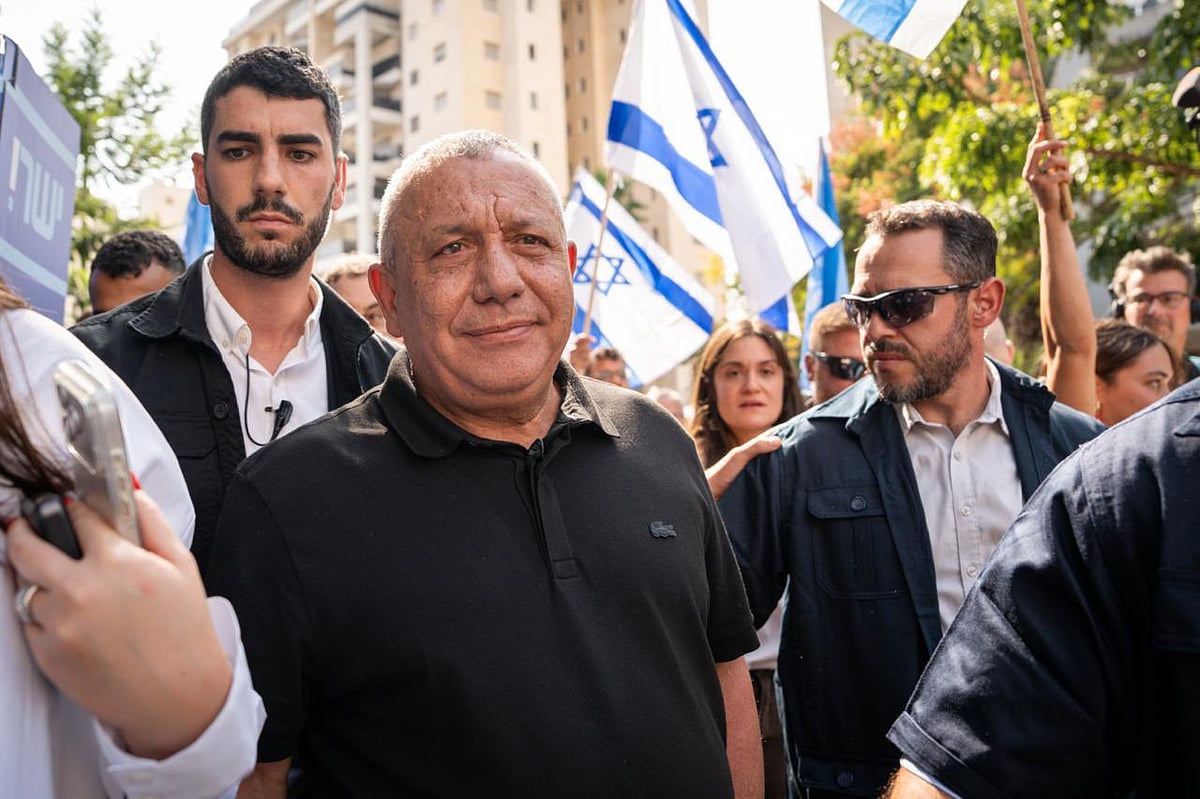
Talks between the two sides are still ongoing. However, no decision has yet been reached.
Neither side has agreed to the other’s conditions. As a result, these talks have still not reached a positive conclusion.
Netanyahu, unwilling to give up the prime minister’s post, and Gadi Eisenkot, who has been given the chance by the president to form a government - which of them will become Israel’s next prime minister? How will they become prime minister? The answer will be known soon.