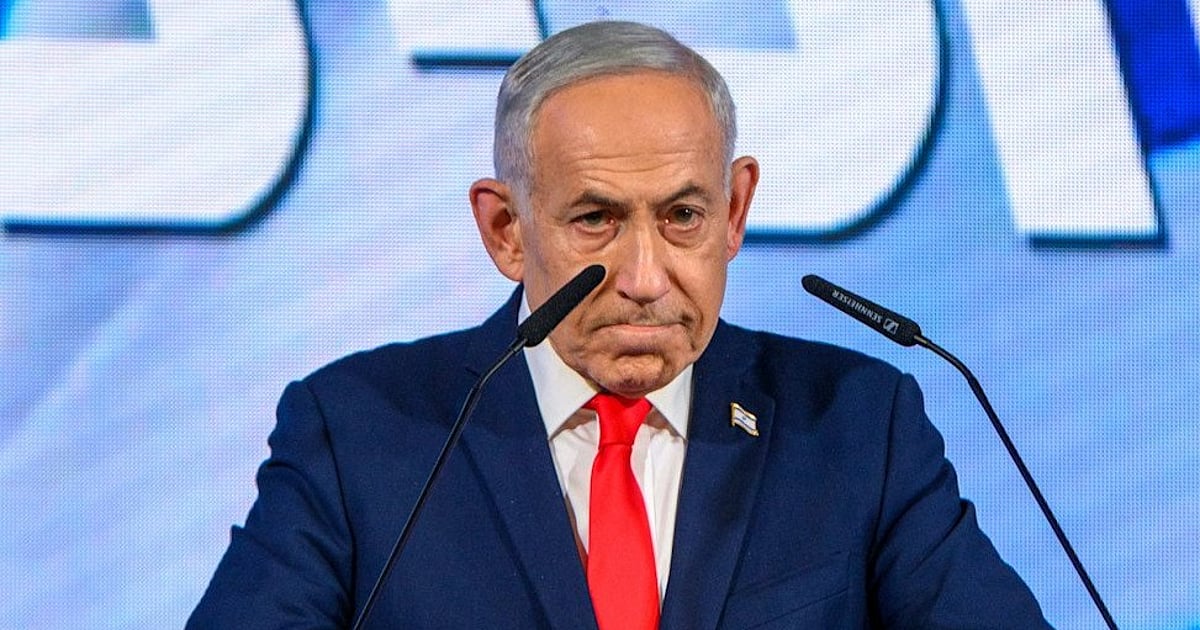
Following the October election, in which his ruling coalition lost its majority, Israel’s current Prime Minister Benjamin Netanyahu has been calling for national unity on the one hand, while warning on the other that civil war could break out if a government opposed to him is formed. This dual stance is seen as a tactic to preserve his political future.
In stark contrast to the election campaign marked by fierce personal attacks, Netanyahu has been speaking in recent days about national unity. He has also said that he wants to work together with the opposition coalition. But at the same time, on that very Saturday when Israeli President Isaac Herzog asked former military chief Gadi Eisenkot to form a new government, Netanyahu posted a video on his social media page.

In that video, he warned that if a new government were formed with the support of Arab parties that "seek to destroy the State of Israel," Israel would be at risk of facing a real civil war. Speaking again in another video two days later, he called on opposition leaders to recognize "the needs of the hour" and join a national unity government led by him.
He also noted that this government would include ultra-Orthodox Jewish parties as well as his controversial far-right allies, Bezalel Smotrich and Itamar Ben-Gvir.
Negotiations to form a new government in Israel are always complicated. "The current situation is entirely a political game. It is about wielding influence, trying to outmaneuver one another, psychological tactics, and propaganda," notes Daniel Levy, a former Israeli government adviser.
As the new parliament, the Knesset, is set to be sworn in on Tuesday, all eyes are on the ultra-Orthodox Jewish (Haredi) parties. Traditionally allies of Netanyahu, these parties have supported him in exchange for laws exempting their young students from military service. However, this time, the United Torah Judaism (UTJ) party appears to be preparing to back Eisenkot. This has further weakened Netanyahu’s position.
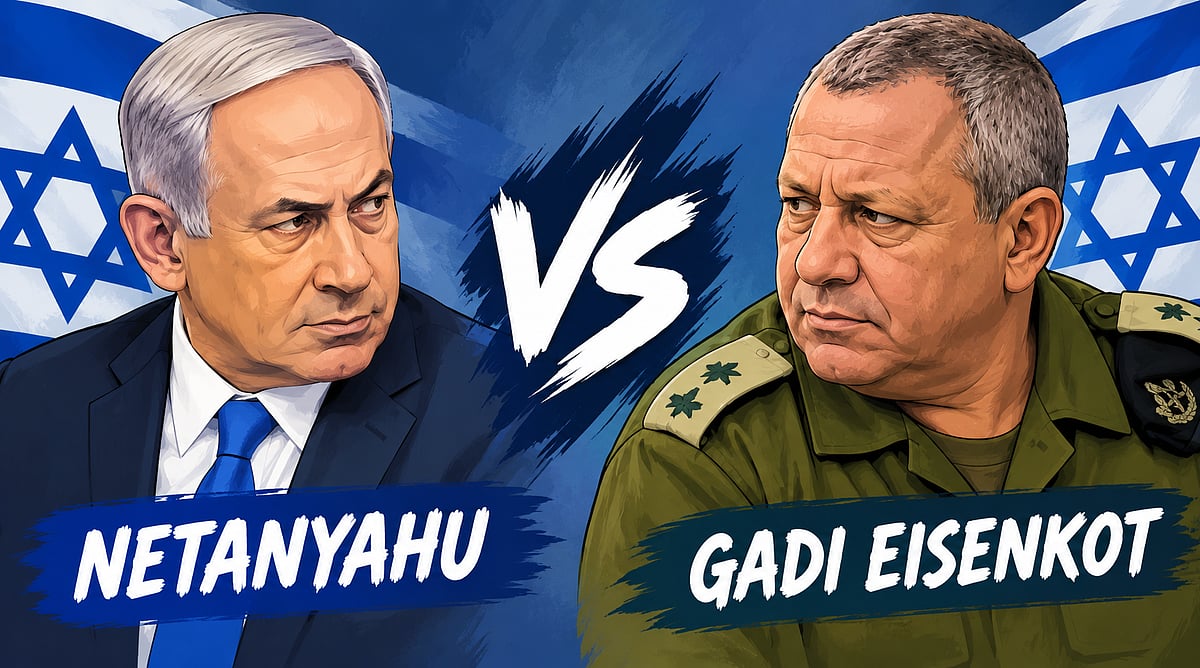
"This is entirely a political strategy. But Netanyahu is negotiating from a weak position," says Mitchell Barak, Netanyahu's former aide and pollster. "With UTJ's support, Eisenkot could prove a majority by winning 67 seats in the 120-seat Knesset. So Netanyahu will do everything he can to preserve his coalition," he also said.
If Eisenkot wins, Netanyahu will not only lose his political influence, but will also face major personal challenges. Several corruption cases against him are under investigation. In addition, pressure is mounting for him and his government to take responsibility for the security failures that occurred before Hamas’s attack on October 7.
In the new Knesset, many people directly affected by the October 7 attack are taking office as members. This includes those who lost relatives, soldiers who fought in the war, and Eisenkot (who lost his son and two sons-in-law in the war). As a result, the question of who is responsible for the failures related to the attack is expected to be a major topic of debate in parliament. In particular, attention will turn to allegations that Netanyahu made miscalculations and ignored warnings.
Israeli political analyst Nimrod Flaschenberg said, "For the first time in a long while, Netanyahu seems a bit lost." However, "the opposition parties have no desire to join a unity government with Netanyahu. That is likely to happen only if he creates a major security emergency," Daniel Levy notes.
In the end, Netanyahu's political and personal future lies in the hands of the strengthened opposition parties and a new parliament eager to investigate past mistakes.!