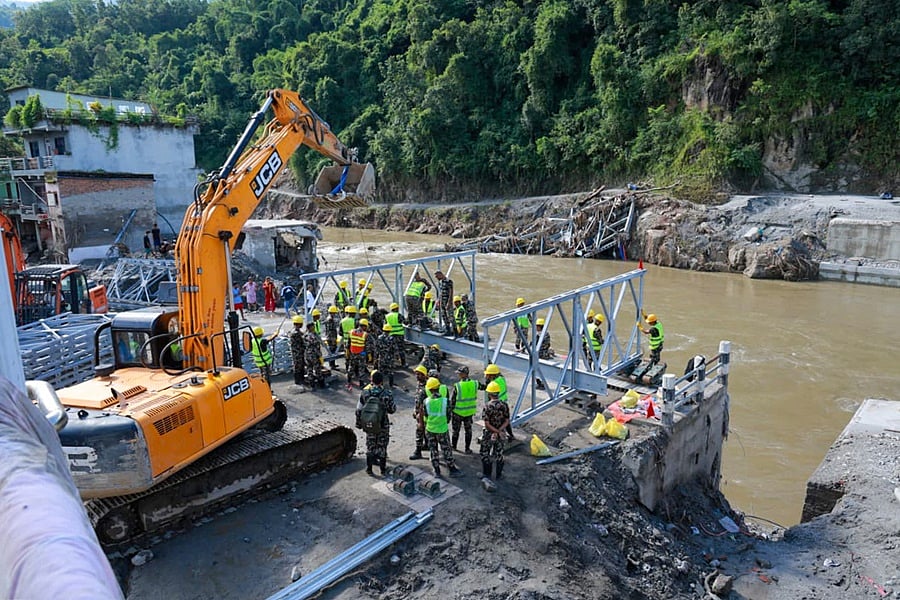
Kathmandu: The death toll from the Nepal floods has risen to 1,450 on Sunday, and more than 6,000 people are still missing, Nepal Police said in a report.
Nepal is still struggling to recover from the effects of this disaster.
The flash flood caused by a glacier-rock avalanche near the Nepal-Tibet border on August 26 devastated towns and villages in northern and central Nepal. The Bhotekoshi River, which flows south from the Himalayan border region, carried the floodwaters downstream, sweeping away houses, vehicles, roads, and bridges, and also damaging hydropower projects.
In this situation, as more bodies were recovered from the affected areas, officials said on Sunday that the death toll from the flash flood in Nepal had risen to 1,450.
367 bodies have been recovered in Chitwan district, 222 in West Nawalparasi, 232 in East Nawalparasi, and 203 in Nuwakot. It has also been reported that 236 bodies were recovered in Rasuwa, 79 in Gorkha, 72 in Dhading, and 38 in Tanahun.
Two flood victims who had been receiving treatment in hospitals in Kathmandu died. So far, 13,784 people affected by the floods have been rescued nationwide.
The Nepal Police said that more than 6,000 people are still missing after the floods.
Search operations are continuing in hydropower project areas, rivers, and debris-filled areas in the flood-affected districts for those who have gone missing.
According to Chinese media reports, 43 people have died in the Chinese region due to this flood, and more than 500 people are reported missing there.
People in the affected areas are facing great hardship as roads and bridges have been damaged; the Himalayan nation of Nepal is still struggling to recover from the effects of this disaster.
Identifying the deceased has also emerged as a major challenge; officials said that so far, only about 110 of the total bodies recovered have been identified and handed over to their families.
Most of the bodies recovered after being swept away by the flood are found decomposed or decayed to the point that they cannot be identified; officials said that in some cases only parts of bodies are recovered, making it difficult to identify them by face, clothing, or personal belongings.
So far, after collecting DNA samples from about 1,300 bodies, officials said the Nepal government has been carrying out the final rites in accordance with international rules.