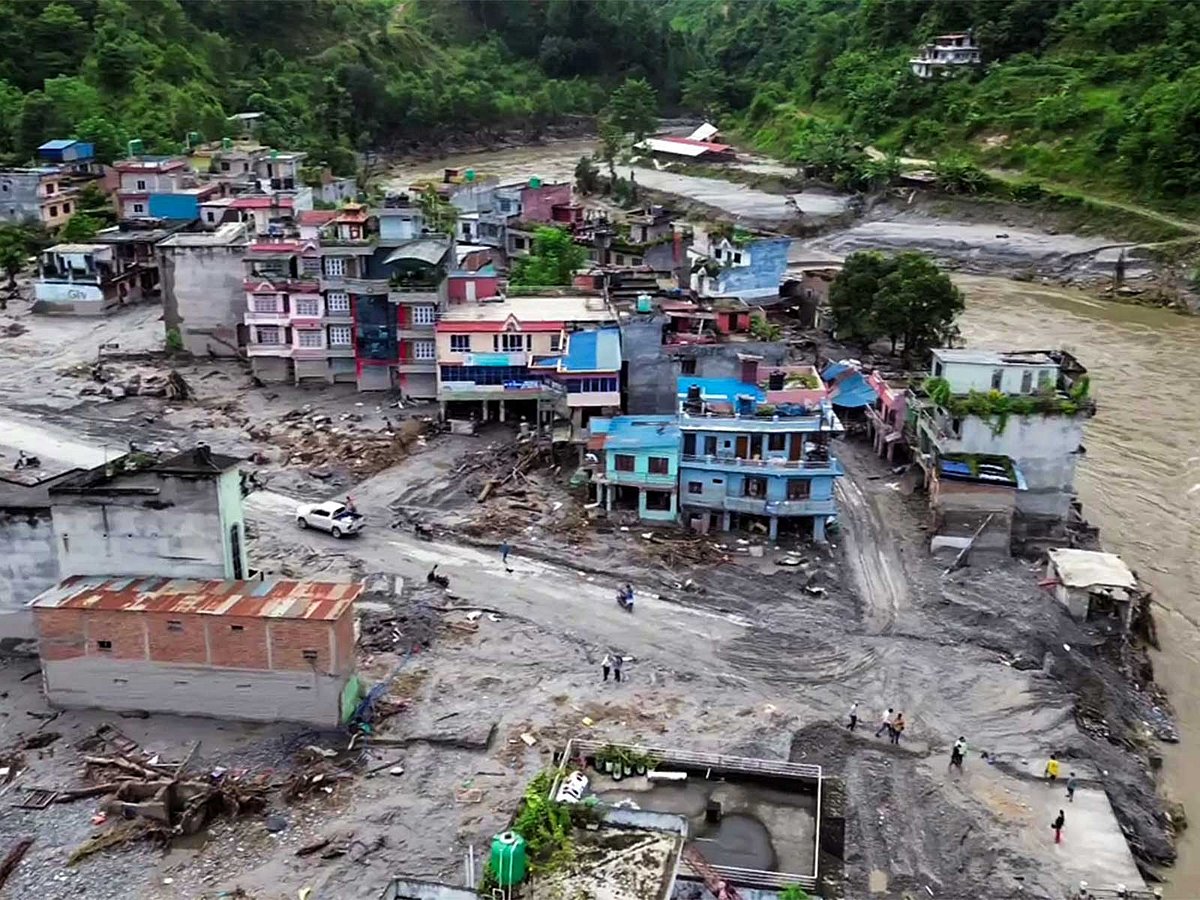
UNICEF has warned that more than 17,000 children affected by the severe floods in Nepal need urgent mental health and psychosocial counseling.
In a report released on Tuesday,
many children in the devastating disaster in Nepal have lost family members. They have lost everything — homes, schools, relatives — and are suffering in isolation.
As a result of this massive flood, more than 17,000 children have been affected. These children need mental health and psychological counseling. Around 541 children who are separated from their families and left without support are at greater mental risk, and they need protection services, the organization said.
Beyond the visible destruction, this flood has left deep emotional scars on children and families, said UNICEF Representative for Nepal Alice Akunga.
Because this flood struck while schools were in session, it shattered children’s sense of safety in an instant. Many children witnessed deeply distressing events firsthand. As a result, children have been struggling with fear, anxiety, and grief. Some have even become unable to talk about what they experienced.
He said that humanitarian aid should not only focus on restoring critical infrastructure, but also on providing mental health and psychosocial counseling so that children can cope with their experiences, regain a sense of safety, and begin to recover.
This UNICEF report has been released as search, rescue, and relief operations continue in flood-affected areas.
As of 7 p.m. on September 15, Nepal’s National Disaster Management Authority said that 1,399 people had died after being trapped in the floods, and 5,179 people were still missing.
In addition, deaths and damage have been reported in Chitwan, East Nawalparasi, West Nawalparasi, Nuwakot, Rasuwa, Gorkha, Dhading, and Tanahun.
The National Disaster Commission has said that 13,742 people have been rescued, 343 people were treated in 19 hospitals, and 282 of them recovered and returned home. Various security agencies have treated 9,496 people.
UNICEF has urged increased investment in child protection and mental health services to ensure that children affected by the floods receive continuous support to cope with the effects, recover, and rebuild their lives.