Culture 4 min read•November 19, 2026

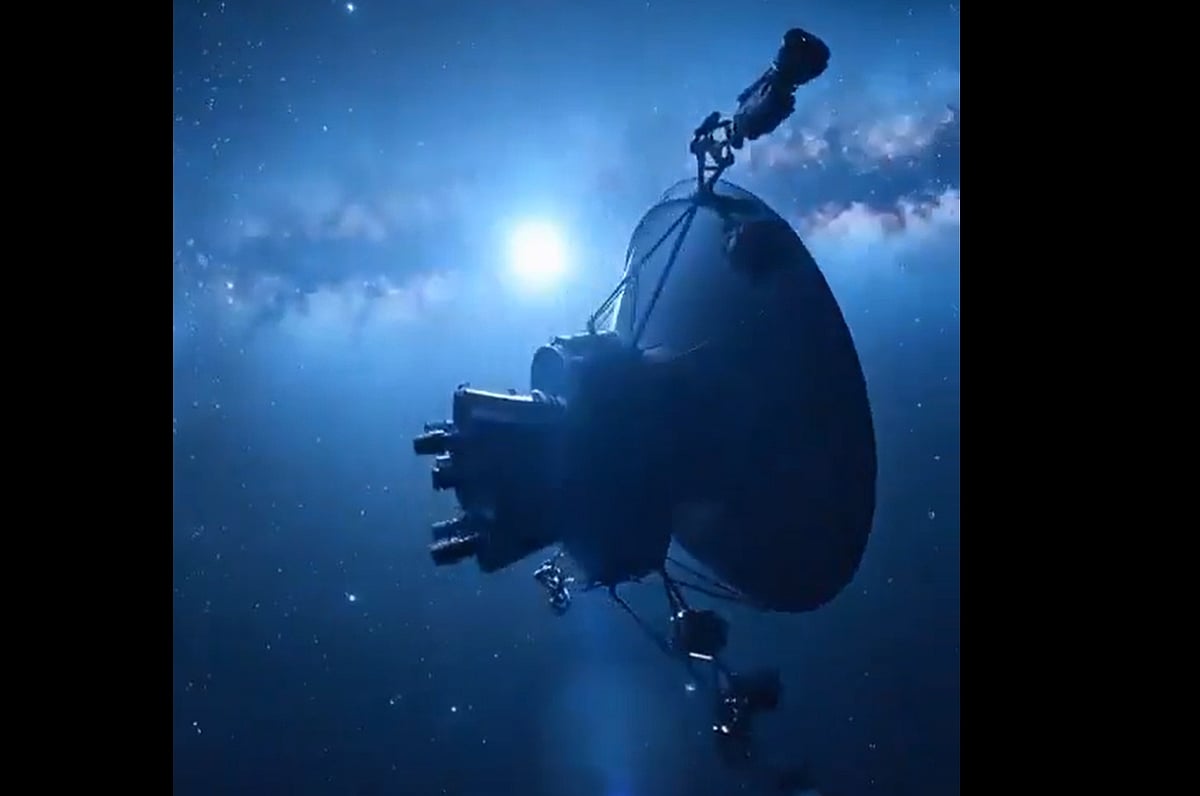
NASA's "Voyager-1" has traveled beyond one light-day from Earth

NASA's "Voyager-1" has traveled beyond one light-day from Earth

👶 Discover Authentic Tamil Baby Names

8,000+ pure Sangam names with audio pronunciation & numerology.

Search Name Finder 🔊

English

NASA’s Voyager-1 spacecraft, journeying toward the boundless depths of space, has crossed a distance of one light-day from Earth, creating a new chapter in the history of humanity’s exploration of space.

For the first time, an object made by humans has reached such a great distance. NASA officially announced that Voyager-1 achieved this historic milestone at 3:46 p.m. on Wednesday (Nov. 18) Indian time.

Launched into space in 1977, this spacecraft has now traveled continuously for 49 years, 2 months, and 11 days at a speed of 60,773 km per hour and is currently more than 2,590 crore km away from Earth. This is more than 4 times the distance from the Sun to Pluto.

By crossing this milestone, Voyager-1’s distance will no longer be measured in kilometers, but in the time it takes light to travel. That is, information signals sent from Earth at the speed of light (about 300,000 km per hour) take 24 hours to reach the spacecraft, and another 24 hours for the return signal from there to reach Earth.

5-year mission; 50-year achievement: Voyager 1 was launched into space on Sept. 5, 1977, from Cape Canaveral Launch Complex in Florida, USA. Although its twin spacecraft, Voyager 2, had been launched 16 days earlier (Aug. 20, 1977), Voyager 1 has overtaken it and remains ahead.

Initially designed to operate for just 5 years to study only the two planets Jupiter and Saturn, these two spacecraft have astonished scientists by functioning for about 10 times longer than their expected lifespan. These are the only two oldest spacecraft currently operating in space.

From Jupiter to the solar system’s “family portrait”: The Voyager spacecraft, which sent back far more precise images than the earlier “Pioneer 10” and “Pioneer 11” spacecraft, revealed to the world many new details about Jupiter’s turbulent atmosphere, its faint rings, and Saturn’s rings and moons.

In particular, Voyager 1, which flew as close as 6,492 km to Titan, Saturn’s largest moon, on Nov. 12, 1980, captured images showing that it has a dense atmosphere. Building on that research, NASA plans to carry out the “Dragonfly” mission to explore Titan in the mid-2030s.

Continuing on, Voyager 1 crossed Pluto’s orbit in 1989 and, before permanently turning off its cameras on Feb. 14, 1990, took 64 photographs to create the solar system’s first “family portrait.” The photograph of Earth, appearing as a tiny dot, taken by the Voyager 1 spacecraft is also famous.

Beyond the wall of fire into interstellar space...: Following the remarkable success of the Voyager spacecraft, the “Voyager Interstellar” mission, which expanded exploration beyond the edge of the solar system, began in the New Year of 1990.

Accordingly, Voyager-1, which crossed the boundary region of the solar wind’s speed limit (the termination shock) in December 2004, left the Sun’s magnetic-field protective bubble, the ‘heliosphere,’ on Aug. 15, 2012, and entered interstellar space. The Voyager-2 spacecraft reached this region only in 2018. While crossing the ‘termination shock’ region, Voyager-1 also detected a layer of superheated plasma called the ‘wall of fire’ by scientists.

1970s technology and NASA’s challenges: Built with 1970s technology, the small car-sized Voyager 1 spacecraft is powered by plutonium-238 nuclear energy. Because its power generation capacity has been declining year by year, and due to computer glitches, memory faults, and propulsion malfunctions, there have been several times over the past 10 years when there was a risk that contact with the spacecraft would be permanently lost. However, by using alternative propulsion systems and rerouting data paths, NASA engineers continue to keep the spacecraft alive.

With most of its instruments now shut down, it continues to send rare data about changes in interstellar space through the remaining cosmic ray telescope, magnetometer (a rod more than 15 meters (50 feet) long used to measure magnetic fields), and plasma wave instrument via NASA’s Deep Space Network.

Voyager-1 is expected to continue operating for another 3 to 5 years, according to project managers. After that, although humanity may receive its final signal from this spacecraft within the next 10 years, it would not be an exaggeration to say that Voyager has redefined the benchmark for success in space exploration.

Box 1..

What is an “light day”?

The distance light travels in one day (24 hours), 260 crore km, is called a “light day.” It is noteworthy that at the speed of light, one can circle the Earth seven and a half times in one second and reach the Moon in 1.28 seconds.

Meanwhile, the star ‘Proxima Centauri,’ which is closest to our solar system, is 4.25 light-years away. Compared with this, even after traveling for 50 years, Voyager 1 has covered only a tiny fraction of a light-year; that is, on the scale of the universe, it has only stepped beyond the doorstep and into the yard.

Box 2...

Humanity’s message to an extraterrestrial civilization

In the hope that, thousands of years later, an extraterrestrial civilization living in a distant planetary system may discover the Voyager 1 spacecraft, a ‘gold-plated copper phonograph record’ has been attached to it.

It contains greetings from humankind, messages, the natural sounds of Earth, music, and symbolic images about the living beings on Earth and human culture.

We may never receive a reply from anyone; but Voyager-1, the envoy of humankind that has recorded our presence and our peaceful curiosity about space in the deep cosmos, continues its journey.

Box 3...

Historical timeline...

Aug. 20, 1977: ‘Voyager-2’ was launched into space.

Sept. 5, 1977: ‘Voyager-1’ was launched into space.

Dec. 19, 1977: Voyager-1 overtook the Voyager-2 spacecraft.

1980 Nov. 12: Voyager 1 flew within 6,492 km of Saturn’s moon Titan and studied its atmosphere.

1989: It crossed Pluto’s orbit.

1990 Jan. 1: Launch of the ‘Voyager Interstellar’ mission

1990 Feb. 14: It took 64 photographs to create the solar system’s ‘family portrait’ and then turned off its cameras.

2004 Dec.: It crossed the ‘termination shock,’ the boundary region of the solar wind.

2012 Aug. 15: It crossed the Sun’s magnetic field boundary and entered interstellar space.

2026 Nov. 18: A historic milestone as the first human-made object to reach a distance of ‘one light-day’ from Earth.

Sept. 5, 2027: It will complete 50 years of travel in space.

Tanglish

pantaveliyin ellaiyarra aazhaththai noekkip payaniththu varum amerikka vinveli aayvu niruvanamaana naasaavin vaayaejaa-1 vinkalam poomiyilirunthu oe oli naal tholaivaik katanthu manithakula vinveli varalaarril puthiya aththiyaayaththaip pataiththullathup p manithanaal uruvaakkappatta porul onru ivvalavu tholaivai ettuvathu ithuvae muthalmuraiyaakum inthiya naerappati katantha puthankizhamai nava 18 maalai 346 manikku intha varalaarrus saathanaiyai vaayaejaa-1 nikazhththiyathaaka naasaa athikaarapoovamaaka ariviththullathu p

1977-il vinnil eavappatta indha vinnkalam, manikku 60,773 ki.mi. vegatthil 49 aandugal, 2 maadhangal matrum 11 naatkal thodar payanatthukkup piragu tharpodhu boomiyilirundhu 2,590 kodi ki.mi.-kkum adhigamaana tholaivil ulladhu. Idhu sooriyanilirundhu plootto kol ulla tholaivaivid 4 madangukkum adhigamaagum.

Indha mailkkallai kadandhadhanmoozham, vaayejaar-1 vinnkalatthin tholaivu ini ki.mi.-galil allaamal, oli payanikkum kaala alavilaye kanakkidappadum. Adhaavadhu, boomiyilirundhu oliyin vegatthil (manikku sumaaar 3 latcham ki.mi.) anuppappadum thagaval samignaigal vinnkalatthai chendradaiya 24 mani neramum, angirundhu badhil samignai boomikkuth thirumba melum 24 mani neramum aagum.

5 aandu thittam; 50 aandu saadhanai: Amerikkaavin Phloridaa maakaanam Kaepp Kanaaveral aevuthalathilirundhu 1977 Sep. 5-il Vaayaejar-1 vinnil aevappattadhu. Idharku 16 naatkalukku munnadhaaga (Agu. 20, 1977) idhan irattai vinnkalaamaana ‘Vaayaejar-2’ aevappattirundhaalum, Vaayaejar-1 adhai mundich sendru munnilai vagikkiradhu.

Thodakkathil Viyaazhan, Sani aagiya iru koalkalai mattum aayvu seivadharkaaga verum 5 aandugal seyalpadum vagaiyil vadivamaikkappatta ivviru vinnkalangalum, edhirpaarkkappatta aayulkaalathaivida sumaaar 10 madangu adhiga kaalam iyangi vignyaanigalai viyappil aazhthiyullana. Vinnveliyil tharpodhu seyalpaattil ulla miga pazhaiyaana vinnkalangal ivai irandum mattume.

p viyaazhan muthal sooriyak kutumpaththin kutumpap pukaippatam varai itharku munnaa anuppappatta payanee-10 marrum payanee-11 vinkalangkalaivita mikath thulliyamaana pukaippatangkalaip poomikku anuppiya vaayaejaa vinkalangkal viyaazhan koelin konthalippaana valimantalam athan melliya valaiyangkal marrum sani koelin valaiyangkal thunaikkoelkal kuriththa pala puthiya thakavalkalai ulakukku velippatuththinap p kurippaaka 1980 nava 12-aam thaethi sani koelin mikap periya thunaikkoelaana taittanukku 6492 kimee arukae paranthu senra vaayaejaa-1 angku ataaththiyaana valimantalam iruppathaip patampitiththuk kaattiyathu antha aayvin thotaassiyaakavae 2030-kalin maththiyil taittan thunaikkoelai aaraaya tiraakanhpilai thittaththai naasaa seyalpatuththavullathup

p thotaanthu 1989-il puloottoevin surruppaathaiyaik katantha vaayaejaa-1 1990 pip 14 thanathu kaemaraakkalai nirantharamaaka anaippatharku munpaaka 64 pukaippatangkalai etuththu sooriyak kutumpaththin muthal kutumpap pukaippataththai uruvaakkith thanthathu vaayaejaa-1 vinkalaththaal etukkappatta oru pulli poenra poomiyin pukaippatamum pirapalamaanathaakump p neruppus suvaraik katanthu intaastellaa veliyil vaayaejaa vinkalangkalin viyaththaku verriyaith thotaanthu sooriyak kutumpaththin ellaikku appaal aayvukalai virivupatuththum vaayaejaa intaastellaa thittam 1990 puththaantil thotangkiyathup

Adhanpadi, 2004 Disambaril Sooriya kaatrin vega ellai pagudhiyai (Termination Shock) kadandha Voyager-1, 2012 Aag. 15-il Sooriyanin kaanthappul paadhugaappu valaiyaana ‘Heliosphere’-ai vittu veliyeeri, natchathirangalukku idaiyaana Interstellar veliyil nuzhaindhadhu. Voyager-2 vinnkalam 2018-ilthaan ippagudhiyai adaindhadhu. ‘Termination Shock’ pagudhiyai kadakkumbodhu ‘Neruppuch Suvar’ endru vignaanigalaal azhaikkappadum adhiveppa plasma adukkaiyum Voyager-1 kandarindhadhu.

1970-kalin thozhilnutpamum naasaavin savaalgalum: 1970-kalin thozhilnutpathil uruvaakkappatta siriya kaar alavilana vaayejaar-1 vinnkalam, ploottoniyam-238 anu aatral moolam iyangi varugirathu. Aanduthorum ithan min utpaththi thiran kurainthu varuvathaalum, kanini thadangalgal, ninaivakap pazhuthu matrum unthuvisaik kolaarugalalum kadantha 10 aandugalil palamurai vinnkalamudanana thodarpu nirandharamaaga thundikkappadum aapathu erpattathu. Eninum, maatru unthuvisai iyandhirangalai payanpaduthiyum, tharavu paathaigalai maatriamaiththum naasaa poriyaalargal vinnkalamai thodarndhu uyirppudan vaithirukkindranar.

Tharpothu ithan perumpaalana karuvigal niruththappattuvitta nilaiyil, Naasaavin aazhvinvelith thodarpu valaiyam vazhiyaaga enjiyulla Kaasmik kathir tholainoakki, kaanthappulamaani(kaanthappulaththai alaviduvatharkaana 15 meettarukkum (50 adi) athigamaana neelamulla kampi), plasmaa alaik karuvi aagiyavatrin moolam intaasdellaar veliyil nigazhum maatrangal kuriththa ariya thavavugalai athu thodarndhu anuppi varugirathu.

p innum 3 muthal 5 aantukal varai vaayaejaa-1 thotaanthu seyalpatakkootum enath thitta maelaalaakal kaniththullanaa atharkup piraku atuththa 10 aantukalukkul intha vinkalaththitamirunthu manithakulam thanathu kataisi samiknjaiyaip pera naeritum enraalum vinveli aaraayssikkaana verriyin alavukoelai vaayaejaa maarri amaiththullathu enraal mikaiyaakaathup p petti 1p p oe oli naal enraal ennap p oli oru naalil 24 mani naeraththil katakkum 2600 koeti kimee tholaivae oe oli naal enappatukirathu oli payanikkum vaekaththil oru vinaatiyil poomiyai aezharai murai surri vanthuvitalaam marrum 128 vinaatiyil nilavai atainthuvitalaam enpathu kurippitaththakkathup

p athaenaeram namathu sooriyak kutumpaththukku mika arukil ulla piraaksimaa sentaari natsaththiram 425 oli aantukal tholaivil ullathu iththutan oppitumpoethu 50 aantukal payaniththum vaayaejaa-1 oe oli aantil mikas siriya pakuthiyaiyae katanthullathu athaavathu antaveliyin alavil athu veettu vaasalaith thaanti murraththil mattumae kaalati vaiththullathu p p petti 2 p p vaerrukiraka naakarikaththukku manithakulaththin seythip p pallaayiram aantukalukkup piraku tholaithoorak koel amaippil vaazhum vaerrukiraka naakarikam onru vaayaejaa-1 vinkalaththaik kantetukkakkootum enra nampikkaiyil athil thangka mulaam poosappatta thaamira isaiththattu poruththappattullathup

ithil manithakulaththin vaazhththugal, seithigal, boomiyin iyarkai oligal, isai matrum boomiyil vaazhum uyirinangal, manithak kalachaaram kuriththa kuriyittup pugaippadangal padhivu seyyappattullana.

yaarudaiya pathilum namakkuk kidaikkaamal pogalaam; aanaal aazhntha andaveliyil namathu iruppaiyum amaithiyaana vinnveli aarvaththaiyum padhivu seythirukkum manithakulaththin thoodhuraga vaayejaar-1 thodarndhu payanikkirathu.

petti 3...

varalatruk kaalavarisai...

1977 aag. 20: ‘vaayejaar-2’ vinnil aevappattathu.

1977 sep. 5: ‘vaayejaar-1’ vinnil aevappattathu.

1977 tis. 19: vaayejaar-2 vinnkalaththai mundiya vaayejaar-1.

p 1980 nava 12 sani koelin thunaikkoelaana taittanukku 6492 kimee arukae vaayaejaa-1 paranthu athan valimantalaththai aayvu seythathup p 1989 puloottoe koelin surruppaathaiyaik katanthathup p 1990 jana 1 vaayaejaa intaastellaa thittam thotakkamp p 1990 pip 14 64 pukaippatangkalai etuththu sooriyak kutumpaththin kutumpap pukaippataththai uruvaakkivittu kaemaraakkalai anaiththathup p 2004 tisampaa sooriyak kaarrin ellaip pakuthiyaana teminaeshaan shaaak-ai katanthathup p 2012 aaka 15 sooriyanin kaanthappula ellaiyaith thaanti intaastellaa veliyil nuzhainthathup p 2026 nava 18 poomiyilirunthu oe oli naal tholaivaith thotta muthal manithanaal uruvaakkappatta porul enra varalaarrus saathanai p

2027 Sep. 5: viNveLiyil 50 aaNdukaalap payaNaththaip poorththi seyyavulladhu.

Idhil manithakulathin vaazhththugal, seithigal, boomiyin iyarkai oligal, isai matrum boomiyil vaazhum uyirinangal, manithak kalacharam kuriththa kuriyittup pugaippadangal padhivu seyyappattullana.

Yaarudaiya pathilum namakkuk kidaikkaamal pogalaam; aanaal aazhamaana andaveliyil namathu iruppaiyum amaithiyaana vinveli aarvathaiyum pathivu seythirukkum manithakulathin thoothuraaga Voyaejar-1 thodarnthu payanikkiRathu.

Petti 3...

varalaatruk kaalavarisai...

1977 aag. 20: ‘Voyaejar-2’ vinnil aevappattadhu.

1977 Sep. 5: ‘Vayejar-1’ vinnil eavappattathu.

1977 Dis. 19: Vāyējār-2 viṇkalattai munthiya Vāyējār-1.

1980 nav. 12: sani kolin thunaikkolanana taittanukku 6,492 ki.mi. aruge vaayejaar-1 parandhu, adhan valimandalatthai aayvu seythathu.

1989: Pluto kOlin sutrupathaiyai kadanthathu.

1990 Jan. 1: ‘Vayejar Intaastellar’ thittam thodakkam

1990 Pip. 14: 64 pugaippadangalai eduthu Sooriyak kudumbathin ‘kudumbap pugaippadathai’ uruvaakkivittu kaemaraakkalai anaiththathu.

2004 Disambar: Sooriyak kaatrin ellaip paguthiyaana ‘Termination Shock’-ai kadandhadhu.

2012 aag. 15: Sooriyanin kaanthappul ellaiyai thaandi intaastellaar veliyil nuzhainthathu.

2026 Nav. 18: Boomiyilirundhu ‘Oar oli naal’ tholaivai thotta mudhal manidhanal uruvaakkappatta porul endra varalatruch saadhanai.

2027 Sep. 5: viNveLiyil 50 aaNdukaalap payaNaththaip poorththi seyyavulladhu.

Tamil

அண்டவெளியின் எல்லையற்ற ஆழத்தை நோக்கிப் பயணித்து வரும் அமெரிக்க விண்வெளி ஆய்வு நிறுவனமான நாசாவின் ‘வாயேஜா்-1’ விண்கலம், பூமியிலிருந்து ஓா் ஒளி நாள் தொலைவைக் கடந்து மனிதகுல விண்வெளி வரலாற்றில் புதிய அத்தியாயத்தைப் படைத்துள்ளது.

மனிதனால் உருவாக்கப்பட்ட பொருள் ஒன்று இவ்வளவு தொலைவை எட்டுவது இதுவே முதல்முறையாகும். இந்திய நேரப்படி கடந்த புதன்கிழமை (நவ. 18) மாலை 3.46 மணிக்கு இந்த வரலாற்றுச் சாதனையை வாயேஜா்-1 நிகழ்த்தியதாக நாசா அதிகாரபூா்வமாக அறிவித்துள்ளது.

1977-இல் விண்ணில் ஏவப்பட்ட இந்த விண்கலம், மணிக்கு 60,773 கி.மீ. வேகத்தில் 49 ஆண்டுகள், 2 மாதங்கள் மற்றும் 11 நாள்கள் தொடா் பயணத்துக்குப் பிறகு தற்போது பூமியிலிருந்து 2,590 கோடி கி.மீ.க்கும் அதிகமான தொலைவில் உள்ளது. இது சூரியனிலிருந்து புளூட்டோ கோள் உள்ள தொலைவைவிட 4 மடங்குக்கும் அதிகமாகும்.

இந்த மைல்கல்லைக் கடந்ததன்மூலம், வாயேஜா்-1 விண்கலத்தின் தொலைவு இனி கி.மீ.-களில் அல்லாமல், ஒளி பயணிக்கும் கால அளவிலேயே கணக்கிடப்படும். அதாவது, பூமியிலிருந்து ஒளியின் வேகத்தில் (மணிக்கு சுமாா் 3 லட்சம் கி.மீ.) அனுப்பப்படும் தகவல் சமிக்ஞைகள் விண்கலத்தைச் சென்றடைய 24 மணி நேரமும், அங்கிருந்து பதில் சமிக்ஞை பூமிக்குத் திரும்ப மேலும் 24 மணி நேரமும் ஆகும்.

5 ஆண்டு திட்டம்; 50 ஆண்டு சாதனை: அமெரிக்காவின் ஃபுளோரிடா மாகாணம் கேப் கனாவெரல் ஏவுதளத்திலிருந்து 1977 செப். 5-இல் வாயேஜா்-1 விண்ணில் ஏவப்பட்டது. இதற்கு 16 நாள்களுக்கு முன்னதாக (ஆக. 20, 1977) இதன் இரட்டை விண்கலமான ‘வாயேஜா்-2’ ஏவப்பட்டிருந்தாலும், வாயேஜா்-1 அதை முந்திச் சென்று முன்னிலை வகிக்கிறது.

தொடக்கத்தில் வியாழன், சனி ஆகிய இரு கோள்களை மட்டும் ஆய்வு செய்வதற்காக வெறும் 5 ஆண்டுகள் செயல்படும் வகையில் வடிவமைக்கப்பட்ட இவ்விரு விண்கலங்களும், எதிா்பாா்க்கப்பட்ட ஆயுள்காலத்தைவிட சுமாா் 10 மடங்கு அதிக காலம் இயங்கி விஞ்ஞானிகளை வியப்பில் ஆழ்த்தியுள்ளன. விண்வெளியில் தற்போது செயல்பாட்டில் உள்ள மிகப் பழைமையான விண்கலங்கள் இவை இரண்டும் மட்டுமே.

வியாழன் முதல் சூரியக் குடும்பத்தின் ‘குடும்பப் புகைப்படம்’ வரை: இதற்கு முன்னா் அனுப்பப்பட்ட ‘பயனீா்-10’ மற்றும் ‘பயனீா்-11’ விண்கலங்களைவிட மிகத் துல்லியமான புகைப்படங்களைப் பூமிக்கு அனுப்பிய வாயேஜா் விண்கலங்கள், வியாழன் கோளின் கொந்தளிப்பான வளிமண்டலம், அதன் மெல்லிய வளையங்கள் மற்றும் சனி கோளின் வளையங்கள், துணைக்கோள்கள் குறித்த பல புதிய தகவல்களை உலகுக்கு வெளிப்படுத்தின.

குறிப்பாக, 1980 நவ. 12-ஆம் தேதி சனி கோளின் மிகப் பெரிய துணைக்கோளான டைட்டனுக்கு 6,492 கி.மீ. அருகே பறந்து சென்ற வாயேஜா்-1, அங்கு அடா்த்தியான வளிமண்டலம் இருப்பதைப் படம்பிடித்துக் காட்டியது. அந்த ஆய்வின் தொடா்ச்சியாகவே, 2030-களின் மத்தியில் டைட்டன் துணைக்கோளை ஆராய ‘டிராகன்ஃபிளை’ திட்டத்தை நாசா செயல்படுத்தவுள்ளது.

தொடா்ந்து 1989-இல் புளூட்டோவின் சுற்றுப்பாதையைக் கடந்த வாயேஜா்-1, 1990 பிப். 14 தனது கேமராக்களை நிரந்தரமாக அணைப்பதற்கு முன்பாக 64 புகைப்படங்களை எடுத்து, சூரியக் குடும்பத்தின் முதல் ‘குடும்பப் புகைப்படத்தை’ உருவாக்கித் தந்தது. வாயேஜா்-1 விண்கலத்தால் எடுக்கப்பட்ட ஒரு புள்ளி போன்ற பூமியின் புகைப்படமும் பிரபலமானதாகும்.

நெருப்புச் சுவரைக் கடந்து இன்டா்ஸ்டெல்லாா் வெளியில்...: வாயேஜா் விண்கலங்களின் வியத்தகு வெற்றியைத் தொடா்ந்து, சூரியக் குடும்பத்தின் எல்லைக்கு அப்பால் ஆய்வுகளை விரிவுபடுத்தும் ‘வாயேஜா் இன்டா்ஸ்டெல்லாா்’ திட்டம், 1990 புத்தாண்டில் தொடங்கியது.

அதன்படி, 2004 டிசம்பரில் சூரியக் காற்றின் வேக எல்லைப் பகுதியை (டொ்மினேஷன் ஷாக்) கடந்த வாயேஜா்-1, 2012 ஆக. 15-இல் சூரியனின் காந்தப்புலப் பாதுகாப்பு வளையமான ‘ஹீலியோஸ்பியரை’ விட்டு வெளியேறி, நட்சத்திரங்களுக்கு இடையேயான இன்டா்ஸ்டெல்லாா் வெளியில் நுழைந்தது. வாயேஜா்-2 விண்கலம் 2018-இல்தான் இப்பகுதியை அடைந்தது. ‘டொ்மினேஷன் ஷாக்’ பகுதியைக் கடக்கும்போது ‘நெருப்புச் சுவா்’ என்று விஞ்ஞானிகளால் அழைக்கப்படும் அதிவெப்ப பிளாஸ்மா அடுக்கையும் வாயேஜா்-1 கண்டறிந்தது.

1970-களின் தொழில்நுட்பமும் நாசாவின் சவால்களும்: 1970-களின் தொழில்நுட்பத்தில் உருவாக்கப்பட்ட சிறிய காா் அளவிலான வாயேஜா்-1 விண்கலம், புளூட்டோனியம்-238 அணு ஆற்றல் மூலம் இயங்கி வருகிறது. ஆண்டுதோறும் இதன் மின் உற்பத்தித் திறன் குறைந்து வருவதாலும், கணினித் தடங்கல்கள், நினைவகப் பழுது மற்றும் உந்துவிசைக் கோளாறுகளாலும் கடந்த 10 ஆண்டுகளில் பலமுறை விண்கலத்துடனான தொடா்பு நிரந்தரமாகத் துண்டிக்கப்படும் அபாயம் ஏற்பட்டது. எனினும், மாற்று உந்துவிசை இயந்திரங்களைப் பயன்படுத்தியும், தரவுப் பாதைகளை மாற்றியமைத்தும் நாசா பொறியாளா்கள் விண்கலத்தைத் தொடா்ந்து உயிா்ப்புடன் வைத்திருக்கின்றனா்.

தற்போது இதன் பெரும்பாலான கருவிகள் நிறுத்தப்பட்டுவிட்ட நிலையில், நாசாவின் ஆழ்விண்வெளித் தொடா்பு வலையமைப்பு வழியாக எஞ்சியுள்ள காஸ்மிக் கதிா் தொலைநோக்கி, காந்தப்புலமானி(காந்தப்புலத்தை அளவிடுவதற்கான 15 மீட்டருக்கும் (50 அடி) அதிகமான நீளமுள்ள கம்பி), பிளாஸ்மா அலைக் கருவி ஆகியவற்றின் மூலம் இன்டா்ஸ்டெல்லாா் வெளியில் நிகழும் மாற்றங்கள் குறித்த அரிய தரவுகளை அது தொடா்ந்து அனுப்பி வருகிறது.

இன்னும் 3 முதல் 5 ஆண்டுகள் வரை வாயேஜா்-1 தொடா்ந்து செயல்படக்கூடும் எனத் திட்ட மேலாளா்கள் கணித்துள்ளனா். அதற்குப் பிறகு, அடுத்த 10 ஆண்டுகளுக்குள் இந்த விண்கலத்திடமிருந்து மனிதகுலம் தனது கடைசி சமிக்ஞையைப் பெற நேரிடும் என்றாலும், விண்வெளி ஆராய்ச்சிக்கான வெற்றியின் அளவுகோலை வாயேஜா் மாற்றி அமைத்துள்ளது என்றால் மிகையாகாது.

பெட்டி 1..

‘ஓா் ஒளி நாள்’ என்றால் என்ன?

ஒளி ஒரு நாளில் (24 மணி நேரத்தில்) கடக்கும் 2,600 கோடி கி.மீ. தொலைவே ‘ஓா் ஒளி நாள்’ எனப்படுகிறது. ஒளி பயணிக்கும் வேகத்தில் ஒரு விநாடியில் பூமியை ஏழரை முறை சுற்றி வந்துவிடலாம் மற்றும் 1.28 விநாடியில் நிலவை அடைந்துவிடலாம் என்பது குறிப்பிடத்தக்கது.

அதேநேரம், நமது சூரியக் குடும்பத்துக்கு மிக அருகில் உள்ள ‘பிராக்சிமா சென்டாரி’ நட்சத்திரம் 4.25 ஒளி ஆண்டுகள் தொலைவில் உள்ளது. இத்துடன் ஒப்பிடும்போது, 50 ஆண்டுகள் பயணித்தும் வாயேஜா்-1 ஓா் ஒளி ஆண்டில் மிகச் சிறிய பகுதியையே கடந்துள்ளது; அதாவது, அண்டவெளியின் அளவில் அது வீட்டு வாசலைத் தாண்டி முற்றத்தில் மட்டுமே காலடி வைத்துள்ளது.

பெட்டி 2...

வேற்றுகிரக நாகரிகத்துக்கு மனிதகுலத்தின் செய்தி

பல்லாயிரம் ஆண்டுகளுக்குப் பிறகு, தொலைதூரக் கோள் அமைப்பில் வாழும் வேற்றுகிரக நாகரிகம் ஒன்று வாயேஜா்-1 விண்கலத்தைக் கண்டெடுக்கக்கூடும் என்ற நம்பிக்கையில், அதில் ‘தங்க முலாம் பூசப்பட்ட தாமிர இசைத்தட்டு’ பொருத்தப்பட்டுள்ளது.

இதில் மனிதகுலத்தின் வாழ்த்துகள், செய்திகள், பூமியின் இயற்கை ஒலிகள், இசை மற்றும் பூமியில் வாழும் உயிரினங்கள், மனிதக் கலாசாரம் குறித்த குறியீட்டுப் புகைப்படங்கள் பதிவு செய்யப்பட்டுள்ளன.

யாருடைய பதிலும் நமக்குக் கிடைக்காமல் போகலாம்; ஆனால் ஆழமான அண்டவெளியில் நமது இருப்பையும் அமைதியான விண்வெளி ஆா்வத்தையும் பதிவு செய்திருக்கும் மனிதகுலத்தின் தூதுராக வாயேஜா்-1 தொடா்ந்து பயணிக்கிறது.

பெட்டி 3...

வரலாற்றுக் காலவரிசை...

1977 ஆக. 20: ‘வாயேஜா்-2’ விண்ணில் ஏவப்பட்டது.

1977 செப். 5: ‘வாயேஜா்-1’ விண்ணில் ஏவப்பட்டது.

1977 டிச. 19: வாயேஜா்-2 விண்கலத்தை முந்திய வாயேஜா்-1.

1980 நவ. 12: சனி கோளின் துணைக்கோளான டைட்டனுக்கு 6,492 கி.மீ. அருகே வாயேஜா்-1 பறந்து, அதன் வளிமண்டலத்தை ஆய்வு செய்தது.

1989: புளூட்டோ கோளின் சுற்றுப்பாதையைக் கடந்தது.

1990 ஜன. 1: ‘வாயேஜா் இன்டா்ஸ்டெல்லாா்’ திட்டம் தொடக்கம்

1990 பிப். 14: 64 புகைப்படங்களை எடுத்து சூரியக் குடும்பத்தின் ‘குடும்பப் புகைப்படத்தை’ உருவாக்கிவிட்டு கேமராக்களை அணைத்தது.

2004 டிசம்பா்: சூரியக் காற்றின் எல்லைப் பகுதியான ‘டொ்மினேஷன் ஷாக்’-ஐ கடந்தது.

2012 ஆக. 15: சூரியனின் காந்தப்புல எல்லையைத் தாண்டி இன்டா்ஸ்டெல்லாா் வெளியில் நுழைந்தது.

2026 நவ. 18: பூமியிலிருந்து ‘ஓா் ஒளி நாள்’ தொலைவைத் தொட்ட முதல் மனிதனால் உருவாக்கப்பட்ட பொருள் என்ற வரலாற்றுச் சாதனை.

2027 செப். 5: விண்வெளியில் 50 ஆண்டுகாலப் பயணத்தைப் பூா்த்தி செய்யவுள்ளது.