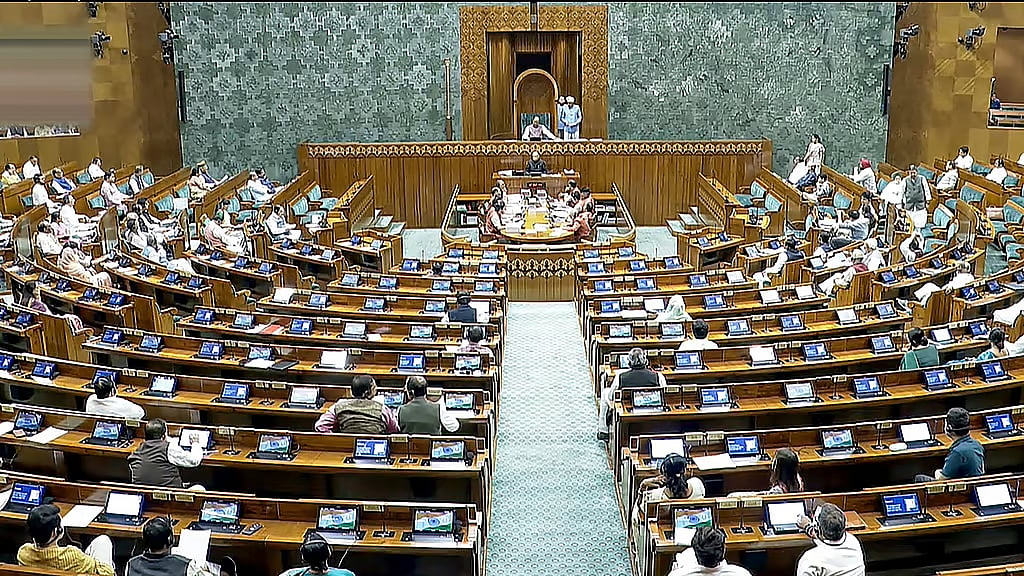
The monsoon session of Parliament was adjourned sine die without a date being specified, and even after 40 days as of Tuesday, it has still not been formally concluded. Former Lok Sabha Secretary-General P.D.T. Achari said that this 40-day gap is the longest ever.
Speculation has gained strength that, by not formally concluding the parliamentary session, the central government wants to bring in an important bill without convening a new session; accordingly, the Women’s Reservation Bill, along with delimitation, may be brought back.
The Parliament monsoon session began on July 20 and continued until August 13. During this session, the opposition parties repeatedly created disruptions by raising issues such as the NEET question paper leak, the resignation of the Union Education Minister, and police action against students in Delhi. As a result, the proceedings of both Houses were severely stalled. On August 13, both Houses were adjourned sine die by the presiding officers.
Normally, after a parliamentary session is adjourned in this manner, the President issues a notification within 4-5 days formally ending the session. However, even after 40 days since the monsoon session was adjourned, this notification has not been issued.
In this regard, former Lok Sabha Secretary-General P.T.T. Achari told a PTI reporter, “In 2015, because the central government was engaged in efforts to build consensus on the Goods and Services Tax law, the then parliamentary session was formally concluded after about 28 days. Now, a gap of 40 days is the longest ever.”
Earlier, the Parliament budget session was adjourned on April 18 and then formally concluded on April 20.
Under the provisions of the Constitution, on the recommendation of the Union government, the President convenes and prorogues sessions of Parliament. It is noteworthy that, as usual, following the monsoon session, the winter session begins in the last week of November and ends before Christmas.
Women’s reservation bill again?
The 131st Constitutional Amendment Bill, which provides for implementing 33 percent women’s reservation from the 2029 Lok Sabha elections and, accordingly, increasing the number of Lok Sabha constituencies to 850, was introduced in the special session of Parliament held last April.
For the constitutional amendment bill to be passed, it needed more than 50 percent of the total number of members (543) and a two-thirds majority of the members participating in the vote. However, the bill failed because it did not secure a two-thirds majority in the vote.
Following this, speculation had already emerged that the bill would be brought back in the monsoon session. Although a total of 12 bills were passed in this session, the women’s reservation bill was not brought back.
In this context, speculation has intensified that the central government wants to introduce the women’s reservation bill without convening a new session. Reports say that, as southern states have been opposing the delimitation of constituencies based on population, fearing that their representation will decrease, the central government is planning to link the proposal to uniformly increase constituencies by 50 percent across all states.