
The days when we used to carry cash in our hands and wallets, carefully guarding it and taking it along, are now long gone.
These days, wherever we go, we keep only a minimum amount of cash with us and rely on digital payment apps for the rest.
Now, QR codes for digital payments have appeared everywhere, from pushcart shops to small grocery stores and beyond.
One of the main reasons our people have so easily embraced digital payments is that there are no charges for using them.
However, the central government has now brought the Merchant Discount Rate (MDR) into effect. Under this, charges will be levied on certain digital payment transactions.
You can easily learn about those charges in FAQ format. Let’s go...
If money is sent from one person to another, is there a fee?
Not at all. There is no fee when one individual sends money to another individual, or when one individual receives money from another individual.
No fee is charged, no matter how many rupees are sent or received.
Then who is charged a fee?
A fee is charged only when an individual sends money to a business account, that is, to merchants.
A fee of 0.4 percent will be charged for each transaction.
If a transaction of more than Rs. 2,000 is made at a grocery store or roadside shop, will there be a charge?
There is an important provision in MDR to protect grocery stores, small businesses, and roadside vendors.
Accordingly, if the UPI payments received through QR code in a month are less than Rs. 1 lakh, there will be no charge for transactions made with them.
Are they saying there will be no fee for transactions up to Rs. 2,000?
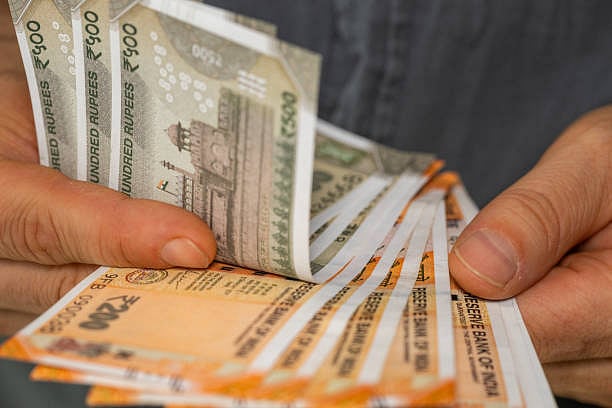
Yes... Apart from the people mentioned above, if payments up to Rs. 2,000 are made to merchants, no fee will be charged for them. Fees will be charged only for payments above Rs. 2,000.
Will the fee collected go to the Central Government?
MDR or NPCI is not a tax or fee collected by the central government.
This charge goes to the banks and payment apps in the UPI network. It will be used for operating the UPI network and for its further expansion.
They keep saying charge... charge... who has to pay it?
Customers do not have to pay the MDR charge. These payments have to be paid by shopkeepers and business owners.
Banks have been instructed to ensure that customers are not burdened with these payment charges from shopkeepers and business owners.
So there is no fee at all for individuals?
According to bank and NPCI practice, an individual can make transactions ranging from Rs. 1 lakh to Rs. 5 lakh per day. There is no fee for these transactions.
Rising opposition
Ever since the central government began talking about this MDR, opposition has been mounting.
Indian Prime Minister Modi brought the habit of using UPI among the public by campaigning for “Digital India.”
If MDR is now implemented, there is a high chance that people will once again move toward cash.
Merchants will mostly try to collect this fee from customers. If they cannot do this directly, they will raise the prices of the goods or services they sell.
This will increase the financial burden on customers.
To avoid all this, clear explanations and procedures are needed on what steps the central government will take and how it will implement them.