This is Vikatan’s ‘My Vikatan’ initiative that turns readers into writers and contributors. All the views expressed in this article are the personal views of the author. They are not the views of the Vikatan platform - Editor
In Indian politics, some parties lose elections and disappear. Some parties, even after losing power, retain their political influence. But it is rare in history for a party that captured power to later split into various factions, giving rise to several regional parties from its political legacy and reshaping the course of Indian politics.
In that sense, the 49-year journey of Janata politics does not merely describe the rise and fall of a single party. It also explains how alternative politics emerged, how it was fractured by the struggle for power, and how it later evolved into distinct features of state politics.

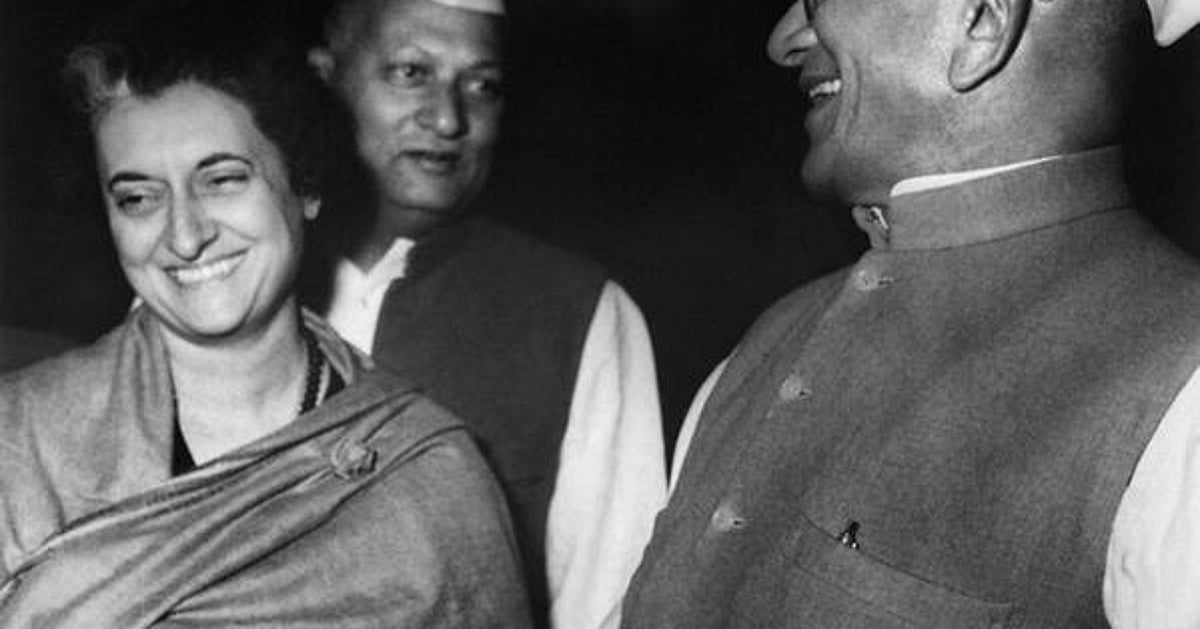
In the run-up to the 1977 Lok Sabha election, the opposition parties that had worked against Indira’s Emergency rule decided to unite. Congress (O), the Bharatiya Jana Sangh, the Bharatiya Lok Dal, and factions of the Socialist Party came together to form the Janata Party. Later, the Democratic Congress led by Jagjivan Ram joined this alliance.
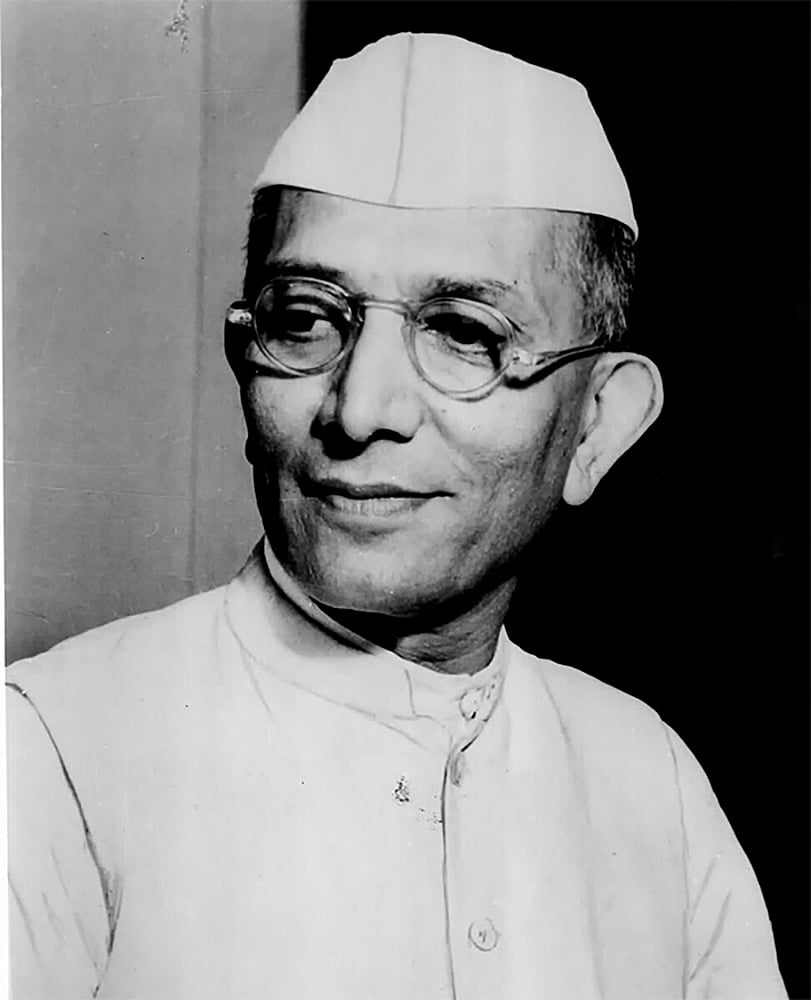
The Janata Party won the March 1977 election, and Morarji Desai became Prime Minister on March 24. This marked the first time in independent India that a non-Congress government came to power at the Centre. This political unity, born out of the struggle against the Emergency, opened a new chapter in Indian politics.
But within the Janata Party’s victory, the seeds of its downfall were also sown. The leaders who had united to defeat the Congress did not have a common understanding of how to govern. Leaders including Morarji Desai, Charan Singh, Jagjivan Ram, and Chandrashekhar each had their own political influence and ambitions for future leadership.
Ideological differences persisted between the former Jana Sangh leaders and the socialist leaders. In particular, the dual membership issue—whether the former Jana Sangh leaders who were members of the Janata Party could continue their association with the RSS—directly challenged the party’s unity.
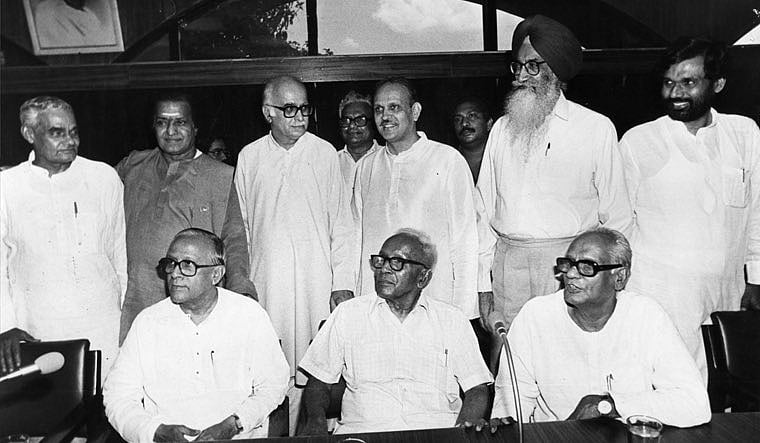
In 1979, the power struggle between Morarji Desai and Charan Singh intensified. As a result, Charan Singh broke away from the Janata Party and formed an organization called Janata Party (Secular).
Following Morarji Desai’s resignation, Charan Singh became Prime Minister with outside support from Indira’s Congress party. The Janata politics that had emerged in opposition to Indira Gandhi ultimately found itself in the contradictory position of having to form a government by relying on the support of the same Indira Gandhi. But before facing a vote of confidence, Indira withdrew her support, and Charan Singh’s government also fell. Within two years, the Janata Party’s unity had broken down, and its first attempt at alternative politics came to an end.
After the decline of the Janata Party, the Bharatiya Janata Party (BJP) was formed on April 6, 1980, under the leadership of former Jana Sangh leaders Vajpayee and L.K. Advani. At the same time, Charan Singh continued his farmers’ politics through the Lok Dal. As a result, the political forces that had come together in the Janata Party split into separate parties.
In 1988, the Janata Dal was formed under the leadership of V. P. Singh. In the 1989 Lok Sabha election, the National Front won, and he became Prime Minister. The BJP and left-wing parties extended support from outside. In 1990, by implementing the Mandal Commission recommendations, social justice politics gained national importance. Meanwhile, due to a conflict over the Ram temple issue, the BJP withdrew its support. Following this, the V. P. Singh government fell.
After that, the leadership struggles within the Janata Dal led to the formation of several new parties. Under Chandrashekhar’s leadership, the Samajwadi Janata Party (Rashtriya) was formed. Although he became Prime Minister with outside support from the Congress, his government did not last long either. Later, Mulayam Singh Yadav founded the Samajwadi Party on November 4, 1992. It grew into a strong regional party in Uttar Pradesh, centered on the politics of backward classes, minorities, and social justice.
In 1994, Nitish Kumar and George Fernandes formed the Samata Party. Lalu Prasad Yadav broke away from the Janata Dal in 1997 and founded the Rashtriya Janata Dal. In the same year, Naveen Patnaik created the Biju Janata Dal in the political legacy of his father, Biju Patnaik. Thus, Janata politics in Bihar and Odisha developed independently as new parties.
From Charan Singh’s farmers’ political line, his son Ajit Singh formed the Rashtriya Lok Dal in 1996. It operated with a focus on farmers and Jat community politics in western Uttar Pradesh. In Haryana, it continued as the Indian National Lok Dal along the political line of Devi Lal. In 1999, in Karnataka, Janata Dal (Secular) emerged as a separate party under the leadership of H.D. Deve Gowda. Ram Vilas Paswan founded the Lok Janshakti Party in 2000. All of these were direct breakaways from the Janata Party; they were connected to its broad socialist, farmers’, and social justice political traditions.
Janata Dal (United) was formed on October 30, 2003. The Janata Dal faction led by Sharad Yadav, along with organizations including the Samata Party, joined it. Under Nitish Kumar’s leadership, it grew in Bihar as a political force alternative to Lalu’s Rashtriya Janata Dal. Nitish Kumar’s political journey saw many twists and turns: alliance with the BJP, withdrawal from it, rejoining, and forming a government with Lalu and the Congress. In 2024, it once again joined the National Democratic Alliance. These are alliance politics changes, different from party splits.
Even after 2003, new parties emerged in the Janata political tradition. Upendra Kushwaha founded the Rashtriya Lok Samata Party in 2013. Jitan Ram Manjhi formed the Hindustani Awam Morcha in 2015. Sharad Yadav founded the Loktantrik Janata Dal in 2018. In Haryana, Dushyant Chautala, who broke away from the Indian National Lok Dal, formed the Jannayak Janata Party in 2018. The Lok Janshakti Party also split into two after Ram Vilas Paswan’s death in 2021: the Lok Janshakti Party (Ram Vilas) led by his son Chirag Paswan, and the Rashtriya Lok Janshakti Party led by Pasupati Kumar Paras.
An effort to reunite the Janata family parties into a single organization was also made in 2015. Leaders including Mulayam Singh Yadav, Lalu Prasad Yadav, and Nitish Kumar were involved in it. However, a complete merger was not possible because they were reluctant to give up leadership, election symbols, state support bases, and political influence. Reuniting parties that had grown over many years with distinct identities was not easy.
By 2026, the Janata Party is no longer a unified national political force. However, its political legacy continues through various parties. Parties such as the BJP, Samajwadi Party, Rashtriya Janata Dal, Janata Dal (United), Janata Dal (Secular), Biju Janata Dal, Rashtriya Lok Dal, and Indian National Lok Dal represent different political traditions. Some of these are direct splinters of the Janata Dal; others are continuations of the agrarian, socialist, and regional political traditions of former leaders.
The history of Janata politics is an important lesson for Indian politics. Leaders who united with the single aim of defeating the Congress were unable, after coming to power, to overcome the power struggles and ideological differences among themselves. As a result, the Janata Party disintegrated; its leaders formed various parties.
Although those parties gained distinct influence in state politics, they were unable to reunite the Janata family into a single political force. The Janata politics that emerged in 1977 as an alternative to the Congress is, in 2026, spread across various regional parties. An alliance formed to defeat a common enemy may capture power; but if it cannot manage ideological differences and leadership rivalries, that very alliance can become the cause of political splits. The history of the Janata Party is a prime example of this.
My Vikatan is Vikatan’s initiative to turn readers into writers and contributors. A dedicated WhatsApp community group has been created for articles published in this ‘My Vikatan’ section.
By joining this, you can instantly know everything about ‘My Vikatan’ articles and ‘My Vikatan’ related announcements..!
To join this WhatsApp community group, click the link below, folks...!
Link : https://chat.whatsapp.com/G7U0Xo0F63YA5PC6VgYMBQ
A page just for you in Vikatan...
To submit your creations - send them to my@vikatan.com by email!