
Luiz Inácio Lula da Silva has won the presidential election held in Brazil and has been elected president for a fourth term.
In recent years, right-wing candidates have risen aggressively across Latin American countries, capitalizing on public dissatisfaction with left-wing governments, especially over rising crime, economic stagnation, and inflation. The victories of political leaders such as Javier Milei in Argentina and Nayib Bukele in El Salvador marked the beginning of this trend.
Especially since Trump took office as U.S. president in 2025, candidates who adopted Trump’s policies of “America First,” a tough crackdown on law and order, and an unrestrained market economy, and campaigned in the same style, began attracting voters. Political analysts say that when Trump-backed right-wing leaders seize power in this way, the region’s trade and foreign policies shift in favor of the United States.
While left-wing leaders try to adopt a stance of self-reliance by opposing U.S. tax policies and interventions, right-wing leaders are rapidly pursuing closer trade agreements with the United States, along with security and border-control policies. It is also said that this is expanding America’s influence and power at the regional level.
It was in the midst of this intense right-wing wave that Lula da Silva, who had taken an anti-Trump stance in Brazil, contested the presidential election. Opposing him was right-wing thinker Senator Flávio Bolsonaro (Flávio Bolsonaro).
Amid rising prices and growing fear of crime among the public, Bolsonaro campaigned by promising, “I will take tough action against crime, and I will reduce the prices of food items.” Lula, meanwhile, promised large-scale government programs to help families in an effort to win over voters on the margins. At the same time, there are corruption allegations against family members and friends of both candidates. In particular, Bolsonaro has been linked to one of Brazil’s major corruption scandals.
It was in this context that the first round of voting was held on October 4. In it, neither candidate won a majority, though Bolsonaro was ahead of Lula by more than 2.2 million votes. After the setback in the first round, Lula completely changed his campaign style. He used special strategies to attract young people and held rallies that brought hundreds of thousands of people into the streets to defend his record in office and democratic values. Warning that “the dangers of another Bolsonaro government would be great,” he also announced several new government programs and campaigned vigorously.
It was in this situation that the final phase of voting took place yesterday (the 25th). With just three minutes left before the usual voting time ended, both candidates’ sides petitioned the electoral court, citing problems in some areas where voters were unable to cast their ballots, and requested that the voting time be extended. Based on that, Supreme Court Justice Cristiano Zanin ordered the voting period to be extended by another two hours. Following that, the vote counting also began.
With all the votes counted, Lula was declared the winner, securing 51.8% of the total vote and defeating Senator Flávio Bolsonaro, who ran against him, by a margin of about 4.4 million votes. This is the first time since the end of military dictatorship in Brazil in 1985 that a candidate who finished second in the first round has gone on to win the runoff and take the presidency. Lula’s new presidential term is expected to officially begin on January 5, 2027.
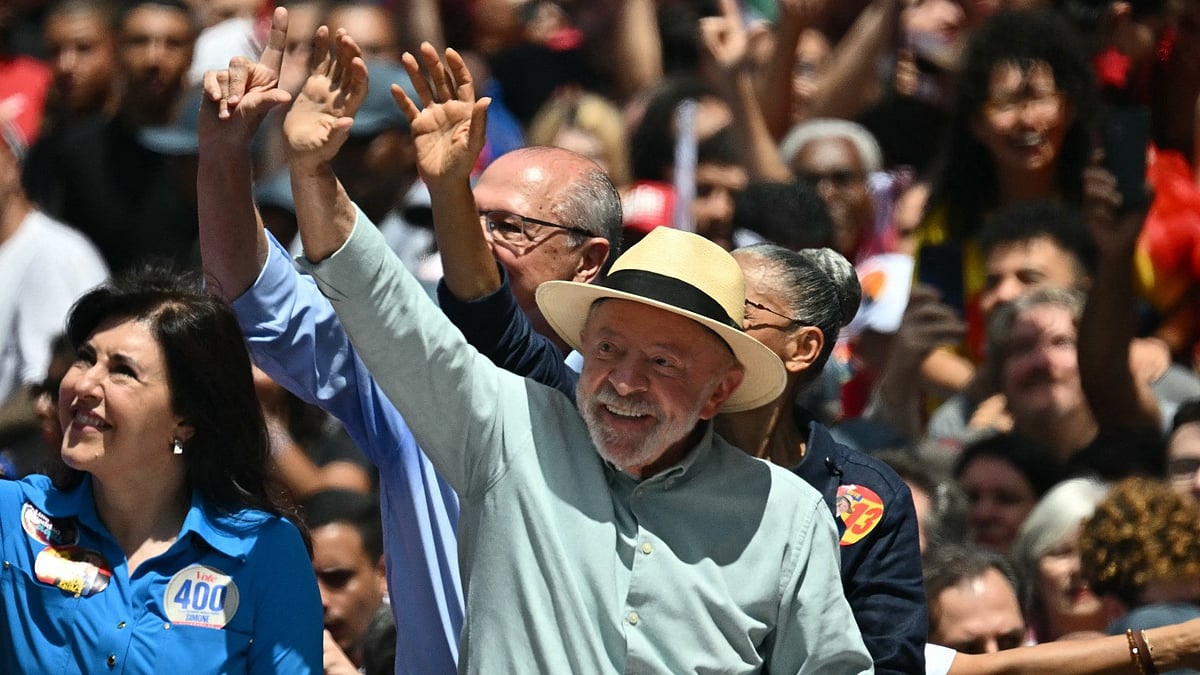
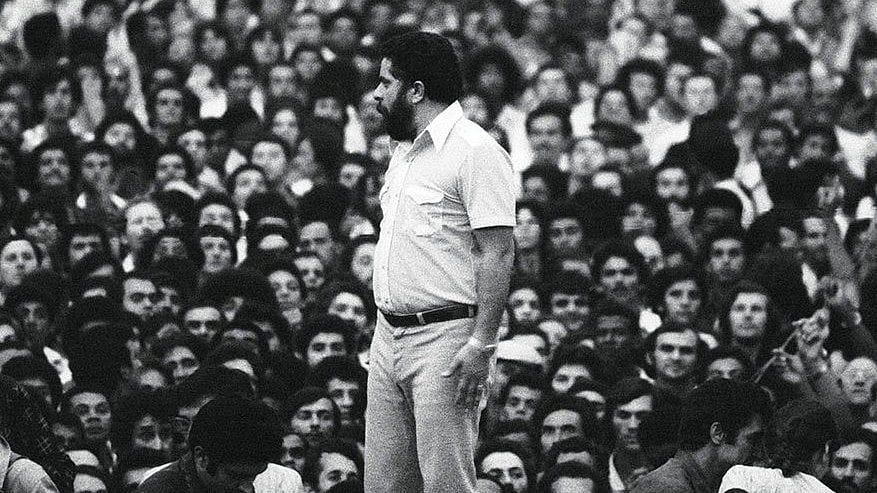
Lula, who began his political journey as a trade union leader in the 1970s, later founded the Workers' Party. After running for president three times on behalf of that party and losing, he finally won in 2002 and became president. Four years later, in 2006, he was elected president again. In 2010, Dilma Rousseff, who had been in his cabinet, took office as president. Rousseff, who won again in 2014, was removed from office in 2016 over allegations of irregularities. Lula was also implicated in this corruption investigation.
Lula, who tried to run in the presidential election in 2018, was found guilty and jailed in March. Lula spent 580 days in prison. After police-seized text messages confirmed that the judge who sentenced him had acted without impartiality, Brazil’s Supreme Court overturned Lula’s conviction. Having returned from prison, Lula emerged as the leading critic of then-president Jair Bolsonaro and defeated him by a narrow margin in the 2022 election.
Now over 80 years old, Lula has joined U.S. President Donald Trump and Nicaraguan President Daniel Ortega among the oldest presidents in the Americas.
Among all the countries in the Latin American region, Brazil and Mexico stand out as the two nations with the greatest economic strength and the largest populations. Political commentators believe it is highly significant that, while other smaller countries in the region may lean toward the United States, these two major countries are under the rule of left-wing leaders.
The view is that if the United States or right-wing organizations backed by Trump try to bring all of Latin America under their control, these two countries will be a major obstacle to that.
It is said that if Lula had lost this election and the party of Bolsonaro, a Trump supporter, had won, much of Latin America would likely have come under U.S. right-wing policies.

At the same time, even though Lula won, the situation within Brazil has not yet fully turned in his favor. This is because, in this election, the vote difference between candidates from Lula’s party and candidates from Bolsonaro’s party, which ran against him, was extremely narrow.
This makes it clear that, although a left-wing government has been formed on the surface, support for right-wing leaders like Bolsonaro and dissatisfaction with left-wing parties remain deeply rooted among the people of Brazil.
However, political analysts believe this decision will enable Brazil’s $2.6 trillion economy to operate independently and freely, without falling under U.S. control, despite the maximum tariffs imposed by Trump. Lula, speaking after his election victory, indirectly referred to the United States when he said, “This election has proven that Brazil is not anyone’s backyard,” and this is seen as a clear indication of America’s setback.
Junior Vikatan’s exclusive Whatsapp Group...
Click here to join... https://tinyurl.com/2b963ppb
Hello,
From BIG BREAKINGS to politics, society, crime, cinema, and more—unmissable updates and in-depth articles from all areas.
Attention-grabbing articles from Junior Vikatan magazine and digital, here instantly... https://tinyurl.com/2b963ppb