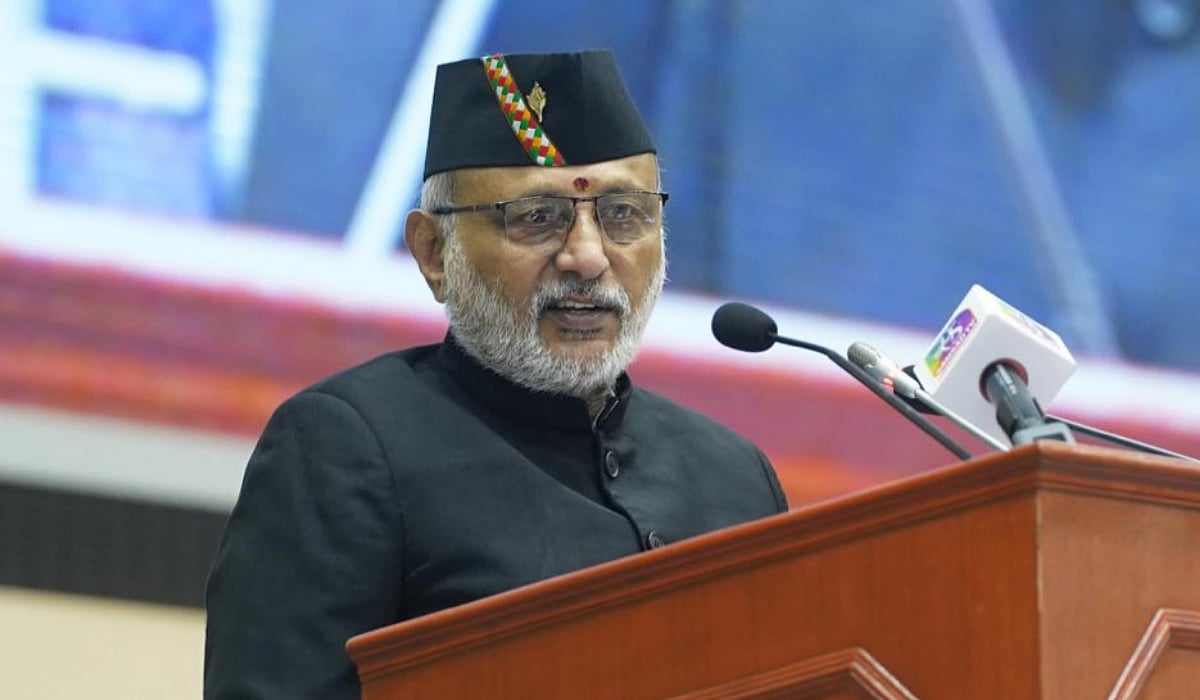
Tamil is one of the oldest languages, and Kashi is one of the oldest cities. The festival that connects them is Kashi Tamil Sangamam. It celebrates the long-standing cultural and spiritual bond between Tamil Nadu and Kashi. Tamils bathing at Rameswaram and offering sand into the Ganges, as well as bringing Ganga water to the Ramanathaswamy Temple, are symbols of this relationship. Likewise, the people of Kashi also undertake pilgrimages to Rameswaram.
Kasi is present in the very names of towns like Tenkasi, Virudhachalam (Virudha Kasi), and Avinasi. They have an old connection with Kasi. “Let us make an instrument in Kanchi to hear the speech spoken by the scholars of Kasi,” said Bharathiyar. His dream was that the noble ideas of Kasi should be heard in Kanchi, and Kanchi’s thoughts should be heard in Kasi. I see this gathering as an effort to make that dream come true.
Tamil is a great treasure of our nation. It contains excellent literature, profound thought, and noble ethics. Therefore, making Tamil known throughout the world is a matter of pride for India as well. Kashi Tamil Sangamam was launched in 2022. Its purpose is to recall the knowledge and culture that Tamil Nadu and Kashi have shared for many years and carry it forward to the next generation. This is an expression of the spirit of “One India, Great India.”
The first Sangam brought the historical connection between the two regions to the people. The second Sangam expanded exchanges in the fields of education, literature, art, science, and technology. The third Sangam highlighted the legacy of Sage Agastya and India’s ancient knowledge. The fourth Sangam, through the “Let’s Learn Tamil” initiative, gave Kashi students the opportunity to learn Tamil and enabled the people of Tamil Nadu to experience Kashi culture firsthand.
The aim of this year is “Let us study the Thirukkural.” This is an effort to take the Thirukkural to every part of India. For the Thirukkural, which profoundly explains the fundamental values of human life—virtue, wealth, and love—in just two lines, is a universal classic that guides not only Tamils but all of humanity. In the first two Sangam gatherings, the Thirukkural was translated into 13 languages and later into 16 languages.
This time, it is being translated into 50 languages. This includes 10 foreign languages. At the first Sangamam, more than 2,500 representatives from Tamil Nadu came to Kashi and exchanged the cultural, artistic, literary, spiritual, and intellectual traditions of the two regions. The participation of around 1,400 people from Tamil Nadu in this Sangamam, including students, teachers, writers, journalists, farmers, and spiritual elders from various fields, shows that this is a gathering of the people.
This has become not just an event, but a movement that creates lasting cultural connections among people. Preserving old traditions and achieving new growth are not contradictory. Every language and culture enriches India’s identity. It is our responsibility to pass them on to the next generation. At a time when the world today is facing many challenges, India’s ancient civilizational wisdom and philosophies of life have the power to guide the world.
The ethical principles of the Thirukkural and the spiritual tradition of Kashi emphasize compassion, harmony, mutual respect, selfless public life, and the well-being of all. The Ganga is the lifeline of North India, and the Cauvery is the lifeblood of Tamil Nadu. Though both flow in different places, they reflect our single civilization.
India’s unity is shaped not only by land, but also by shared history, spirituality, culture, and humaneness. The Kashi–Tamil Nadu bond must be sown in the present generation and strengthened in the generations to come. This confluence renews the age-old relationship between Tamil Nadu and Kashi. It should be a place where India’s many languages and cultures understand one another and help one another grow. May the spirit of “One India, Great India” flourish everywhere.
- Vice President of India C.P. Radhakrishnan