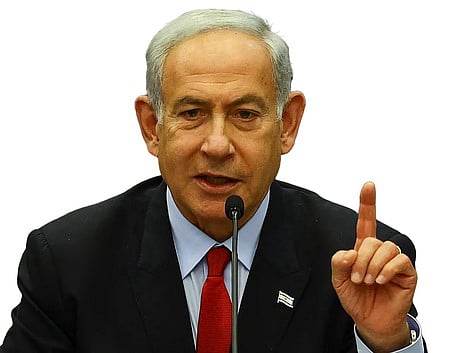
For the first time in Israel since the Hamas attack on Oct. 7, 2023, a parliamentary election is being held on Tuesday (Oct. 27). It is widely seen as a direct public verdict on the leadership of Benjamin Netanyahu, who has long served as prime minister.
Instead of directly electing the prime minister, the people of Israel vote for parties. According to recent opinion polls, there is a fierce contest between Benjamin Netanyahu’s Likud party and the opposition alliance led by former military chief Gadi Eisenkot. It appears that no one is likely to come close to a majority (61 seats) in the 120-seat parliament. Accordingly, if no one fails to form a coalition with majority strength, the government led by Benjamin Netanyahu will continue as a “caretaker government” until another election is held in the next few months.
Benjamin Netanyahu has continued to reject calls to establish an independent commission of inquiry into the security failure of the Oct. 7 attack. Recently, more than a hundred thousand people gathered in Tel Aviv and protested against the government, creating a major crisis for him.
In Israeli politics, military setbacks have historically led to major political shifts. After the 1973 Yom Kippur War, the ruling Labor Party was forced to end its 29-year hold on power in 1977. That paved the way for the rise of the Likud Party. Now, due to the intelligence and security failures preceding the Oct. 7 attack, Benjamin Netanyahu’s image as a “security hero” has sharply declined.
Moreover, the conflict over military service between secular Israelis and the ultra-Orthodox “Haredi” community has also emerged as a major issue. While military service is mandatory for most Jewish men in Israel, Benjamin Netanyahu’s government sought to enact a law granting exemptions to Haredi men studying in religious schools. The Supreme Court intervened and struck down the law. With manpower shortages in the military amid the ongoing war, this exemption has caused strong public resentment.
On the other hand, the breakdown of the power-sharing agreement with former defense minister Benny Gantz, along with the judicial reforms introduced by the government in 2023, have reduced confidence in Benjamin Netanyahu. In addition, the economic downturn caused by the ongoing war, trade disruptions, and the costs of maintaining reserve soldiers in the military have placed a heavy financial burden on Israeli families. All of these have strengthened public sentiment against the ruling government.
In this way, all the debates in the election arena revolve around Benjamin Netanyahu’s leadership. In that sense, this election, which will serve as a true ordeal for Benjamin Netanyahu’s political life, has become a crucial battleground that will determine Israel’s future security, economic stability, and domestic social cohesion. Above all, it is being watched even more closely because the new leadership that is about to emerge will decide the direction in which Israel’s military actions and war strategies against Iran should now move.