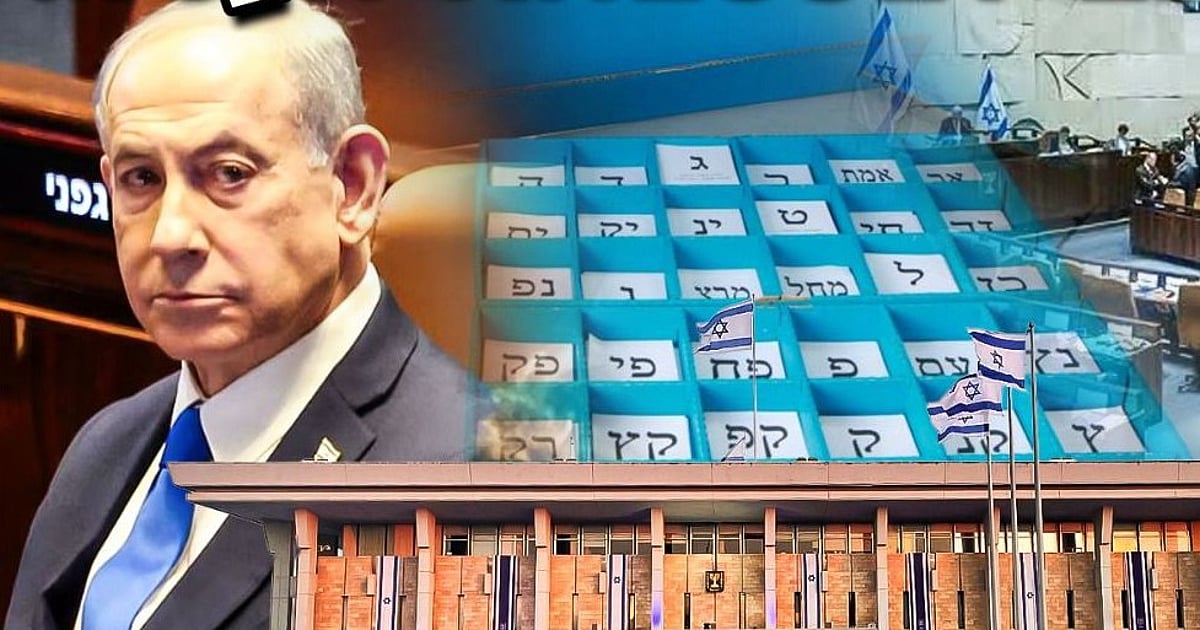
In Israel, no party has ever formed a government on its own so far. The reason is its electoral system.
Israel is one of the countries with the most unusual and most complex electoral systems in the world.
Israel’s parliament is the `Knesset'. How does that Knesset work, how is the prime minister elected, why is the number 61 so important, and who all are contesting in the election to be held on October 27, 2026...
Let’s take a closer look.!
What is the Knesset? — A single chamber, 120 members!
Israel’s parliament is called the “Knesset” (Knesset). It has a total of 120 members (Members of Knesset - MKs). Unlike countries such as India, the United States, and Britain, which have two houses—a upper house and a lower house—Israel does not. It has a unicameral parliament. Moreover, unlike federal countries such as the United States or Australia, Israel has no regional or state-level legislatures. The power to make laws for the entire nation rests solely with the Knesset.
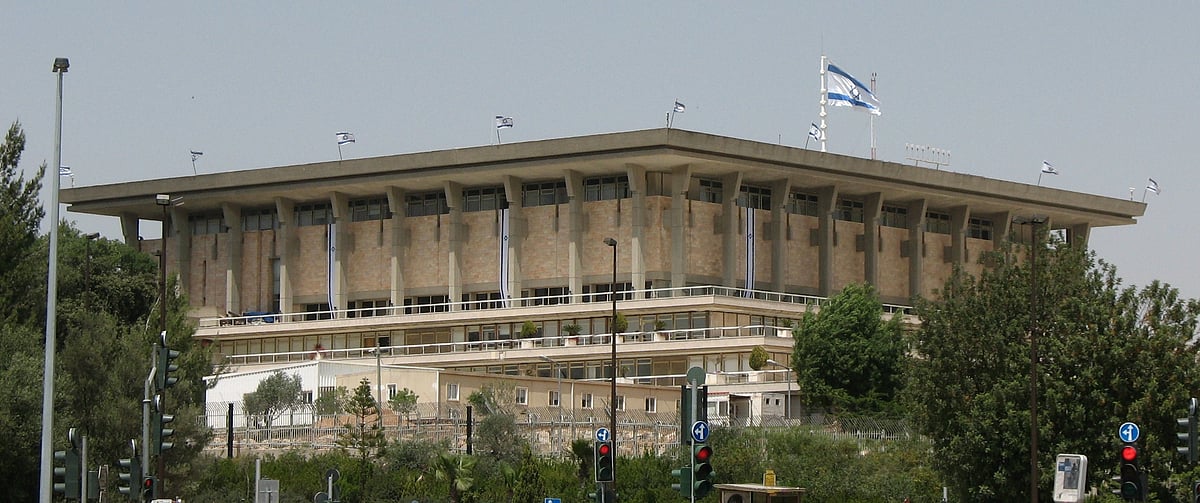
Israel follows a parliamentary democratic system. The people do not directly elect the Prime Minister; they elect only the members of parliament. The parties that win the election come together to form the government. The Prime Minister and his cabinet are accountable to the Knesset.
Main functions of the Knesset:
Enacting laws
Monitoring the functioning of the government
Approving the country’s budget
Electing key officials
Forming the government or dissolving it through a vote of no confidence
In terms of population, the Knesset, with 120 members, is a relatively small parliament. As a result, each member has to serve on multiple committees, which also increases the workload.
Proportional Representation — The Entire Country Is One Constituency!
The most important feature of Israel’s electoral system is its proportional representation system. Unlike in the United States, India, or Britain, the country is not divided into separate constituencies. Instead, the entire country is treated as a single electoral district. Voters do not vote for a specific candidate; they vote for a party list.
Each party list receives seats in the Knesset in proportion to the percentage of votes it gets. For example, if a party receives 10% of the votes, it gets about 12 seats in the parliament (10% of 120).
However, for a party to win seats, it must cross the electoral threshold of at least 3.25% of the total votes. The votes of parties that fail to meet this condition are wasted — this encourages smaller parties to join with larger parties or form alliances.
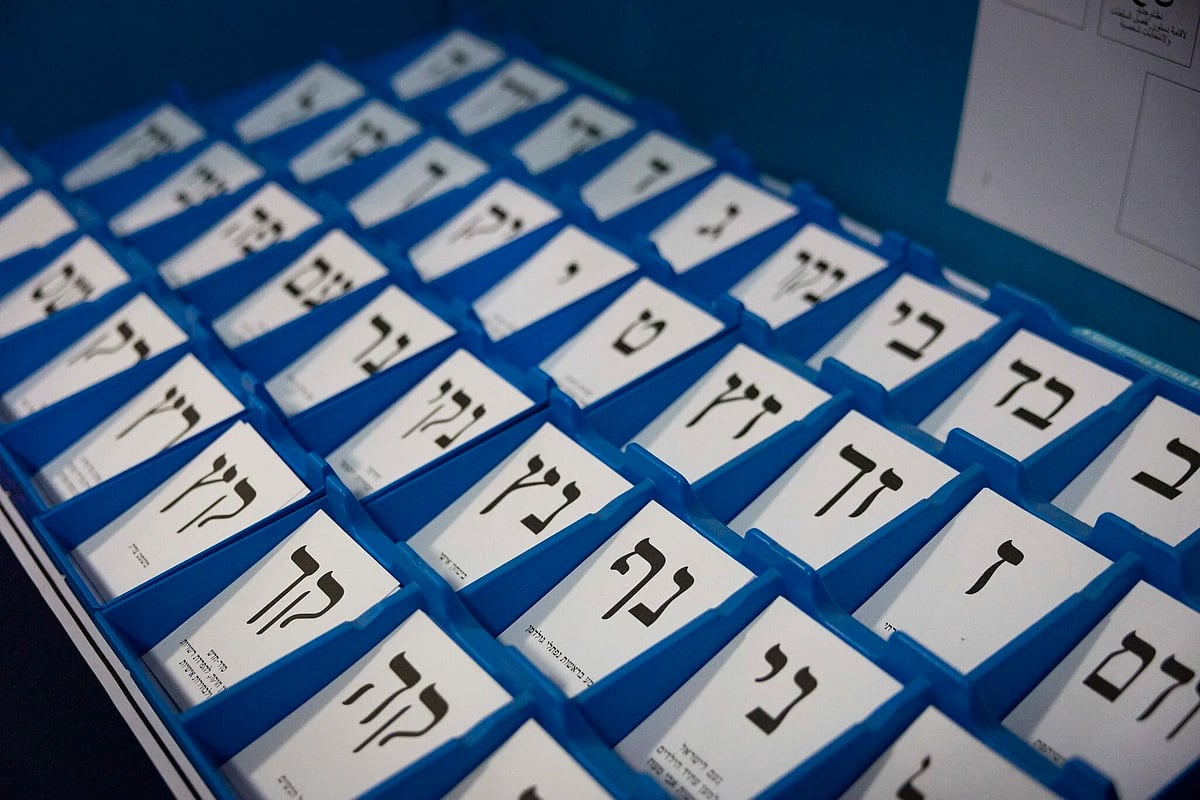
Under this system, even small parties find it easier to gain representation in parliament. As a result, the Knesset is always seen as a diverse house with many parties.
Candidate list — how do parties prepare it?
According to Israeli election law, candidates cannot be announced or changed after the election. Therefore, the candidate list must be declared in advance, before the election.
Ranked Party List: A few weeks before the election, each party must officially submit the names of its candidates in order from 1 to 120 (Ranked List). For example, the party leader (the prime ministerial candidate) will be in the first position; the party’s key leaders and candidates will follow in positions 2, 3, 4, and so on.
How is victory determined? Based on the election results, however many seats a party wins, that many top candidates on the list will enter parliament. For example, if a party wins 20 seats, the first 20 people on that list will directly become MKs; the person in 21st place will not get a seat.
How are candidates selected?
Each party follows different methods:
Internal party elections (Primaries): Parties like Likud determine the list through votes from party members.
Leader’s decision: In some parties, the party leader directly decides the list.
Religious groups: Spiritual/religious bodies (Council of Torah Sages / Shura Council) select the candidates
How often are elections held?
By law, Knesset elections must be held once every four years. However, due to political instability and the collapse of coalitions, early elections have become very common in Israel. From 1996 to 2022, elections were held on average once every 2.4 years. This has made Israel one of the countries with the most frequent elections among parliamentary democracies.
Only in exceptional circumstances, such as war, can elections be postponed with the support of 80 members. Elections were postponed only once, during the 1973 Yom Kippur War.
On election day, most workers are given the day off. Voting takes place secretly at polling stations using paper ballots. Most Israelis living abroad must return to the country in order to vote. Special voting arrangements have been made only for certain groups, such as government employees, soldiers, and patients in hospitals.
The magic number 61 — who decides the prime minister?
The announcement of election results is only the first move in the political chess game. The real political game begins only after that. In Israel’s history, no party has ever won 61 or more seats and formed a government on its own. This makes coalitions essential in deciding the prime minister.
After the election results are announced, the country’s president consults with all the parties. After assessing who has the most support, the president invites a party leader to form a government and gives them 28 days. If needed, this can be extended by another 14 days.
The invited leader must negotiate with other parties and secure the support of at least 61 members. To do this, supporting parties are offered cabinet positions, leadership roles in Knesset committees, and promises to implement their policies. Once a coalition agreement is reached, a vote of confidence is held in the Knesset, and the new prime minister and cabinet are sworn in.
If the leader invited to form a government fails, the president may give another leader a chance. If no one succeeds then either, the Knesset is dissolved and the country goes to elections again.
It is precisely because of this complex system that the Israeli political arena is often seen as unstable. If the budget fails to pass or a bill to dissolve the Knesset succeeds, a government can be brought down and early elections may be held. So, just as difficult as it is to form a government in Israel, it is equally challenging for it to last.
How does voting work?
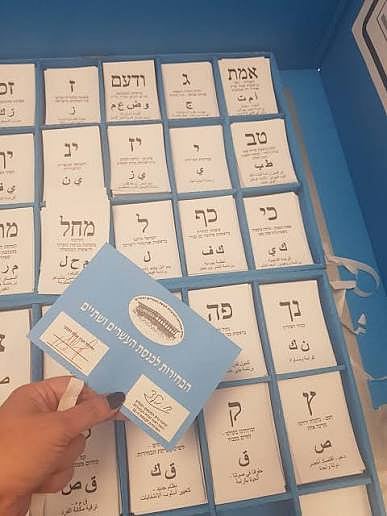
Ballot envelope: Officials provide only an empty ballot envelope to the voter who goes to the polling station.
Party slips (Party Slips / 'Pitka'): Behind the voting screen, separate paper slips for all the parties contesting the election (about 30–40 parties) are stacked on a large tray.
Party symbol: On each slip, only the party name and the 1 to 4 Hebrew or Arabic letters assigned to that party are printed in large type. (For example: the 'Likud' party will have the letters מחל - 'Mahal').
Voting: The voter takes only the slip of the party they like, puts it inside the envelope, seals it, comes out, and drops it into the box.

October 27, 2026 Election — Who’s in the race?
Israel’s 26th Knesset election is scheduled to take place on October 27, 2026. After the final candidate list filing deadline passed on September 8, a total of up to 35 parties and alliances are officially contesting the election. Although Israel has more than a hundred registered parties, the number of candidate lists on the ballot is reduced because smaller parties join together and run as alliances.
Major parties / alliances running in the 2026 election:
Likud: The ruling right-wing party led by current Prime Minister Benjamin Netanyahu.
Yashar / Together: An opposition alliance led by former Prime Minister Naftali Bennett and Yair Lapid.
The Democrats: A left-wing alliance led by Yair Golan.
Blue and White: A party led by Benny Gantz.
Joint List: An alliance of Arab community parties (Hadash, Ta'al, Balad).
Ra'am: An Arab party running independently, led by Mansour Abbas.
Shas & United Torah Judaism (UTJ): Jewish religious conservative parties.
Otzma Yehudit & Religious Zionist (RZP-Zehut): Far-right nationalist parties.
Yisrael Beiteinu: A party led by Avigdor Lieberman.
Amcha Yisrael: A newly launched party by former military officer Ofer Winter.